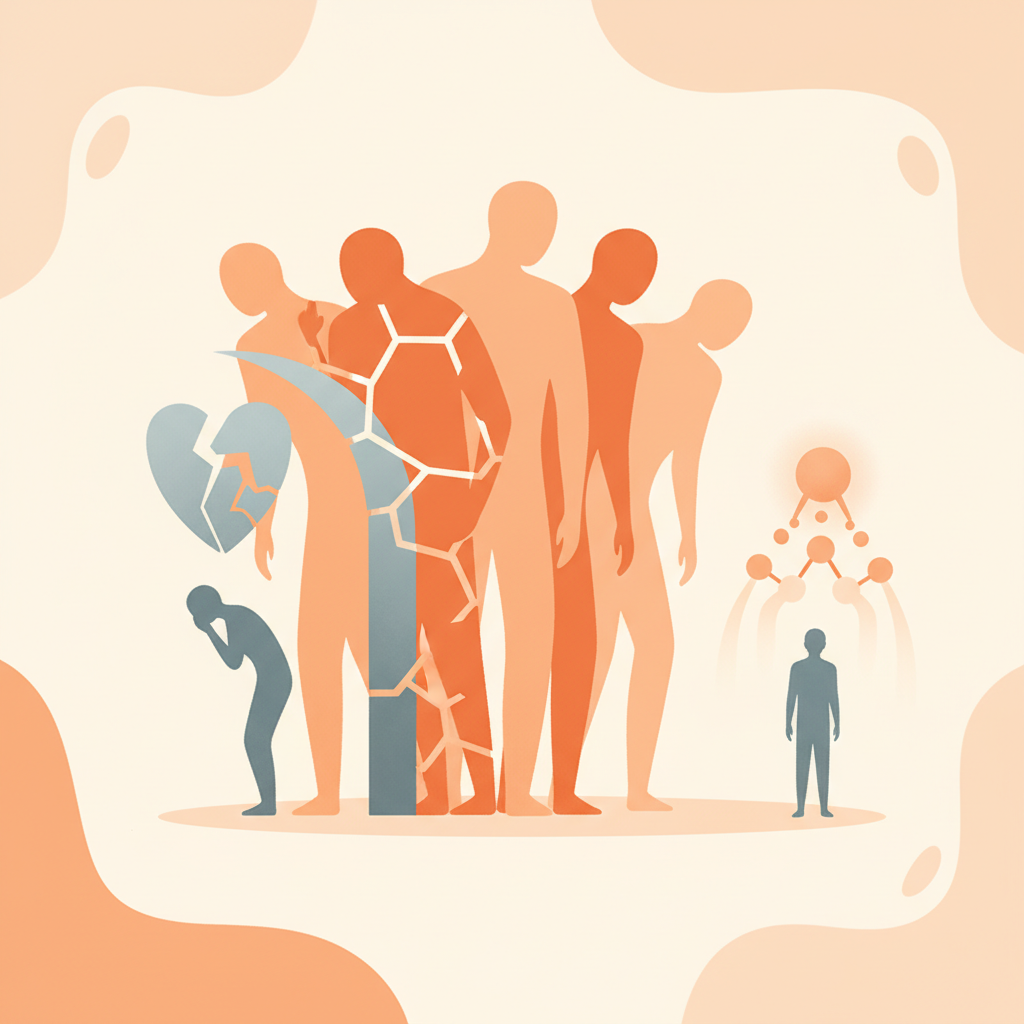
Workplace bullying — also known as mobbing — is a set of hostile, systematic, and prolonged behaviours directed against an employee with the intent to intimidate, isolate, emotionally destabilise, or force that person out of the organisation. The term was popularised by Swedish psychologist Heinz Leymann in the 1980s, who defined mobbing as "hostile and unethical communication directed systematically by one or more individuals against another, who is pushed into a helpless position." The Workplace Bullying Institute estimates that approximately 30% of American workers experience bullying directly, and a further 19% witness it. In the UK, ACAS reports that bullying costs employers billions annually in lost productivity, absenteeism, and staff turnover.
Quick Overview: Types of Workplace Bullying
| Type |
Direction |
Common Examples |
| Downward (bossing) |
Manager to subordinate |
Assigning impossible tasks, public humiliation, isolation |
| Horizontal |
Between peers |
Exclusion from meetings, spreading rumours, sabotaging work |
| Upward |
Subordinates to manager |
Collective boycott, undermining authority |
| Organisational |
The structure itself enables it |
Culture of fear, unattainable targets, forced rotation |
What Are the Signs You Are Being Bullied at Work?
Leymann identified 45 bullying behaviours grouped into five categories. The most common include:
- Attacks on communication: you are constantly interrupted, shouted at, your emails are ignored, or you are excluded from relevant meetings.
- Attacks on social relationships: you are physically isolated (moved to a different desk, seated apart), colleagues stop talking to you under pressure from the bully.
- Attacks on reputation: rumours are spread about your personal or professional life, your work is ridiculed publicly.
- Attacks on professional quality: you are assigned tasks far below or far above your capability, responsibilities are removed without justification, training is denied.
- Attacks on health: you are forced to work in harmful conditions, your health complaints are ignored.
The key is systematic pattern: this is not a one-off disagreement, but a pattern repeating at least once a week over a minimum of six months (Leymann's criterion).
What Is the Psychological Impact of Workplace Bullying?
Sustained workplace harassment produces progressive deterioration across multiple dimensions:
- Mental health: generalised anxiety, depression, post-traumatic stress disorder, suicidal ideation in severe cases.
- Physical health: insomnia, headaches, digestive problems, muscle tension, weakened immune system.
- Self-esteem: the victim begins to doubt their competence and believe they deserve the treatment (internalisation of abuse).
- Personal relationships: irritability, social withdrawal, conflicts with partners and family due to accumulated distress.
- Career: reduced performance from stress, sick leave, job abandonment, difficulty re-entering the workforce.
Researcher Marie-France Hirigoyen, author of Stalking the Soul, notes that bullying victims need an average of two years to recover psychologically after leaving the toxic environment.
What Can You Do Legally?
Legal frameworks vary by country, but common protections include:
- United States: while there is no federal anti-bullying law, harassment based on protected characteristics (race, sex, disability, etc.) is covered by Title VII of the Civil Rights Act and the ADA. Several states have introduced Healthy Workplace Bills.
- United Kingdom: the Protection from Harassment Act 1997, the Equality Act 2010, and employer duty of care under common law.
- European Union: the EU Framework Directive on Safety and Health at Work (89/391/EEC) requires employers to assess and prevent psychosocial risks.
- Australia: the Fair Work Act 2009 includes anti-bullying provisions enforced by the Fair Work Commission.
Regardless of jurisdiction, document everything: dates, facts, witnesses, emails, screenshots. Evidence is your strongest tool.
How to Take Action if You Are Being Bullied
Step 1: Name What Is Happening
Many victims take months to recognise they are being bullied. "It's not that bad," "maybe I'm exaggerating," "every workplace has conflicts." Naming the situation for what it is — bullying — is the first step out of the spiral of self-blame.
Step 2: Document Everything
Save emails, screenshots, messages, meeting notes. Record dates, times, witnesses, and descriptions of each incident. This record will be essential if you decide to report.
Step 3: Seek Support
- Internal: HR department, employee assistance programme, union representative.
- External: psychologist specialising in workplace trauma, employment lawyer, anti-bullying organisations.
- Personal: do not isolate yourself. Share what you are experiencing with trusted people. Isolation is the bully's favourite weapon.
Step 4: Use Formal Channels
Submit a written complaint through your company's grievance procedure or whistleblowing channel. The employer has a duty to investigate and take action.
Step 5: Legal Routes
If the employer does not act, you can file a claim with your relevant employment tribunal, equal opportunity commission, or labour authority. An employment lawyer can advise on the best route for your case.
How to Rebuild After Workplace Bullying
Recovery is not linear. It includes phases of anger, grief, fear, and gradually, rebuilding trust. Key elements:
- Therapy: preferably with a professional specialising in workplace trauma.
- Reclaim your professional identity: bullying distorts your self-image. You need to reconstruct the narrative of who you are beyond what the bully made you believe.
- Don't rush: give yourself permission to struggle. The pressure to "get over it quickly" is another form of violence.
We understand that workplace relationships are human relationships, and that the damage workplace bullying causes extends to every sphere of life. AI tools can help you verbalise what you feel, identify toxic patterns, and prepare difficult conversations — though they never replace legal assistance or specialised therapy.
Frequently Asked Questions
How long does a situation need to last to be considered workplace bullying?
According to Leymann's criterion, at least six months with a minimum frequency of once per week. However, courts have recognised shorter periods when the intensity of the harassment is high.
Is workplace bullying only perpetrated by bosses?
No. While downward bullying (boss to subordinate) is the most common, peer bullying and even upward bullying (subordinates to manager) exist. What defines bullying is the behavioural pattern, not the hierarchy.
Can I record conversations as evidence?
Laws vary by jurisdiction. In many US states (one-party consent states), you may record conversations you participate in. In the UK and EU, rules are stricter. Always check local laws or consult a lawyer before recording.
What is the difference between a demanding boss and a bully?
A demanding boss expects results, gives constructive feedback, and treats everyone with respect. A bully humiliates, isolates, lies, and directs hostility selectively at one person. Professional rigour never justifies mistreatment.
Can emotional intelligence training prevent workplace bullying?
It can reduce it significantly. Organisations that invest in emotional intelligence training report lower rates of conflict, higher psychological safety, and better retention. However, structural change — clear policies, accountability, and genuine enforcement — must accompany individual training.
Your relationships can improve. Today.
Start free in 2 minutes. No credit card, no commitment. Just you, the people you care about, and an AI that helps you understand each other.
Start free now