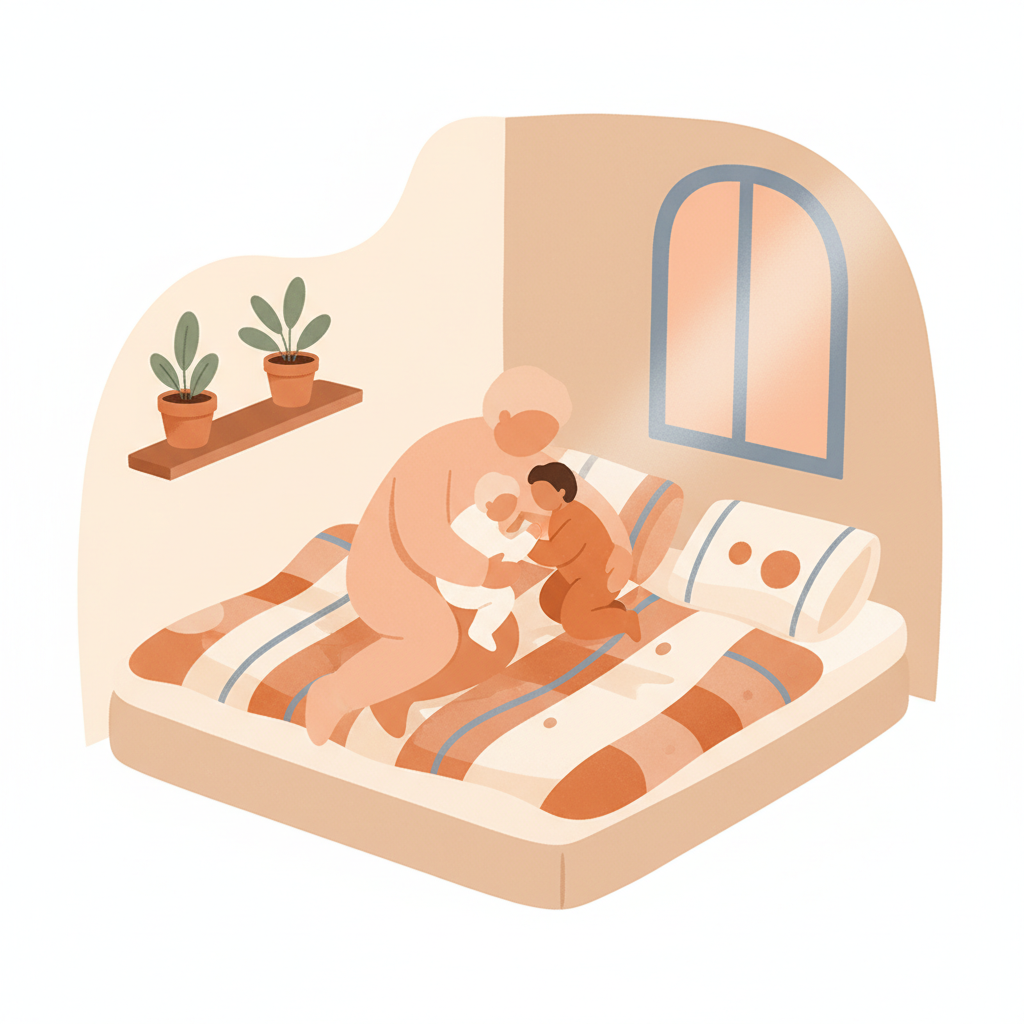
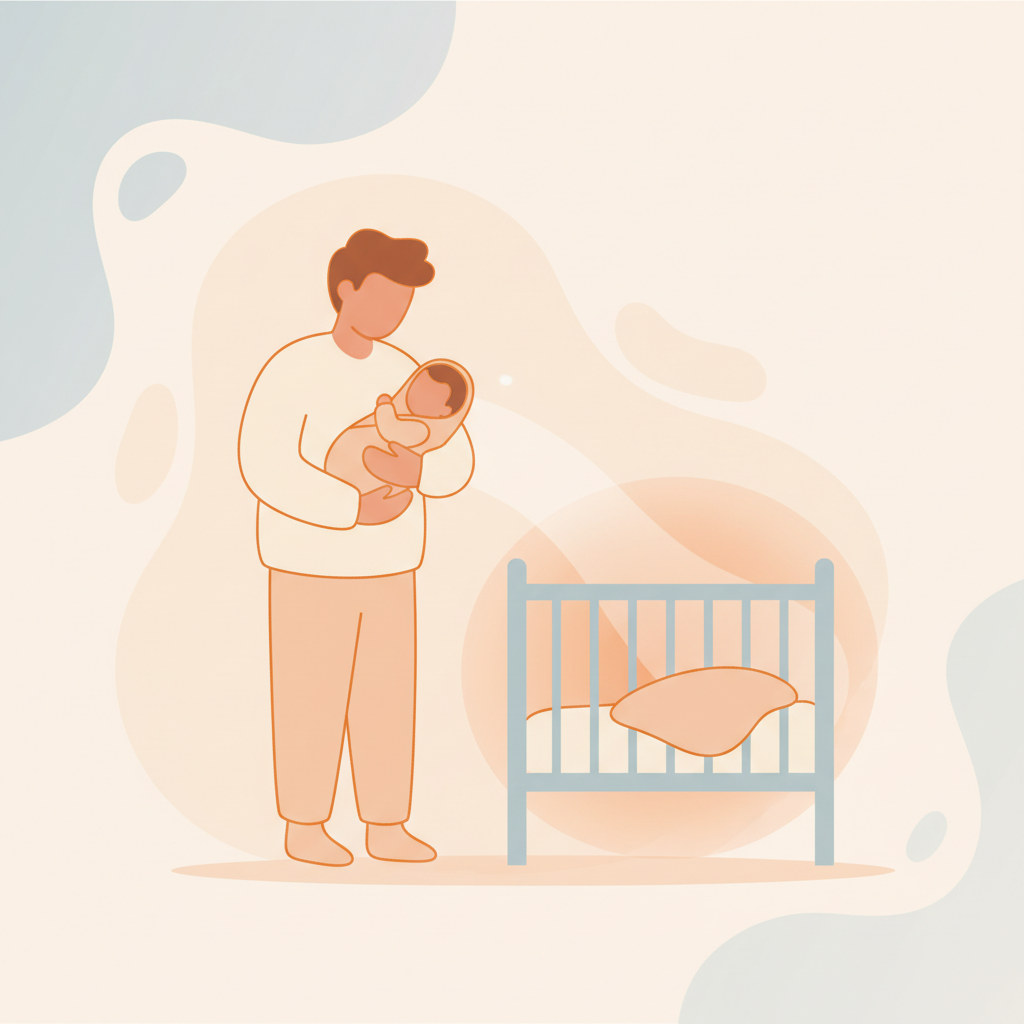
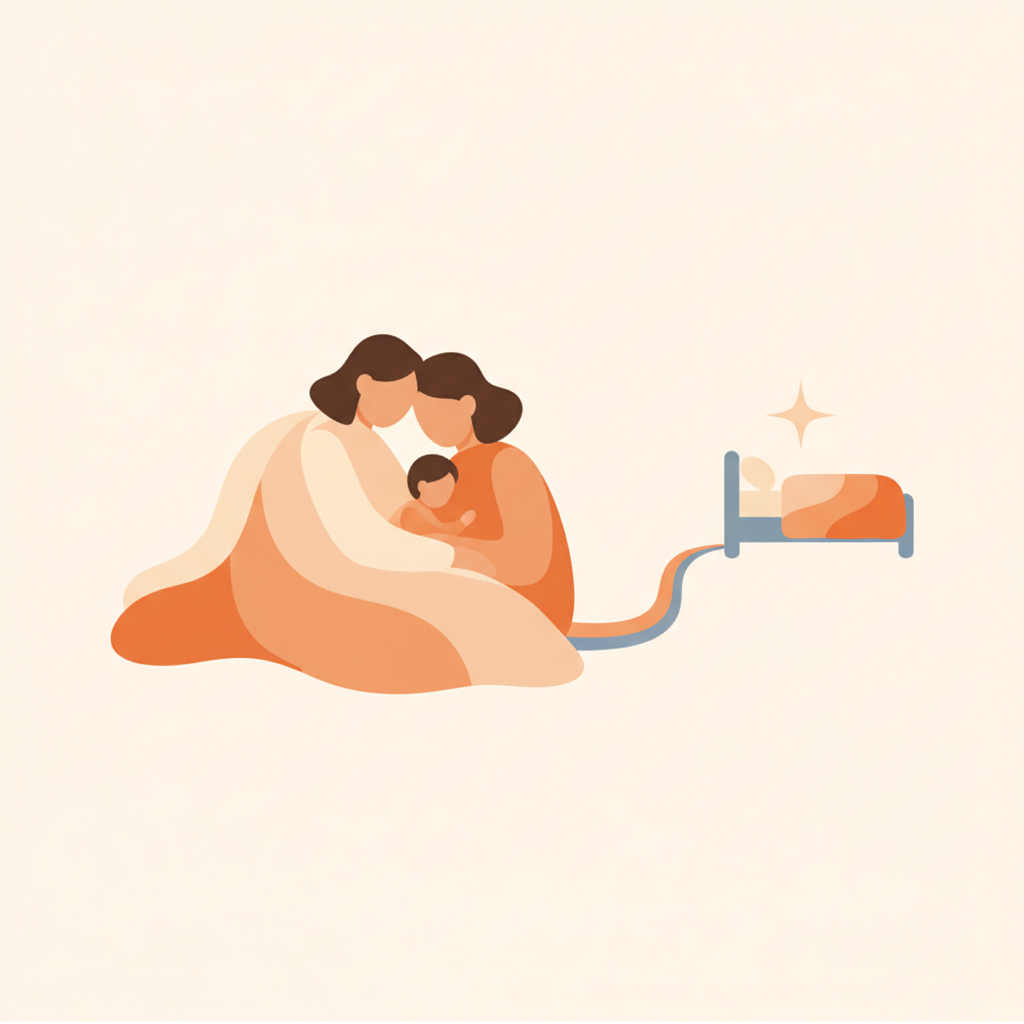
Co-sleeping refers to sleeping on the same surface or on adjacent surfaces with your baby. There is an important distinction between bed-sharing (same bed) and room-sharing with a bedside bassinet (sometimes called a co-sleeper crib). This practice, which has been the norm in most cultures throughout history, generates intense debate in modern pediatrics. In this guide we present the evidence without judgment, so each family can make an informed decision.
What Does the Science Say About Co-Sleeping?
Positions vary across institutions. The American Academy of Pediatrics (AAP) advises against bed-sharing but recommends room-sharing for at least the first 6 months. UNICEF and the WHO acknowledge that co-sleeping is a widespread and safe practice when certain conditions are met.
Dr. James McKenna, director of the Mother-Baby Behavioral Sleep Laboratory at the University of Notre Dame, has spent decades researching the biology of co-sleeping. His work shows that when a breastfeeding mother shares a bed with her infant on a firm surface, they naturally synchronize their breathing and sleep cycles — a phenomenon he calls "breastsleeping."
The Academy of Breastfeeding Medicine recognizes that bed-sharing facilitates nighttime breastfeeding, reduces infant crying, and improves maternal sleep quality, provided it is practiced safely.
What Are the Benefits of Co-Sleeping?
| Benefit |
Explanation |
| Facilitates breastfeeding |
Mother nurses without fully waking; milk supply is maintained |
| Regulates baby's temperature |
Skin-to-skin contact stabilizes body temperature |
| Synchronizes sleep cycles |
Mother and baby align their light and deep sleep phases |
| Reduces nighttime crying |
Baby feels secure and cries less when waking |
| Promotes secure attachment |
Nighttime contact strengthens the emotional bond |
| More rest for the mother |
Nursing lying down allows more total hours of sleep |
What Are the Risks of Co-Sleeping?
The primary risk associated with bed-sharing is Sudden Infant Death Syndrome (SIDS) and accidental suffocation. However, research shows that these risks concentrate in specific situations:
- Premature or low-birth-weight baby
- Parents who smoke (even if they don't smoke in the bedroom)
- Alcohol, drug, or sedative medication use
- Soft surfaces (sofa, waterbed, cushions, heavy duvets)
- Bed shared with other children or pets
- Formula-fed babies (a breastfeeding mother naturally adopts a protective position that doesn't occur with bottle-feeding)
When none of these risk factors are present, the Pediatric Sleep Council indicates that the SIDS risk for a breastfeeding mother bed-sharing on a firm surface is comparable to that of a crib.
How to Practice Co-Sleeping Safely
The 7 Golden Rules of Safe Co-Sleeping
-
Firm, flat mattress. Never on a sofa, armchair, recliner, or soft mattress. The safest surface is a firm spring or foam mattress on a solid base.
-
No pillows or duvets near the baby. Use a fitted sheet and a light blanket covering only the mother to the waist. The baby can wear a sleep sack.
-
Baby on their back. The supine position is the safest, just as in a crib.
-
No smoking. Neither mother, father, nor anyone who sleeps in the bed. Tobacco multiplies the SIDS risk even without smoking in the room.
-
Zero alcohol, drugs, or sedative medication. Any substance that alters an adult's level of consciousness is a contraindication for co-sleeping.
-
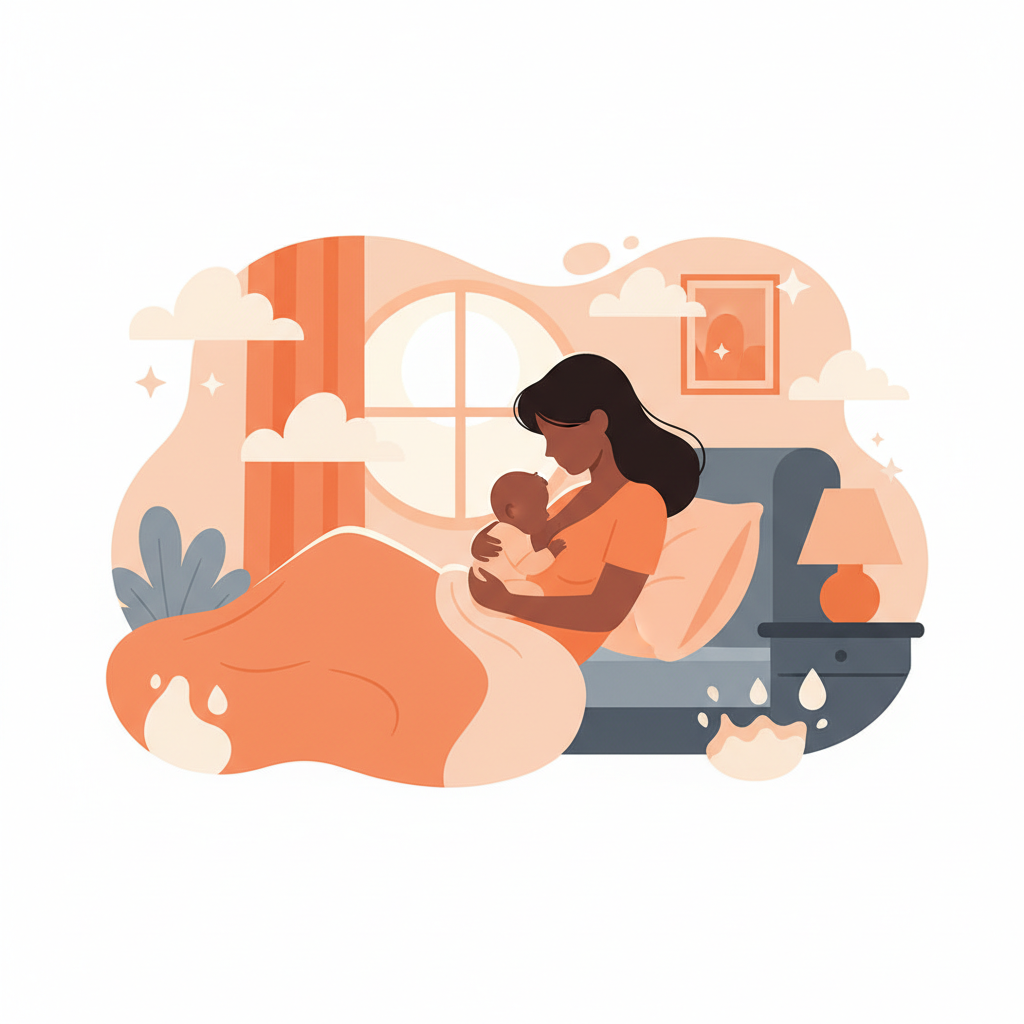
Breastfeeding mother in protective position. A nursing mother instinctively adopts the "C" position: on her side, with the lower arm above the baby's head and knees bent below. This position creates a safe space.
-
No other children or pets in the bed. Only the adult caregivers should sleep beside the baby.
Alternative: The Bedside Bassinet
If you prefer the peace of mind of an independent sleep surface but the closeness of co-sleeping, a bedside bassinet (attached to the bed with the side barrier removed) offers the best of both worlds: proximity for breastfeeding and a separate surface for the baby.
How to Decide If Co-Sleeping Is Right for Your Family
Consider these questions:
- Do both parents agree? (If one sleeps anxiously, nobody rests.)
- Are all safety rules met?
- Is the decision based on information or social pressure?
- Does co-sleeping improve the family's rest or make it worse?
There is no universal answer. Some families co-sleep during the first months and then transition to a crib. Others maintain co-sleeping for years. What matters is that it's an informed, consensual, and revisable decision.
At LetsShine.app, the AI can help you talk through this decision when both parents have different viewpoints, facilitating a constructive conversation that considers everyone's needs.
When to Stop Co-Sleeping
There is no "correct" age to stop co-sleeping. Many families transition between 12 and 36 months, but others continue longer. In most cultures, children sleep with their parents until age 3-5, and research shows this does not create dependency — children become independent when they're ready.
Frequently Asked Questions
Does co-sleeping create dependency?
There is no evidence that co-sleeping generates long-term dependency. Studies show that children who co-slept become independent at the same age as those who slept in their own bed from the start.
Can we co-sleep with twins?
Yes, but extra precautions are needed: a wide bed, babies must be separated (one on each side of the mother, never together), and independent bedside bassinets for each baby are recommended.
Does co-sleeping affect the couple's intimacy?
This is a legitimate concern. Couple intimacy is not limited to the bed or the bedroom. Many co-sleeping couples maintain an active intimate life by adapting the timing and the space. Open communication on this topic is essential.
Can I co-sleep if I take medication?
It depends on the type of medication. If the medication causes drowsiness or alters your level of consciousness, bed-sharing is not safe. Consult your doctor and consider a bedside bassinet as a safe alternative.
Your relationships can improve. Today.
Start free in 2 minutes. No credit card, no commitment. Just you, the people you care about, and an AI that helps you understand each other.
Start free now