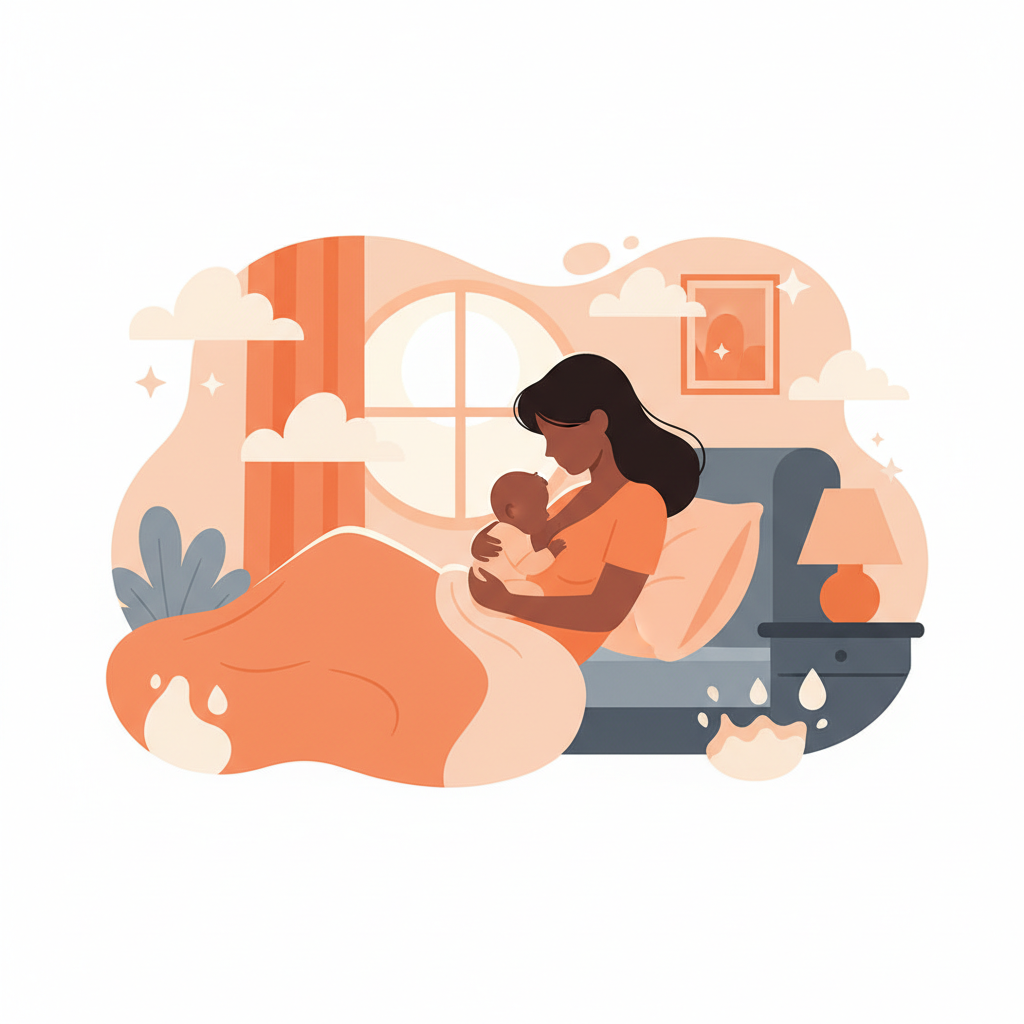
The relationship between baby sleep and breastfeeding is one of the issues that concerns families most during the first year of life. Nighttime nursing serves nutritional, immunological, and emotional functions that go far beyond feeding. Understanding this relationship allows you to make informed decisions about when and how to make changes — without guilt or pressure.
Why Do Breastfed Babies Wake More Often?
Breastfed babies wake more frequently than formula-fed babies, and this has a biological explanation — it's not a flaw of breastfeeding:
| Factor |
Explanation |
| Faster digestion |
Breast milk digests in 1.5-2 hours (formula takes 3-4 hours) |
| Lighter sleep cycles |
Breastfeeding is associated with more REM sleep, which protects against SIDS |
| Variable composition |
Nighttime milk contains tryptophan and melatonin, which promote sleep |
| Need for proximity |
The baby smells the mother and seeks the breast as a source of comfort |
| Prolactin production |
Levels are highest at night; nighttime feeds maintain milk supply |
Pediatric researchers explain that nighttime wakings in breastfed babies aren't a problem — they're a feature. Breast milk is designed to be consumed frequently, including at night.
How Many Night Feeds Are Normal by Age?
The Pediatric Sleep Council provides these general guidelines, though every baby is different:
| Age |
Expected night feeds |
Notes |
| 0-3 months |
2-4 |
Newborns need to eat every 2-3 hours |
| 4-6 months |
1-3 |
The 4-month regression may temporarily increase them |
| 7-9 months |
1-2 |
Many babies can manage a long stretch of 5-6 hours |
| 10-12 months |
0-1 |
Some babies still need 1 feed; others don't |
| 12-18 months |
0 (nutritionally) |
Night feeds at this age are more emotional than nutritional |
It's important to note that "normal" and "expected" don't mean "mandatory." There are 6-month-olds who sleep 6 straight hours and 12-month-olds who still feed twice at night. Both fall within the range of normal.
Does Breastfeeding Prevent Good Sleep?
No. This is one of the most widespread and most harmful beliefs. The evidence shows that:
- Breastfeeding mothers sleep more total hours than those who bottle-feed, because nursing lying down allows them to not fully wake up.
- Nighttime milk contains melatonin and nucleotides that promote the baby's sleep.
- Physical contact during nighttime feeding reduces the baby's cortisol and helps them fall back asleep quickly.
The AAP emphasizes that "the problem isn't nighttime breastfeeding, but the unrealistic expectation that a baby should sleep 12 straight hours. That expectation generates frustration in parents — not breastfeeding."
When and How to Night Wean
When Is the Right Time?
There's no mandatory age, but most professionals agree on these indicators:
- The baby is at least 6-9 months old and at an adequate weight.
- They eat well during the day (complementary foods are established).
- Night feeds are very brief (comfort, not actual feeding).
- The mother feels ready to make the change.
Gradual Night Weaning Method
Week 1: Identify how many feeds your baby takes and at what time. Record for 5-7 nights.
Week 2: Choose the feed you want to eliminate first (usually the one with the least nutritional importance). When the baby wakes at that time, try to soothe them without offering the breast: caresses, whispers, rocking.
Week 3: Once you've eliminated the first feed, repeat with the next one. Proceed at a pace that works for the baby and your energy level.
Week 4 onward: Continue reducing until you maintain only the feed(s) you both want to keep. There's no obligation to eliminate them all.
Night weaning doesn't have to be total. Many mothers keep one feed (the 5-6 a.m. one, for example) for months because it's comfortable and comforting for the baby.
Can the Father/Partner Help at Night?
Yes, and it's highly recommended. When the father or partner handles nighttime awakenings, the baby can learn to be soothed without the breast. This works especially well when done gradually:
- First, the partner handles wakings that aren't hunger-related.
- Then, progressively, also the ones that used to be feeds.
- The baby learns they can feel safe with both caregivers.
At LetsShine.app, the AI can help couples organize their nighttime schedule, especially when exhaustion creates tension. At 4 a.m., a support tool that reminds you this is temporary and helps you manage frustration can make all the difference.
What About Nighttime Nutrition?
Nighttime breast milk has a different composition from daytime milk: more fat, more tryptophan (a precursor to serotonin and melatonin), and more nucleotides. These components help the baby sleep. Ironically, the milk that "wakes them up" is also what helps them fall back asleep.
After 12 months, if the child eats well during the day (breakfast, lunch, snack, dinner), night feeds don't provide significant nutritional benefit. Their function becomes primarily emotional — which doesn't make them any less valid.
Frequently Asked Questions
If I stop breastfeeding at night, will my baby sleep through?
Not necessarily. Many parents stop nighttime breastfeeding expecting the baby to sleep all night, only to discover that the awakenings continue. Night wakings are multifactorial and don't depend solely on feeding.
Can I night wean while continuing daytime breastfeeding?
Absolutely. Night weaning and total weaning are independent processes. Many mothers eliminate night feeds and continue breastfeeding during the day for months or years.
Does a cereal bottle before bed help baby sleep longer?
The evidence does not support this practice. Studies show that babies who consume cereal before bed don't sleep significantly longer than those who don't. Additionally, adding cereal to a bottle increases the risk of choking and obesity.
How do I know if my baby wakes from hunger or habit?
If the feed lasts more than 5-10 minutes and the baby actively swallows, they're probably hungry. If they suckle for a few seconds and fall asleep immediately, they're more likely seeking comfort. Both needs are legitimate.
Your relationships can improve. Today.
Start free in 2 minutes. No credit card, no commitment. Just you, the people you care about, and an AI that helps you understand each other.
Start free now