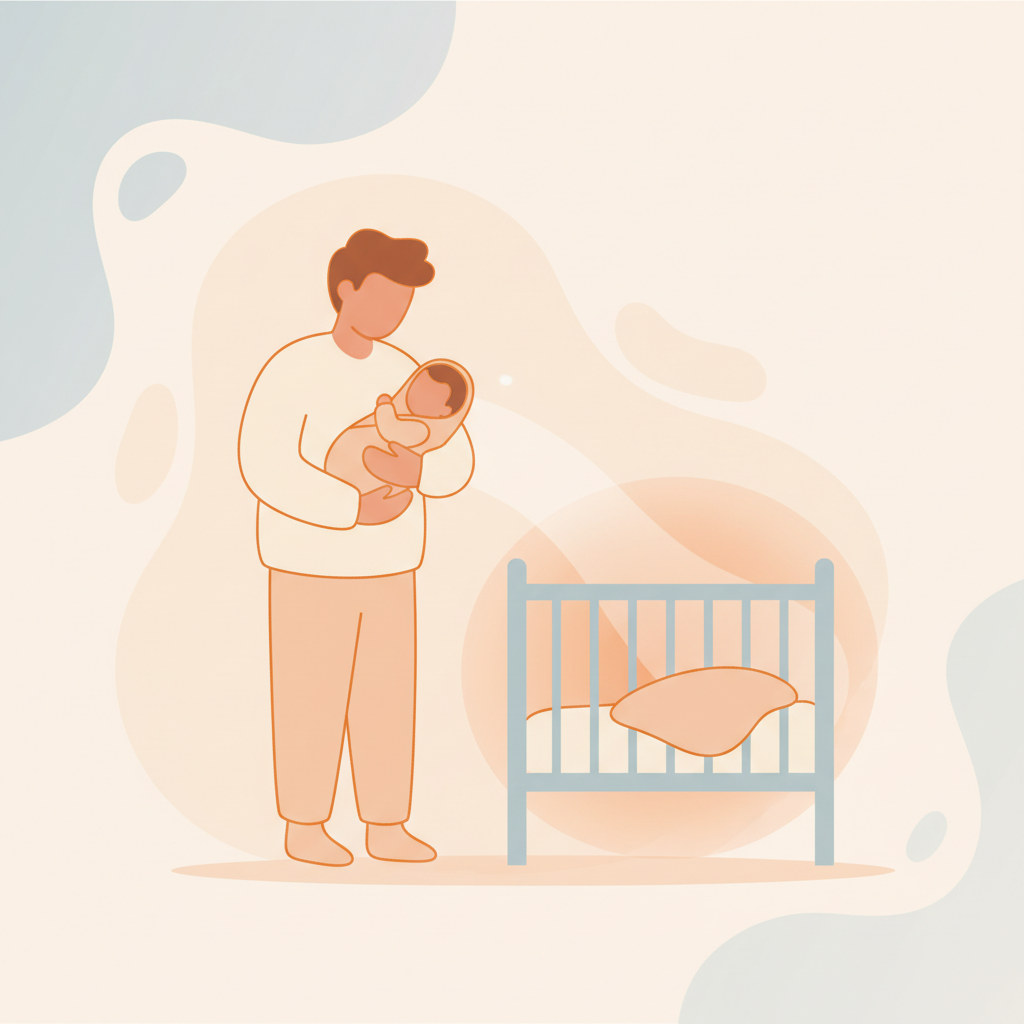
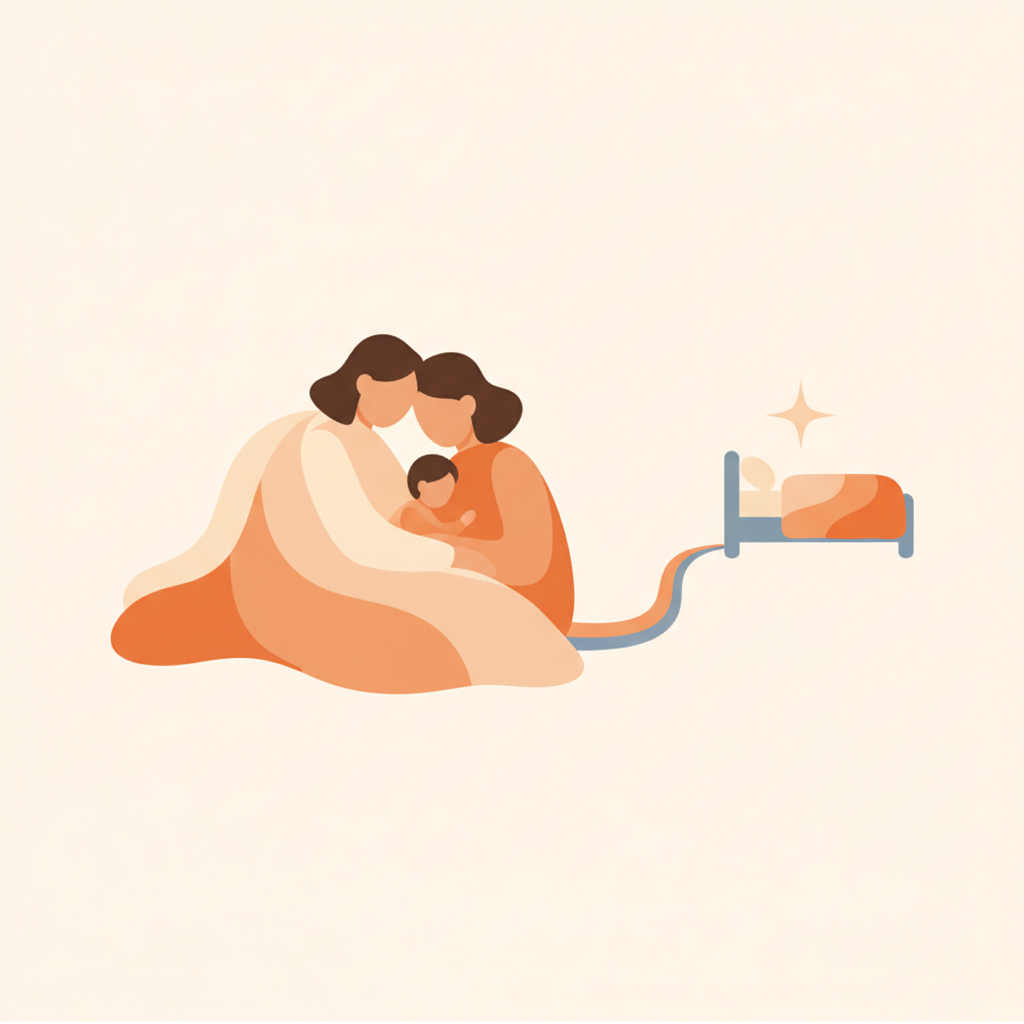
The need to fall asleep in someone's arms is one of the most universal behaviors of early infancy. It responds to a deep biological instinct: the human baby is born immature and depends completely on physical contact with their caregiver to regulate temperature, heart rate, and the nervous system. When a baby only falls asleep when held, they're not being "difficult" or developing a "bad habit" — they're expressing a genuine need for contact and security.
Why Does My Baby Only Fall Asleep When Held?
The Evolutionary Explanation
For 99% of human history, a baby separated from their mother would die. Crying when placed on a cold, contact-free surface is a survival mechanism encoded in DNA: "Don't leave me alone, I'll die." Obviously, a 21st-century baby won't die in their crib, but their primitive brain doesn't know that.
The Neurological Explanation
Physical contact activates the baby's parasympathetic nervous system (the "calm and connect" system). The caregiver's arms regulate the baby's heart rate, cortisol levels, and body temperature. When placed in the crib, the baby loses that external regulation and their nervous system activates — they wake up.
Contributing Factors
| Factor |
Explanation |
| Age |
Newborns (0-3 months) need the most contact; this is the "fourth trimester" |
| Moro reflex |
When placed down, the falling sensation triggers this startle reflex |
| Temperature |
Arms keep baby warm; the crib feels cold |
| Sound and motion |
In arms there's a heartbeat, breathing, rocking. The crib is silent and still |
| Scent |
The baby smells their mother; the crib smells like nothing familiar |
Is This Normal? Until What Age?
The Pediatric Sleep Council indicates that the need for contact to sleep is completely normal and expected during the first 3-4 months of life. From 4-6 months onward, most babies begin to be able to fall asleep with less direct physical contact, though the pace is individual.
There is no expiration date on this need. A 2-month-old who sleeps alone isn't "well-trained" — they simply have a temperament that allows it. And an 8-month-old who needs arms has a temperament that requires it. Both are normal.
Real Need or Habit? An Important Distinction
The difference between "need" and "habit" depends on age and context:
| Age |
Need or habit? |
Recommendation |
| 0-3 months |
Biological need |
Always respond. You cannot spoil a newborn |
| 4-6 months |
Need that can begin to be modulated |
Introduce gradual changes if you wish |
| 7-12 months |
Part need, part sleep association |
Respectful transitions are possible |
| 12+ months |
Primarily sleep association |
If you want to change it, it's a good time |
Even when it's a "habit," a habit isn't a defect. Every adult has sleep habits: a pillow, a position, darkness. The baby's habit is having someone nearby. Is that really so terrible?
How to Transition from Arms to Crib
The 5-Step Method
Step 1: Warm the crib. Place a warm (not hot) water bottle in the crib a few minutes before putting baby down. Remove it before laying them in. The temperature difference between warm arms and a cold crib is the most common cause of waking.
Step 2: Swaddle. Until 3-4 months, wrapping the baby snugly in a muslin reduces the Moro reflex and simulates the containment of being held. From 4 months onward, use a sleep sack with free arms.
Step 3: Put them down drowsy but awake. The most common mistake is waiting until they're deeply asleep. In that phase, any change of surface wakes them. Try placing them in the crib when drowsy but still awake: their eyes are closing but they're still moving. It's harder, but the learning is faster.
Step 4: Maintain contact after putting them down. Don't remove your hands immediately. Place one hand on their chest and another on their head for 2-3 minutes. Let them feel your presence while they adjust to the new surface.
Step 5: Use background sound. White noise (hairdryer, vacuum, rain) or womb sounds simulate the acoustic environment of being held (where they could hear your heart and breathing). Keep the sound playing all night at low volume.
If Baby Wakes When Put Down
Don't be frustrated. It's absolutely normal for the first attempts (or the first weeks) to result in waking when they touch the crib. Options:
- Pick them up again, soothe them, and try again.
- If you've tried 3-4 times, hold them for this nap and try the crib at the next one. There's no rush.
- Alternate: one nap in arms, the next attempting the crib. Progressively, the crib will be more accepted.
Alternatives to "Arms Only"
If you want to free your arms without baby losing the feeling of contact, these options serve as an intermediate transition:
- Ergonomic baby wearing: Baby sleeps against you while your hands are free. It's the closest thing to arms without being arms.
- Bouncer or rocker: The movement and containment simulate arms. Use as a transition, not a permanent solution.
- Bedside bassinet: Attached to your bed, the baby senses your scent and warmth without literally being in your arms.
How Does This Affect Your Relationship?
It's common for one parent to want to continue with arms and the other to want to transition. This disagreement creates conflicts that are especially acute at 3 a.m. when patience has run out.
At LetsShine.app, the AI can help you have that conversation during a calm moment, without the exhaustion of the early morning, exploring what each person needs and finding a common approach.
Experts advise: "Don't turn the transition into a 'who's right' argument. Talking about what each person needs (more rest, more freedom, more contact) is more productive than debating methods."
Frequently Asked Questions
Am I spoiling my baby by letting them sleep in my arms?
No. Attachment science demonstrates that responding to a baby's needs (including the need for contact) doesn't create dependency — it creates security. A baby whose needs are consistently met becomes independent sooner and with more confidence.
When should I worry if my baby only sleeps when held?
If your baby is older than 9-12 months, only sleeps when held, and this is causing exhaustion that affects your physical or mental health, it's a good time to seek help: a gentle sleep consultant, your pediatrician, or tools like LetsShine.app.
Does baby wearing count as "sleeping in arms"?
Yes and no. Baby wearing provides contact similar to arms but frees your hands and reduces postural strain. Many professionals consider it an excellent intermediate option, especially during the first 4-6 months.
If my baby falls asleep in my arms, will they sleep worse at night?
Not necessarily. The way a baby falls asleep (arms, breast, crib) doesn't determine nighttime sleep quality. What does matter is that if the baby always falls asleep in arms, they'll need arms each time they wake between sleep cycles. Teaching them to fall asleep in the crib allows them to link cycles independently.
Your relationships can improve. Today.
Start free in 2 minutes. No credit card, no commitment. Just you, the people you care about, and an AI that helps you understand each other.
Start free now