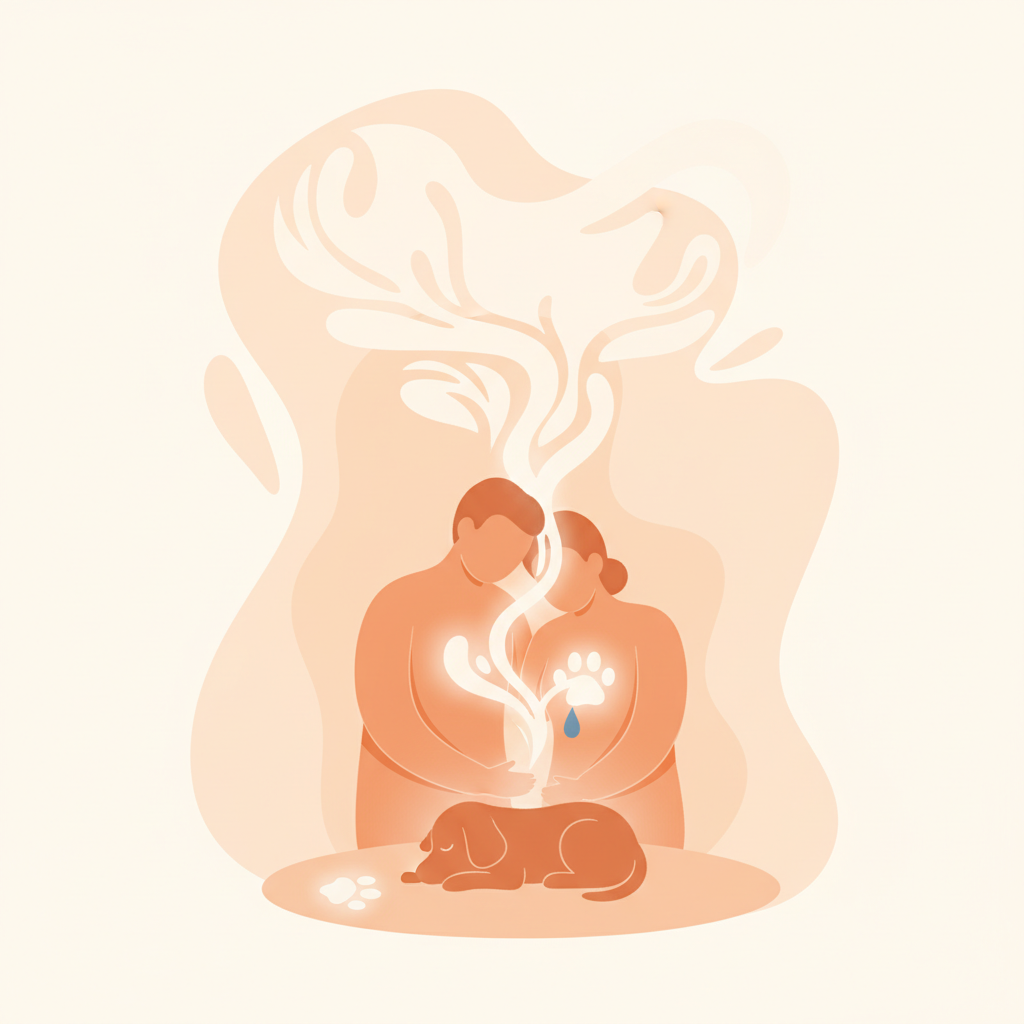
If you have ever lost a pet and been told "it was just an animal," you know the particular sting of having your grief dismissed by the very people who should be supporting you. The truth, backed by decades of research into the human-animal bond, is that losing a pet is a genuine bereavement — one that can be as intense as losing a close friend or family member, and one that deserves to be treated with the same respect.
Important notice: This article is informational. If your grief over a pet's death feels overwhelming, a therapist who understands animal bereavement can help. Your pain is valid.
Quick Summary
| Aspect |
Detail |
| Is it real grief? |
Yes — research confirms it matches human bereavement patterns |
| Why it hurts so much |
Unconditional attachment, daily routines, physical presence |
| Main challenge |
Disenfranchised grief: social dismissal of the loss |
| Key researchers |
Kenneth Doka (disenfranchised grief), John Archer, Sandra Barker |
| Grief duration |
Weeks to months; sometimes longer for people living alone |
| Euthanasia dimension |
Adds guilt and decision-weight to the grief |
The Science Behind the Bond
John Bowlby's attachment theory, while originally developed for human relationships, has been extended by researchers like John Archer and Sandra Barker to the human-animal bond. Studies consistently show that people form genuine attachment bonds with their pets — bonds characterised by proximity-seeking, separation distress, safe-haven behaviour, and secure-base effects. In other words, pets fulfil the same core attachment functions as human relationships.
Neuroimaging research supports this. Studies at Massachusetts General Hospital found that when people view photos of their pets, the same brain regions activate as when viewing photos of their children — including areas associated with emotion, reward, and social cognition. The brain does not distinguish between species when it comes to love.
The daily physical presence of a pet reinforces the bond in ways that human relationships sometimes cannot. A dog greets you at the door every single day. A cat sleeps on your chest every night. This constant, predictable, non-judgmental presence creates a bodily rhythm of attachment that, when broken by death, produces a physical as well as emotional void.
Why Society Gets It Wrong
Kenneth Doka's concept of disenfranchised grief — grief that is not socially acknowledged or validated — applies powerfully to pet loss. Society operates on an implicit hierarchy of acceptable losses: spouse first, then parent, child, sibling, friend. Pets are either absent from this hierarchy or placed so low that grieving them openly invites dismissal or ridicule.
Common dismissive responses — "It was just a dog," "You can get another one," "At least it wasn't a person" — communicate that the mourner's pain is disproportionate, inappropriate, or trivial. This social invalidation forces the bereaved person to grieve in silence, which research consistently associates with prolonged and complicated grief.
The disenfranchisement is structural too: there is no bereavement leave for pet loss, no culturally established funeral rites, no condolence protocol. The mourner must return to work the next day and pretend nothing happened, carrying a grief that occupies every corner of their home.
The Euthanasia Dimension
For many pet owners, the grief is compounded by the decision to euthanise — a burden that has no parallel in most human bereavements. Choosing to end your pet's suffering is an act of love, but it can feel like an act of betrayal. The guilt can be paralysing: "Did I do it too soon? Did I wait too long? Did they know I was there?"
Research by veterinary psychologist Mary Stewart shows that the decision-making burden of euthanasia significantly increases the complexity of grief. The owner must weigh quality of life, veterinary advice, financial constraints, and their own readiness — all while watching an animal they love deteriorate. The moment of death is not passive (as in many human bereavements) but active, chosen, and witnessed.
Processing this guilt requires the same compassion you showed in making the decision. You did not end a life — you ended suffering. These are profoundly different things.
Who Grieves Hardest?
Research shows that certain populations are especially vulnerable to intense pet loss grief:
- People living alone for whom the pet was the primary daily companion and the main source of physical touch and routine.
- Older adults who may have limited social networks and for whom the pet represented the last living connection to a deceased partner.
- Children who may be experiencing death for the first time through their pet, and who need honest, age-appropriate support.
- People with mental health conditions for whom the pet served a therapeutic or emotional-support function.
For all these groups, the loss of a pet is not "less than" — it is structurally significant in ways that outsiders may not see.
How to Grieve Your Pet with Dignity
1. Name your grief. Say "I am in mourning" and mean it. Do not minimise your own experience to make others comfortable.
2. Create a ritual. Bury your pet, hold a small ceremony, plant something in their memory, write them a letter. Rituals give grief a shape and a place. Neimeyer's meaning-making research supports the healing power of symbolic acts.
3. Protect your home from the void. The empty bed, the silent door, the untouched food bowl — these are physical reminders of absence. Some people need to put things away immediately; others need to leave them for a while. Neither approach is wrong.
4. Seek understanding listeners. If your immediate circle does not understand, find people who do — pet loss support groups, online communities, or a therapist who validates animal bereavement. You deserve to grieve in the open.
5. Be cautious with replacement. Getting a new pet immediately can sometimes be a grief avoidance strategy rather than a genuine readiness for a new bond. Give yourself time. The right moment to welcome a new animal is when you can see them as a new relationship, not a replacement for the old one.
Frequently Asked Questions
How long does pet loss grief last?
It varies widely. Some people experience acute grief for weeks; others feel it for months. Studies show an average of about 6–12 months for significant reduction in distress, but there is no "correct" timeline. If your grief persists and impairs daily functioning, seek professional support.
Should I get another pet right away?
There is no universal answer. Some people find that a new pet brings comfort relatively quickly; others need extended time. The key is ensuring that you are ready for a new relationship rather than seeking a grief anaesthetic. A new pet is not a replacement — they are a new individual.
How do I explain my pet's death to my child?
Use honest, simple language: "Buddy's body stopped working and he died. He is not coming back, and it's okay to be sad." Avoid euphemisms like "put to sleep" (which can create fear around sleeping) or "ran away" (which creates false hope). Allow your child to grieve openly and answer their questions truthfully.
Is it normal to grieve a pet more than a relative?
It happens, and it does not make you a bad person. The intensity of grief correlates with the closeness of the daily bond, not with species or social expectations. If your cat was your closest daily companion and your distant uncle was someone you saw once a year, it is neurologically predictable that you would grieve the cat more intensely.
Can losing a pet trigger grief for previous human losses?
Yes. Pet loss frequently opens the door to previously unprocessed grief. The death of a pet can reactivate mourning for a parent, a partner, or a friend — particularly if the pet was connected to that person (e.g., a dog you shared with a deceased spouse). This layered grief is normal and deserves attention.