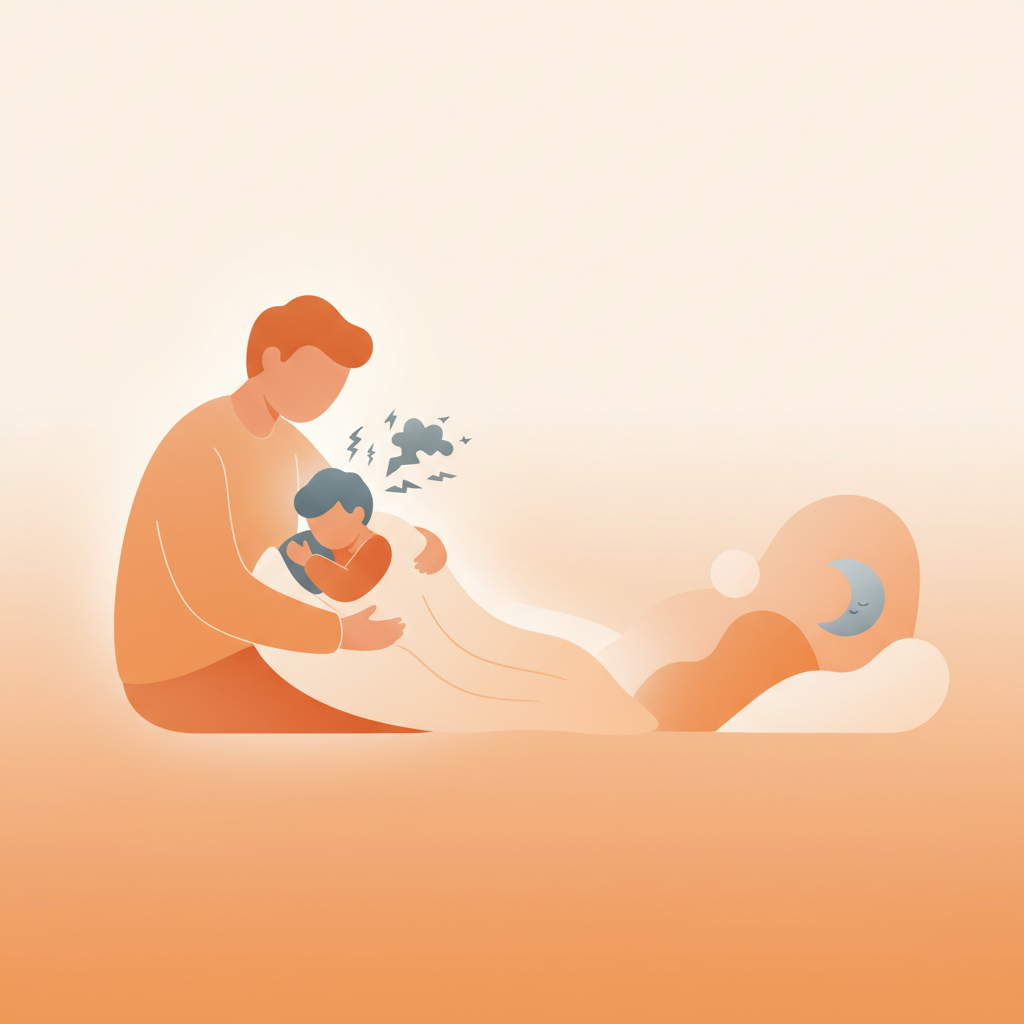
Nightmares and night terrors are two sleep phenomena in children that are frequently confused but have entirely different causes, characteristics, and approaches. Nightmares are frightening dreams from which the child wakes up and remembers with distress. Night terrors are episodes of partial brain activation during deep sleep in which the child appears awake but isn't, and remembers nothing the next day.
What Exactly Is the Difference?
| Characteristic |
Nightmares |
Night Terrors |
| Sleep phase |
REM (light sleep) |
N3/N4 (deep sleep) |
| Time of night |
Second half (early morning) |
First half (1-3 hours after falling asleep) |
| Common age |
3-6 years (can start at 2) |
18 months - 6 years |
| Does the child wake? |
Yes, fully |
No, appears awake but is asleep |
| Remembers the episode? |
Yes, with detail |
No, complete amnesia |
| Child's reaction |
Seeks comfort, wants parents |
May reject contact, doesn't recognize parents |
| Duration |
Variable (fear persists) |
5-30 minutes, then sleeps peacefully |
| Frequency |
Sporadic or seasonal |
Can be recurrent (same time each night) |
| Eyes open? |
Yes (is awake) |
May be open but with a blank stare |
Why Do Nightmares Happen?
Nightmares are a normal part of a child's emotional development. The infant brain processes during REM sleep the experiences, emotions, and fears of the day. When those emotions are intense (a scare, a movie, a conflict at daycare), the brain represents them as a frightening dream.
Nightmares are more frequent when:
- The child is going through a major change (new sibling, moving, starting school).
- They've seen age-inappropriate content on screens.
- They have daytime anxiety or stress.
- They are sick or have a fever.
Parents can take comfort: occasional nightmares don't indicate trauma or a psychological problem. They are a sign that the brain is working, processing, and maturing.
How to Respond to a Nightmare
- Go to them quickly. The child is genuinely scared. Your presence is the best medicine.
- Turn on a dim light. Help them see that they're in their room, that everything is real and safe.
- Hug them and validate their feelings. "You had a scary dream. It's normal to feel scared. Mommy/Daddy is here." Don't say "it's nothing" (to them, it is something).
- Don't ask them to recount the dream right away. At night, reliving the dream can intensify the fear. Discuss it in the morning if they want to.
- Stay until they calm down. They may need a few minutes or for you to stay until they fall back asleep.
- The next day, if they want, talk about the dream. Invent a different ending together. This technique (rescripting) is highly effective.
Why Do Night Terrors Happen?
Night terrors occur during the transition between two deep sleep phases. The brain gets "stuck" between sleep and wakefulness: the body activates (screaming, movement, sweating, rapid heart rate) but consciousness remains asleep.
The Pediatric Sleep Council notes that night terrors have a strong genetic component and are associated with:
- Sleep deprivation or excessive tiredness.
- Irregular schedules.
- Fever or illness.
- Sleep apnea.
- Emotional stress.
Night terrors are more frightening for the parents than for the child. The child does not suffer during the episode — they're not conscious. It's the parent watching who suffers.
How to Respond to a Night Terror
- Don't try to wake them. Waking a child during a night terror will disorient them and may prolong the episode.
- Don't pick them up (if they resist). Many children reject contact during the episode. Respect that. Stay nearby to prevent injury.
- Secure the environment. Remove dangerous objects, put barriers near stairs. The child may move abruptly.
- Wait. The episode typically lasts 5 to 30 minutes. Then the child relaxes and continues sleeping as if nothing happened.
- Don't discuss it with the child the next day (unless they ask). They remember nothing, and bringing it up may generate anxiety.
When to Consult the Pediatrician
- Night terrors occur several times a week for more than a month.
- The child injures themselves during episodes.
- Episodes last longer than 30 minutes.
- They also show symptoms of sleep apnea (loud snoring, breathing pauses).
- Nightmares are so frequent the child is afraid to go to sleep.
How to Prevent Nightmares and Night Terrors
| Strategy |
Nightmares |
Night Terrors |
| Consistent bedtime routine |
Yes |
Yes (essential) |
| Regular schedules |
Helps |
Very effective |
| Avoid excessive tiredness |
Helps |
Key (the main cause) |
| Limit screens before bed |
Very effective |
No direct influence |
| Talk about the day's emotions |
Very effective |
Moderately helpful |
| Scheduled awakening* |
Not applicable |
Very effective |
*A scheduled awakening involves gently rousing the child 15-30 minutes before the usual night terror time, breaking the deep sleep cycle. This is repeated for 1-2 weeks.
If bedtime becomes a source of anxiety for the whole family, LetsShine.app can help you manage nighttime stress. The AI is available when you need it most — during those early morning hours when your child's fear (or your own) feels overwhelming.
Frequently Asked Questions
Can nightmares indicate a psychological problem?
Occasional nightmares are completely normal in childhood. They're only a concern if they're very frequent (several times per week), if the content is repetitive and specific (which could indicate a traumatic experience), or if the child develops an intense fear of sleeping.
Can my 2-year-old have nightmares?
Yes. Although they're more common from age 3 onward, 2-year-olds already have REM sleep and can have unpleasant dreams. At that age they usually can't describe what they dreamed, but they wake up scared and seek comfort.
Do night terrors go away on their own?
In the vast majority of cases, yes. Night terrors typically disappear on their own between ages 6 and 8, when the nervous system matures. If they're very frequent or intense, the scheduled awakening technique is effective.
Are night terrors hereditary?
Yes, there is a significant genetic component. If one parent had night terrors or sleepwalking as a child, their child is more likely to experience them as well. They are manifestations of the same family of deep-sleep parasomnias.
Your relationships can improve. Today.
Start free in 2 minutes. No credit card, no commitment. Just you, the people you care about, and an AI that helps you understand each other.
Start free now