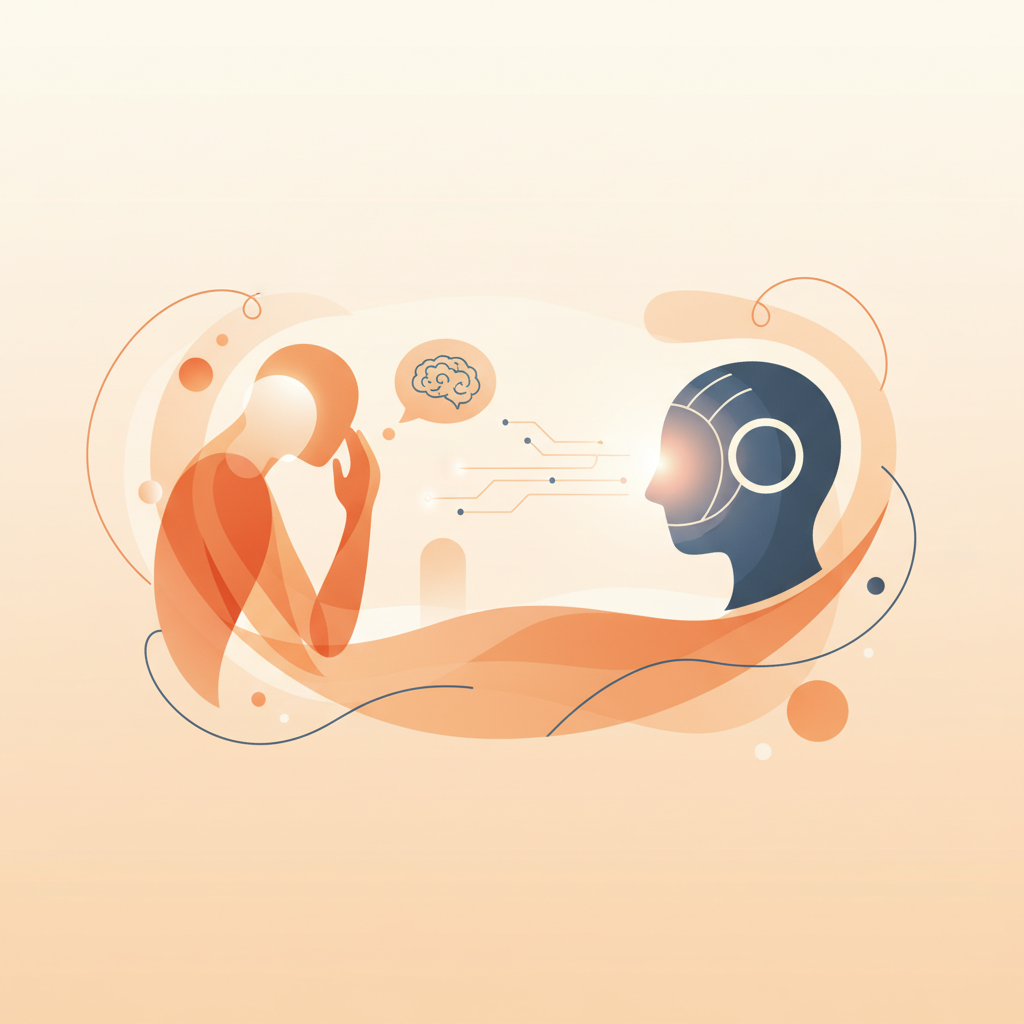
A mental health chatbot is an artificial intelligence programme designed to hold conversations about emotional wellbeing, offer stress, anxiety or sadness management techniques and, in the most advanced models, adapt its responses to each user's psychological profile. Since Woebot launched in 2017 as a Stanford project, these assistants have gone from technological curiosities to tools used by millions of people worldwide. The question many ask is not whether they work technically, but something deeper: can a machine really listen to you?
Leading Mental Health Chatbots in 2026
| Chatbot |
Approach |
AI |
Relationships focus |
Price |
| Woebot |
Individual CBT |
GPT-4 + proprietary model |
No |
Free |
| Wysa |
CBT + mindfulness |
Proprietary model |
No |
Freemium ($60/year) |
| Youper |
Emotional tracking |
Proprietary model |
No |
Freemium |
| Replika |
Emotional companionship |
GPT-4 |
Simulated |
Freemium |
| LetsShine.app |
Relationships + emotional archaeology |
Gemini Pro |
Yes (mediator) |
From $9/mo |
How Does a Mental Health Chatbot Work?
Most mental health chatbots are built on a combination of three technologies:
- Natural Language Processing (NLP): allows the chatbot to understand the text you write, identify the intention behind your words and detect emotional indicators.
- Large Language Models (LLM): generate coherent and contextualised responses. The most advanced chatbots use models like GPT-4 or Gemini Pro, fine-tuned with clinical data.
- Programmed therapeutic protocols: the interventions are not improvised. They are designed by teams of psychologists and follow protocols of cognitive-behavioural therapy, mindfulness or nonviolent communication.
When you tell a chatbot "I feel alone", the system does several things simultaneously: identifies the emotion (loneliness), assesses the intensity, checks your conversation history for context and selects the most appropriate intervention according to the programmed therapeutic protocol.
Can AI Really Listen?
This is where radical honesty is necessary.
What AI does when it "listens": it processes your text, identifies semantic patterns, classifies them according to trained emotional categories and generates a response that maximises the probability of being helpful according to its objective function. It does not "feel" empathy. It does not "understand" your pain in the phenomenological sense. It has no subjective experience.
What the user feels when AI "listens": relief. A sense of being understood. Reduction in rumination. Many users report that talking to a chatbot is easier than talking to a person, precisely because the machine does not judge, does not take offence, has no agenda of its own and is always available.
The paradox is revealing: AI does not listen in the philosophical sense, but the effect on the user can be genuinely therapeutic. The question then is not whether the machine "really listens", but whether the result — that the person feels heard — is sufficient to generate positive change.
What Does Science Say About Mental Health Chatbots?
The evidence is promising but nuanced:
- A 2023 meta-analysis in JAMA Network Open reviewed 15 controlled trials and concluded that CBT-based chatbots significantly reduce symptoms of anxiety (effect size: 0.64) and mild-to-moderate depression (0.53).
- A Stanford University study on Woebot showed a 28% reduction in depressive symptoms after two weeks of daily use.
- However, evidence for severe depression, bipolar disorder, PTSD or personality disorders is insufficient. In these cases, a chatbot is not a valid option as a primary intervention.
What Distinguishes a Generic Chatbot from One Specialised in Relationships?
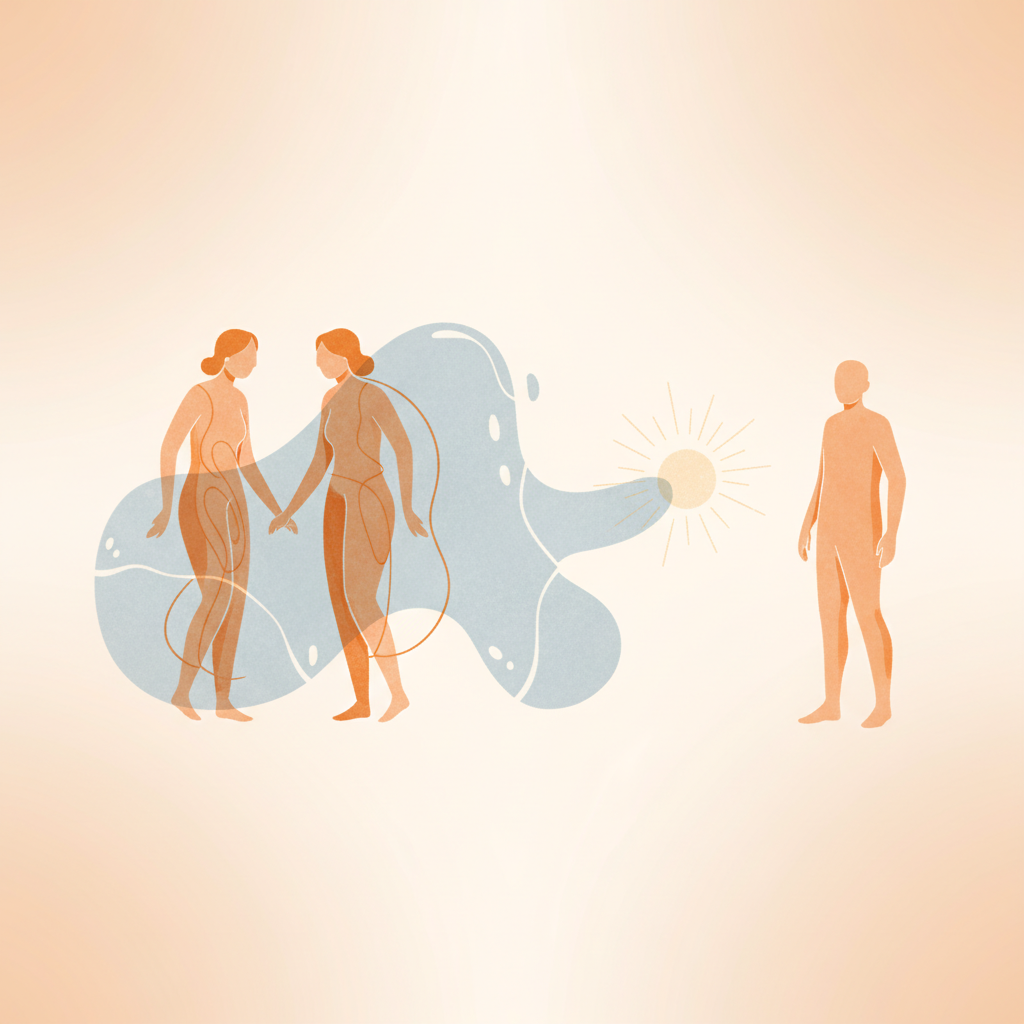
Most mental health chatbots are designed for individual use: one person talks to the AI about how they feel. The approach of LetsShine.app is different: it functions as a mediator between two people. It does not just listen to one person; it tries to understand the complete relational system — the dynamics, the cycles, the wounds of each person that are activated in their interaction with the other.
This distinction matters because relationship problems do not live inside one person. They live in the space between two. An individual chatbot can help you manage your anxiety after an argument, but an AI mediator like LetsShine.app can help both of you understand why that same argument repeats every time money comes up.
What Are the Risks of Using a Mental Health Chatbot?
- False sense of treatment: using a chatbot can give the impression of "doing something", delaying the search for needed professional help.
- Emotional dependence: some users of Replika have developed intense emotional attachments to their AI, raising questions about the health of those dynamics.
- Inadequate crisis responses: despite safety protocols, chatbots can fail in detecting suicidal risk or give inappropriate responses in emergency situations.
- Privacy: your emotional data is extremely sensitive. Always verify that the platform complies with data protection regulations and does not commercialise your information.
When to Use a Chatbot and When to Seek a Therapist
A chatbot is a good option when: you need a space to vent without judgement, you want to learn emotional management techniques, you are looking for support between therapy sessions, or your problem is mild and situational (work stress, a one-off argument with your partner, insomnia from anxiety).
Seek a human therapist when: symptoms persist for more than two weeks, significantly affect your daily life, include suicidal ideation or self-harm, or relate to unprocessed trauma from the past.
The best strategy is not choosing one or the other, but combining them: a professional for deep work and an AI tool for continuous support.
Frequently Asked Questions
Are mental health chatbots free?
Some offer a free version with limited features (Woebot, Wysa). Full versions typically cost between $5 and $20 per month. LetsShine.app has plans from $9 per month with full access to AI mediation.
Can a chatbot diagnose anxiety or depression?
No. A chatbot can identify indicators consistent with anxiety or depression and suggest you consult a professional, but it does not have the capacity to issue a clinical diagnosis.
Is what I tell a chatbot confidential?
It depends on the platform. Verify that it complies with data protection regulations, encrypts communications and does not share data with third parties. Read the privacy policy before sharing sensitive information.
Can a chatbot make my emotional state worse?
It is possible if the AI gives inadequate responses, if it delays the search for professional help or if it creates dependence. Use the chatbot as a complement, not a substitute, and if you notice you feel worse, stop using it and consult a professional.
Which mental health chatbot is best for relationship problems?
For individual issues (anxiety, stress), Woebot and Wysa have good evidence. For relationship problems, LetsShine.app is the most specialised option, as it functions as a mediator between both members of the couple, not just as individual support.
Your relationships can improve. Today.
Start free in 2 minutes. No credit card, no commitment. Just you, the people you care about, and an AI that helps you understand each other.
Start free now