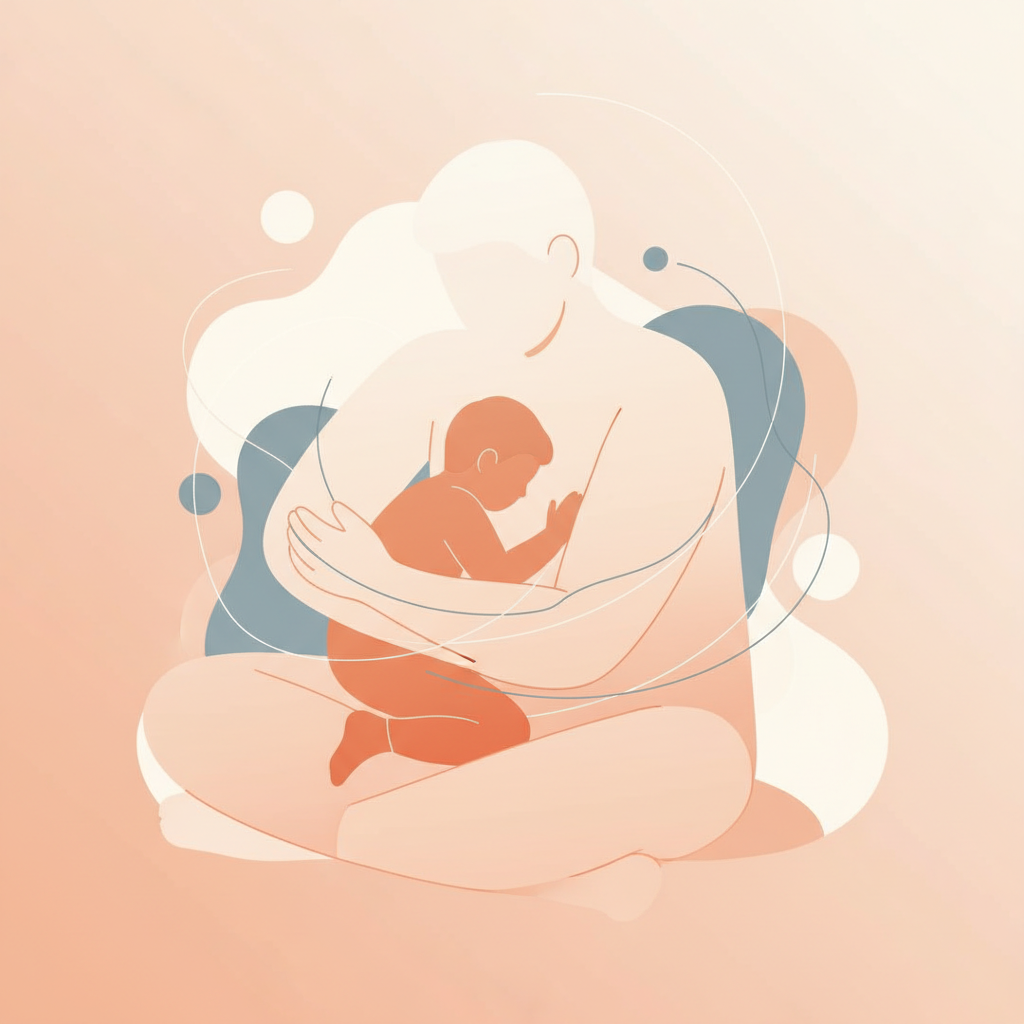
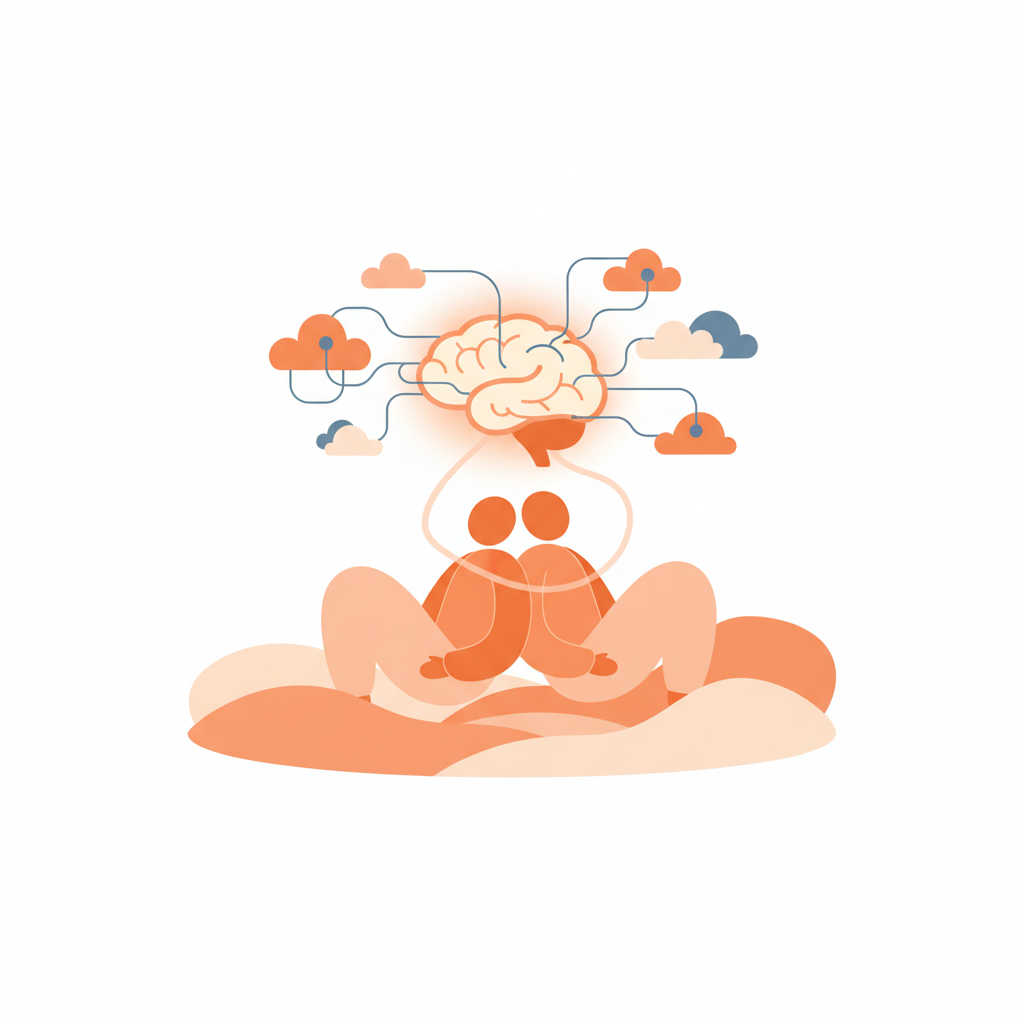
The inner child is a psychological concept referring to the set of emotions, needs, reactions, and behavioural patterns that formed in childhood and continue operating in adult life, generally outside awareness. Carl Gustav Jung was among the first to describe the archetype of the "divine child" as a representation of the potential for growth and vulnerability inherent in every human being. Eric Berne, creator of Transactional Analysis, formalised the idea by proposing that each person carries three "ego states": Parent, Adult, and Child. But it was John Bradshaw, in Homecoming: Reclaiming and Championing Your Inner Child (1990), who popularised the concept as a therapeutic tool. From John Bowlby's perspective, the inner child can be understood as the living manifestation of internal working models: the automatic emotional responses you learned in your relationship with your caregivers, which activate whenever a present situation resembles — consciously or unconsciously — a past one. Bessel van der Kolk complements this view by demonstrating that unresolved childhood experiences are encoded in the body, not only the mind, and that "the wounded child" is not a poetic metaphor but a neurobiological reality.
Overview: different "inner children" and their manifestations
| Inner child |
Formed when... |
Activates when... |
Typical reaction |
| The wounded child |
Basic needs went unmet |
Someone touches the original wound |
Rage, crying, panic, freeze |
| The adapted child |
Had to modify behaviour to receive love |
Feels pressured to please |
Submission, identity loss |
| The rebel child |
Rebelled against authority to protect themselves |
Perceives control or imposition |
Automatic opposition, defiance |
| The magical child |
Retained the capacity for wonder and creativity |
Feels safe and free |
Joy, spontaneity, play |
Why is your inner child still active in adult life?
Bowlby explained that internal working models form in the first years of life, when the brain is at its peak period of plasticity. These models are encoded as implicit memory — not as narrative memories you can recount but as automatic patterns of emotional response. That is why you do not "remember" the formation of your inner child: you experience it every time a present situation triggers a disproportionate reaction.
Van der Kolk adds that the body does not distinguish between past and present. When something activates an implicit memory, the nervous system responds as if the original event were happening now. That 40-year-old person who weeps inconsolably because their partner ignores them for five minutes is not reacting as an adult to a minor event: they are reacting as a 4-year-old who was ignored by their father and whose nervous system encoded that experience as a survival threat.
How does the inner child manifest in romantic relationships?
Lise Bourbeau observes that romantic relationships are the most powerful setting for inner-child activation, because they involve intimacy, vulnerability, and dependence — the very ingredients of the caregiver relationship.
Common manifestations:
- Disproportionate reactions: your partner makes a minor comment and you react as though the world is ending. It is not "your" reaction: it is your inner child's reaction to feeling that something from the past is repeating.
- Approval-seeking: needing your partner to validate every decision. This is the adapted child who learned they were only acceptable if they did what others expected.
- Irrational fear of abandonment: your partner goes on a trip and you feel panic. It is the wounded child reacting to separation.
- Emotional rigidity: inability to play, to laugh, to be spontaneous. It is the child who had to grow up too fast.
- Intimacy sabotage: when the relationship is going well, you provoke a crisis. It is the child who learned that good moments always precede bad ones.
Harville Hendrix states that in every couple's conflict there are at least four people present: the two adults and the two inner children. Resolution is only possible when the adults acknowledge the children and respond to their needs, rather than letting the children run the conversation.
What is reparenting and how is it practised?
Reparenting is the process of learning to give yourself what your caregivers could not — or did not know how to — give. It is not about replacing your parents or blaming them, but about taking responsibility for meeting your emotional needs as an adult.
Exercise 1: Dialogue with your inner child
Peter Levine and other somatic therapists propose a visualisation exercise:
- Close your eyes and take three deep breaths.
- Imagine your 5-to-7-year-old self. Where are they? What are they wearing? What expression do they have?
- Ask them: "What do you need from me?" Listen to the answer without judging it.
- Offer what they ask for: a hug, a word, a promise of presence.
It does not matter if you feel you are "making it up." Van der Kolk explains that imagination activates the same brain regions as real experience, which means this exercise has measurable neurobiological effects.
Exercise 2: A letter from your adult to your child
Write a letter addressed to your childhood self. Tell them what is going to happen, assure them they survive, say what no one said at the time. Some powerful phrases:
- "It was not your fault."
- "You had every right to cry, to be angry, to be scared."
- "You were enough just as you were."
- "I am here and I am not leaving."
Exercise 3: Everyday reparenting
Gabor Mate proposes integrating reparenting into daily life:
- When you make a mistake, instead of criticising yourself, say what a loving parent would say to their child: "It's okay. Everyone makes mistakes. Let's try again."
- When you feel afraid, instead of ignoring or suppressing the fear, acknowledge it: "I'm scared. And it's okay to be scared."
- When you need to rest, rest without guilt. Your inner child needs to learn that resting is not "being lazy" — it is self-care.
Can your partner reparent your inner child?
Yes and no. Hendrix proposes that the couple become a "space for mutual reparenting" where each offers the other what they missed in childhood. However, Van der Kolk warns that this cannot be the sole source of reparenting: if you depend exclusively on your partner to meet your inner child's needs, you fall into codependency.
The healthy formula is: you are the primary caregiver for your inner child. Your partner can be a co-caregiver, but not the sole one. And a therapist can teach you how.
When is professional help necessary?
Inner-child work can be done autonomously in many cases, but certain situations require professional support:
- When contact with the inner child triggers flashbacks, dissociation, or intense distress.
- When the childhood history includes sexual abuse, physical violence, or severe neglect.
- When inner-child patterns are causing harm in your current relationships and you cannot change them alone.
At LetsShine.app, we facilitate a first approach to emotional archaeology: the AI can help you identify when your inner child is taking control of your reactions and develop more conscious and compassionate responses.
Frequently Asked Questions
Is the inner child real or a metaphor?
It is both. Metaphorically, it is a way to name automatic emotional patterns formed in childhood. Neurobiologically, Van der Kolk has shown that implicit childhood memories activate in the adult brain identically to how they activated originally, meaning that at a brain level, the inner child is as real as any memory.
Can inner-child work make things worse?
It can be emotionally intense. If the childhood history includes severe trauma, it is advisable to do this work with a professional who can contain the emotions that emerge. Peter Levine insists that somatic work should be done gradually, respecting the nervous system's rhythms.
At what age does the inner child form?
The deepest patterns form between ages 0 and 7, when the brain is most plastic and the child most dependent. However, significant experiences in pre-adolescence and adolescence can also shape "layers" of the inner child.
Is the inner child the same as "childhood trauma"?
Not exactly. Everyone has an inner child — including people with happy childhoods. The inner child includes the capacity for play, creativity, and spontaneity, not just wounds. But when we speak of "healing the inner child," we refer specifically to working with the wounds that child accumulated.
How can LetsShine.app help me with my inner child?
LetsShine.app can accompany you in identifying the moments when your inner child takes control of your relationships, help you understand which wound is being activated, and suggest reparenting exercises. It does not replace deep therapy, but it does offer a daily space to practise self-compassion.
Your relationships can improve. Today.
Start free in 2 minutes. No credit card, no commitment. Just you, the people you care about, and an AI that helps you understand each other.
Start free now