Gentle sleep training is any strategy to improve your baby's rest that takes into account their neurological development, their need for secure attachment, and the emotional wellbeing of the entire family. Unlike behaviorist methods based on cry extinction, gentle approaches support the baby through the process of learning to sleep without leaving them to cry alone.
How Does Gentle Sleep Training Differ from Cry-It-Out?
The Ferber method, popularized in the 1980s, relies on graduated extinction: letting the baby cry for progressively longer intervals until they "learn" to fall asleep independently. While effective at a behavioral level, researchers and pediatricians including Dr. William Sears and the AAP have raised questions about the emotional impact on infants.
| Aspect |
Cry-It-Out (Ferber) |
Gentle Sleep Training |
| Theoretical basis |
Behaviorism (extinction) |
Attachment theory and neuroscience |
| Crying |
Permitted and timed |
Always attended to |
| Parent presence |
Brief scheduled check-ins |
Continuous and gradual support |
| Time to results |
3-7 days |
2-6 weeks |
| Recommended age |
From 6 months |
Adaptable to each stage |
| Baby stress |
High (cortisol) |
Low to moderate |
Dr. William Sears explains that when babies stop crying after repeated unanswered calls, they haven't "learned" to sleep — they've learned that no one is coming. Developmental psychologists add that the infant brain lacks the maturity to manage the distress of feeling abandoned.
Why Do Babies Need Support to Fall Asleep?
The Pediatric Sleep Council notes that nighttime awakenings are a normal survival mechanism during the first years of life. A baby's sleep architecture differs from an adult's: their cycles are shorter (40-50 minutes), they spend more time in light sleep, and they need frequent feeding.
The AAP (American Academy of Pediatrics) recognizes that for thousands of years, human infants have slept alongside their caregivers. The expectation that a baby should sleep alone through the night is culturally modern, not biologically natural.
What Are the Main Gentle Sleep Training Methods?
The Chair Method (Gradual Presence)
Sit beside your baby's crib until they fall asleep, then every 3-4 nights move the chair a little closer to the door. Within 2-4 weeks, the baby becomes accustomed to falling asleep with less physical proximity.
Pick Up / Put Down
When the baby cries, pick them up until they calm down, then place them back in the crib. Repeat as many times as needed. It's exhausting the first few nights, but the baby never feels abandoned.
Fading (Gradual Withdrawal of Help)
Gradually reduce the intensity of the help you give: from rocking in your arms to rocking in the crib, then to patting, then to a hand on the chest, and finally to being present without contact.
Co-sleeping with Gradual Transition
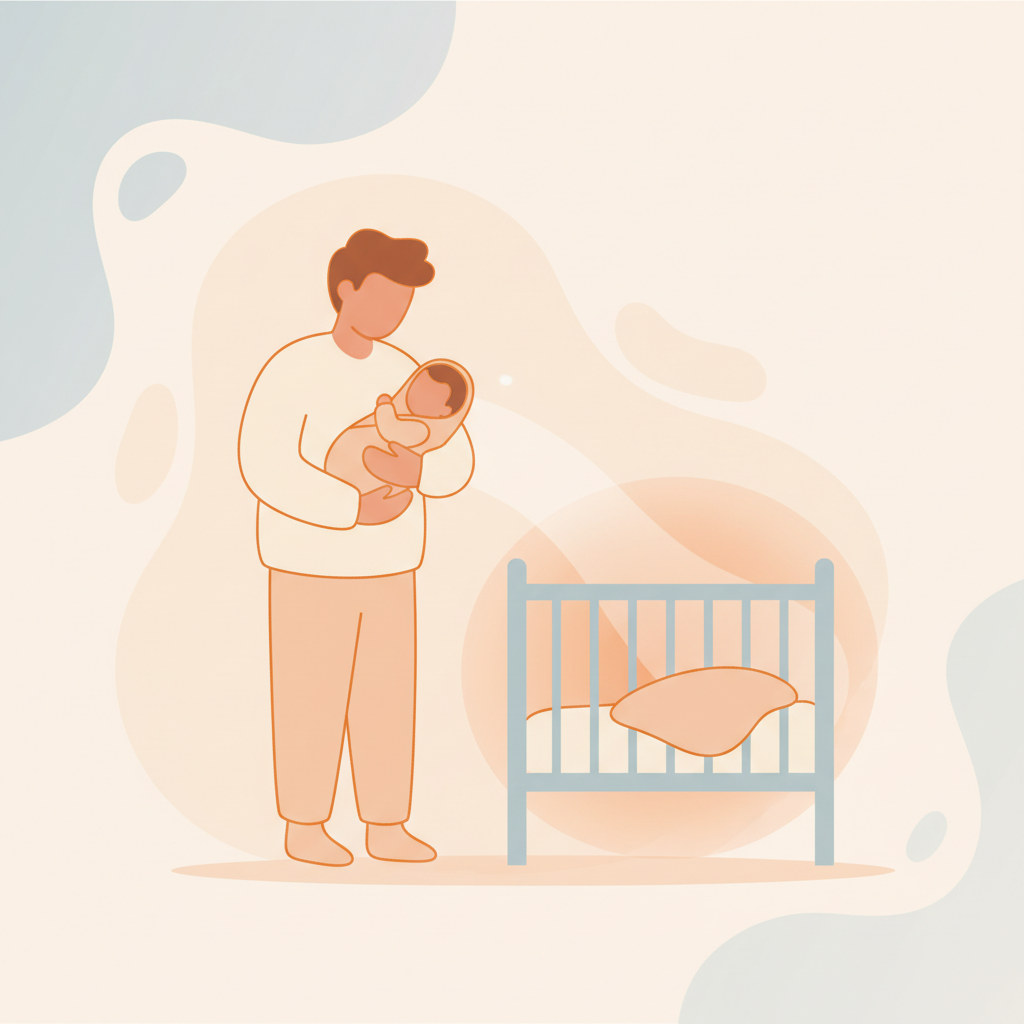
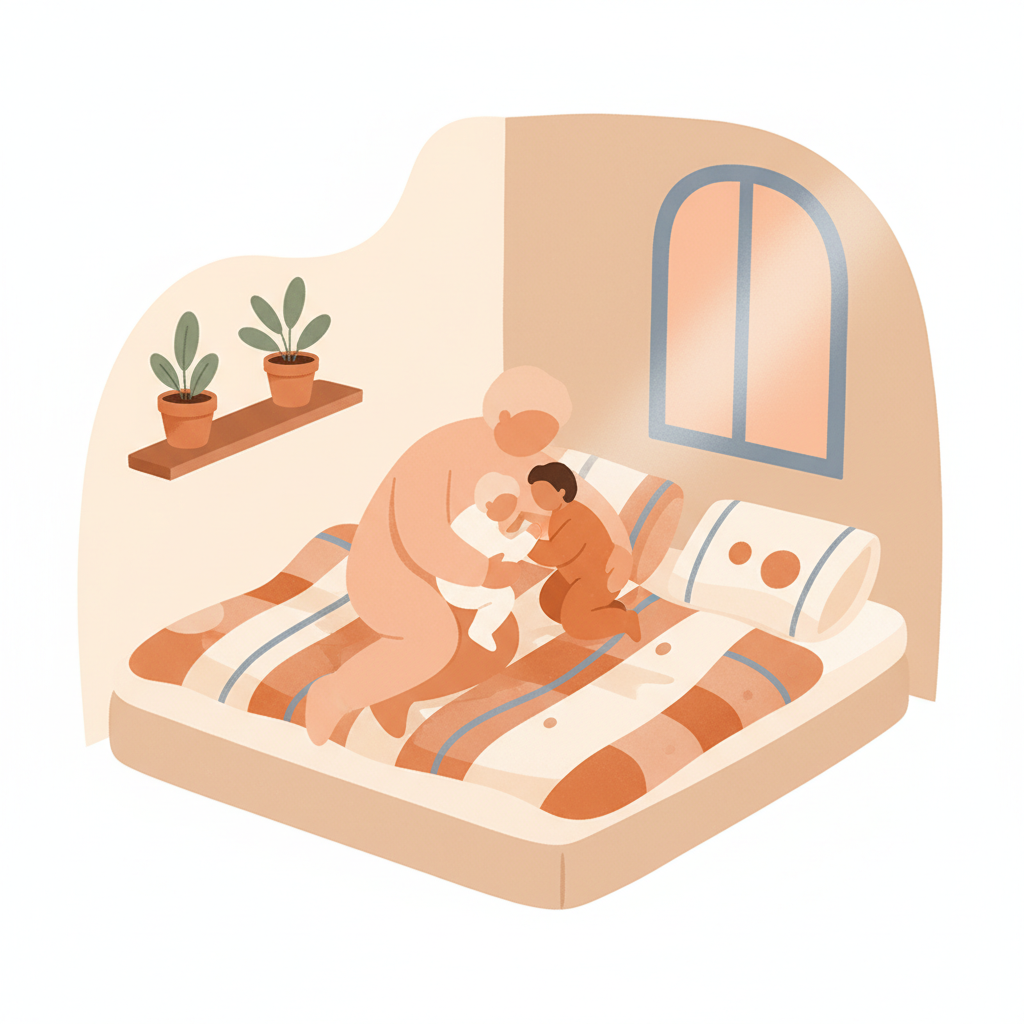
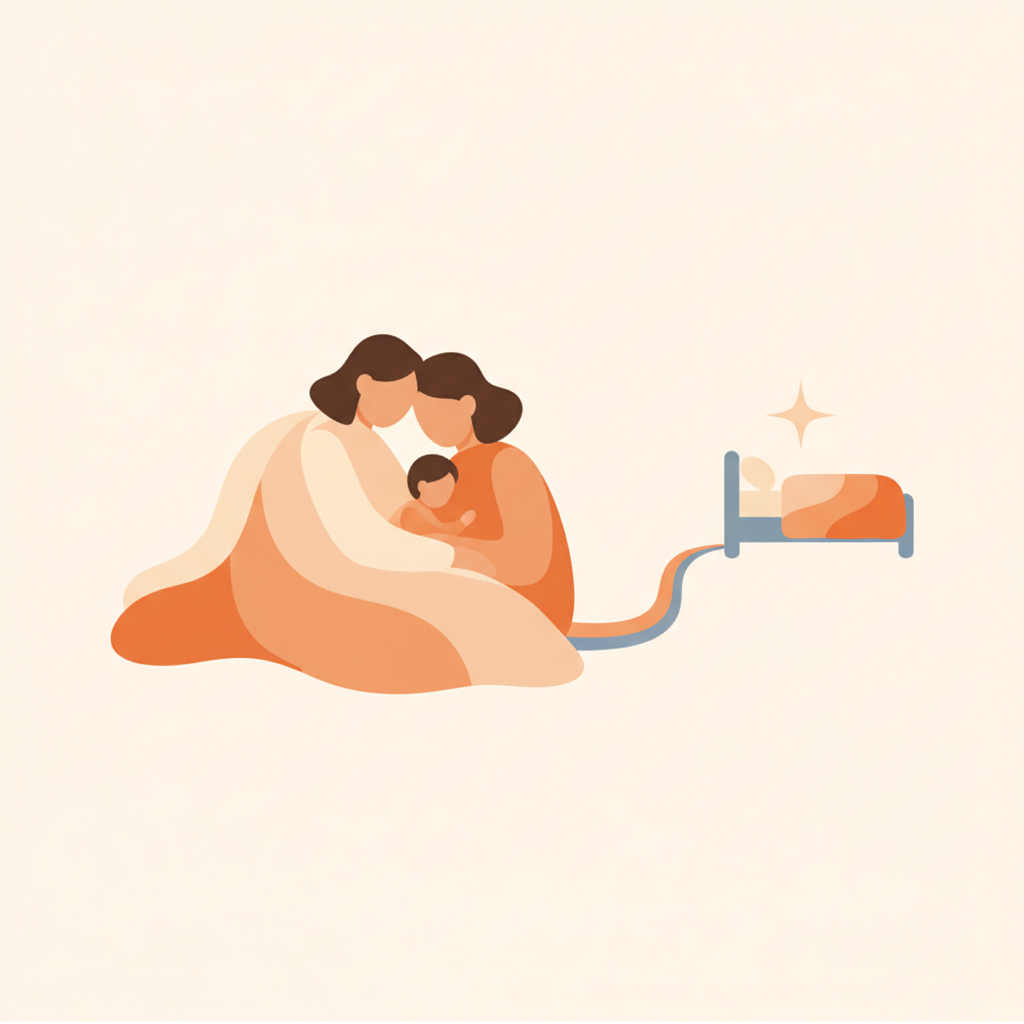
Start by sleeping together and progressively move the baby to a bedside bassinet, then to an independent crib, and finally to their own room. Each step is maintained for several weeks until the baby feels secure.
How to Apply Gentle Sleep Training Step by Step
Step 1: Establish a predictable routine. The baby's brain needs signals that anticipate sleep. A 15-20 minute sequence (bath, pajamas, story, song, darkness) triggers melatonin production.
Step 2: Respect wake windows. A baby who goes to bed too late is overtired and paradoxically finds it harder to fall asleep. Watch for sleepy cues: yawning, eye rubbing, fussiness.
Step 3: Choose a method and stick with it for at least 2 weeks. Consistency matters more than the specific method. If you change strategies every two nights, the baby doesn't know what to expect.
Step 4: Work as a team with your partner. Extreme fatigue creates conflict. It's essential that both of you agree on the approach and take turns. At LetsShine.app, the AI can help you manage nighttime stress and coordinate shifts when exhaustion makes communication difficult.
Step 5: Track progress. Note what time baby falls asleep, how many times they wake, and how long each waking lasts. In 2-3 weeks you'll see a positive trend that will keep you motivated.
What Does the Research Say?
The Pediatric Sleep Council recommends that any sleep intervention take into account the baby's age, temperament, and family circumstances. There is no single method that works for every baby.
The AAP's 2022 safe sleep guidelines emphasize that what we know with certainty is that prolonged toxic stress (crying without comfort for extended periods) can affect brain development. Gentle methods avoid this risk by maintaining caregiver availability at all times.
When to Seek Professional Help
If after 4-6 weeks of consistently applying a gentle method you see no improvement, consult your pediatrician to rule out medical causes (reflux, sleep apnea, allergies). You can also look for a certified infant sleep consultant who uses respectful approaches.
For the hardest nights, LetsShine.app offers AI-powered support available around the clock, so you don't have to feel alone at three in the morning.
Frequently Asked Questions
At what age can I start gentle sleep training?
From birth you can establish healthy sleep hygiene (routine, environment, wake windows). More structured methods (chair method, pick up/put down) are usually recommended from 4-6 months onward, when the baby's brain has greater maturity.
Do gentle methods take longer to work?
Yes, they generally require 2 to 6 weeks compared to 3-7 days for extinction methods. The difference is that learning occurs without toxic stress and results tend to be more lasting.
Can I combine several gentle methods?
Yes, as long as you stay consistent. You can start with co-sleeping and transition to the chair method. The key is not to alternate contradictory approaches (accompanying one night, leaving them to cry the next).
What if my partner wants to use cry-it-out and I don't?
This is a very common conflict. The priority is that you both agree, because inconsistency confuses the baby. Calmly discussing each person's reasons and seeking a middle ground is usually more effective than imposing a method.