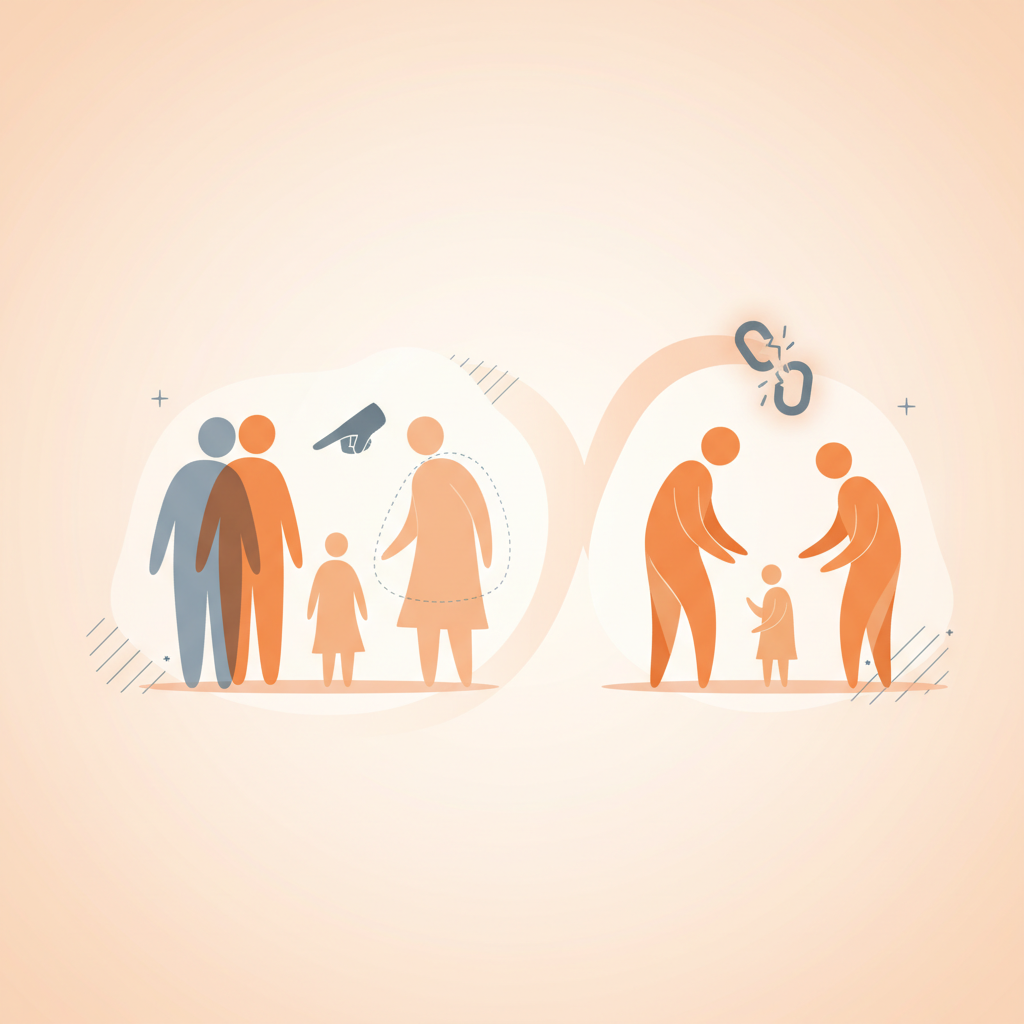
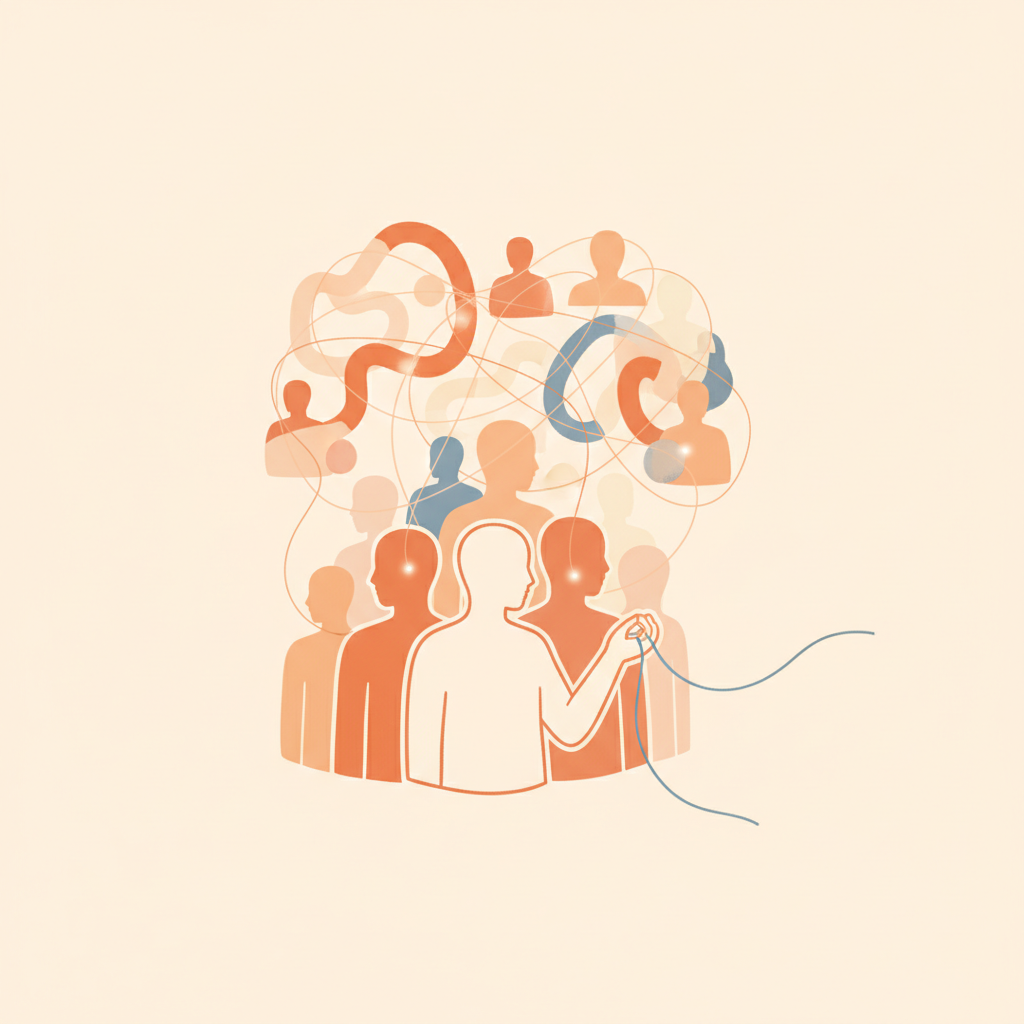
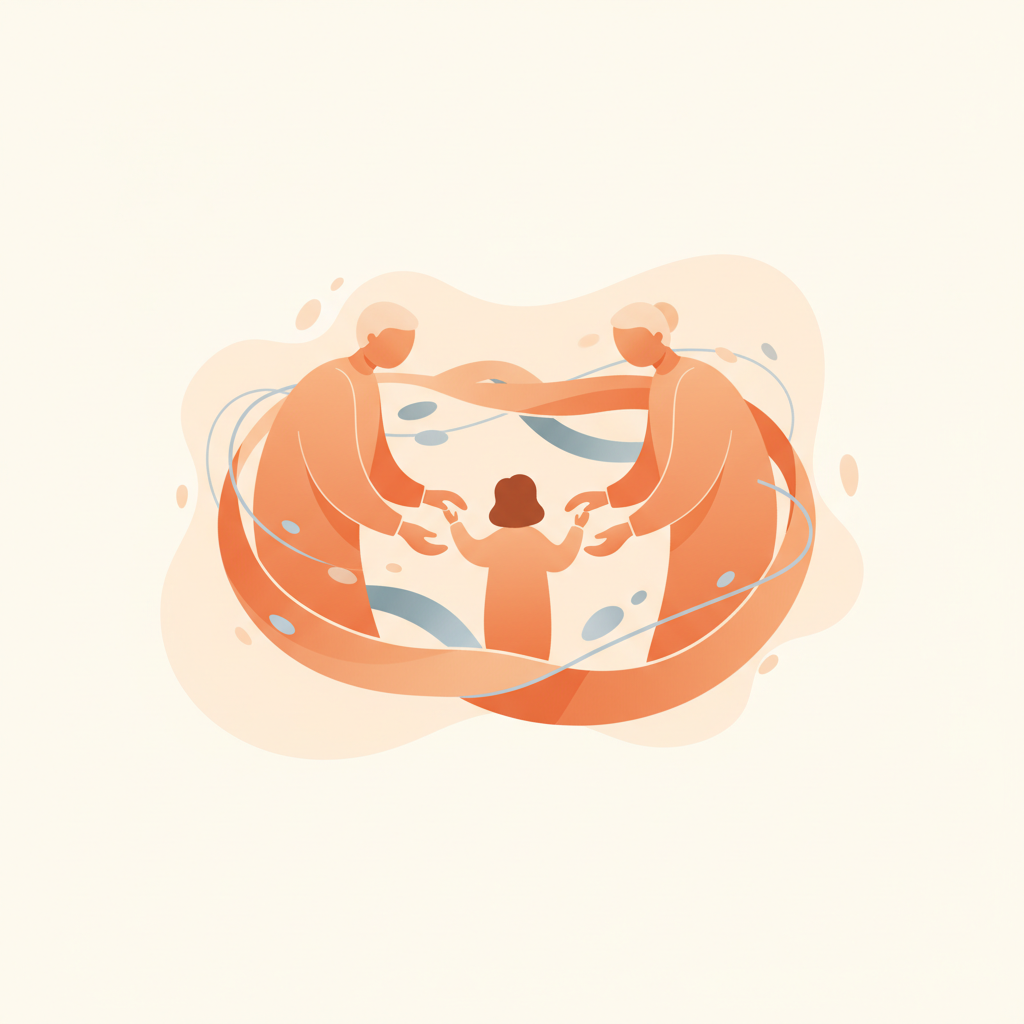
A dysfunctional family is one in which the relational patterns between its members generate chronic distress, impede the healthy emotional development of some members, and perpetuate over time without the family system being able to correct them on its own. The American Psychological Association (APA) notes that family dysfunction is not a binary category — functional or dysfunctional — but a continuum: all families have degrees of dysfunction, and what matters is the impact those patterns have on members' wellbeing.
It is important to dispel the stereotypical image: a dysfunctional family is not necessarily one with violence, addiction, or poverty. It can be a middle-class family with a polished appearance, where the parents attend every school event and Sundays mean family barbecues. The dysfunction is not in what is seen from the outside, but in what is felt from within.
| Type of Dysfunctional Family |
Core Dynamic |
Defining Phrase |
| Authoritarian |
Control and fear |
"My house, my rules" |
| Overprotective |
Annihilation of autonomy |
"I do it because I love you" |
| Neglectful |
Emotional absence |
Silence |
| Conflict-ridden |
Constant fighting |
"There are always screams in this house" |
| Perfect on the surface |
Emotional repression |
"We don't have problems" |
| Parentified |
Role reversal |
"The child cares for the adult" |
What Are the Signs of a Dysfunctional Family?
1. Emotions Are Not Expressed or Are Punished
In dysfunctional families, crying is "being weak," getting angry is "being difficult," and being afraid is "being a coward." Members learn to suppress their emotions or to express them explosively, with no middle ground. Dr. Jonice Webb's work on Childhood Emotional Neglect (CEN) documents how this emotional invalidation creates lasting psychological effects.
2. There Are Taboo Subjects
A parent's alcoholism, mental illness, infidelity, abuse. Everyone knows; no one names it. Silence becomes the accomplice of the problem. Family therapist Dr. Harriet Lerner calls these "family secrets" that organize the entire emotional life of the household.
3. Boundaries Are Either Blurred or Rigid
Either there are no boundaries (a parent reading their adult child's messages, a mother making decisions for her 30-year-old daughter) or they are excessive (total emotional distance, coldness, absence of affection). Both extremes are dysfunctional.
4. There Is a Scapegoat
One family member — usually a child — carries the blame for everything. "If it weren't for you, this family would be fine." The scapegoat absorbs the system's tension so that the others do not have to face their own problems. Murray Bowen's concept of the "identified patient" in family systems theory describes this dynamic with clinical precision.
5. Roles Are Rigid and Unquestioned
The responsible one, the troublemaker, the invisible one, the caretaker. Each member has a part that cannot change without threatening the (dysfunctional) equilibrium of the system.
6. Love Is Conditional
"I love you if you get good grades / if you obey me / if you don't cause problems." The child learns that love is earned, not given, and carries that belief into adult relationships.
7. There Is Triangulation
One parent speaks ill of the other in front of the children. A sibling becomes a messenger between two others. Direct communication is replaced by alliances and factions.
How Are Dysfunctional Patterns Transmitted Across Generations?
The intergenerational transmission of family patterns is one of the most studied phenomena in family therapy. The mechanism is twofold:
Through modelling: Children learn to relate by watching how their parents relate. If the model is shouting-silence-superficial reconciliation, that is what they will reproduce in their own relationships. Bandura's social learning theory provides the framework: children absorb relational templates long before they can critically evaluate them.
Through reactive compensation: Some adults, aware of the damage they received, try to do "the opposite" with their children. The authoritarian parent raises children without any boundaries. The neglectful mother becomes a helicopter parent. The pendulum swings to the opposite extreme, which is also dysfunctional.
The true break in the pattern is neither repeating nor compensating. It is understanding: comprehending why your parents acted as they did (without justifying them) and consciously choosing what you want to keep and what you want to change. Dr. Daniel Siegel calls this "making sense of your story" and considers it the strongest predictor of secure attachment in the next generation.
How to Break the Dysfunctional Pattern
1. Do Emotional Archaeology
Dig into your history. What did you learn about love in your family? About conflict? About emotions? About power? Those answers are the map of your current patterns. Tools like the AI on LetsShine.app facilitate this guided exploration process, helping you identify patterns you repeat without realizing.
2. Identify Your Triggers
What situations make you react disproportionately? Do you yell like your father yelled? Do you shut down like your mother shut down? Do you control like you were controlled? Your triggers are the doorways to your unprocessed history.
3. Break the Silence
Name what happened. Not to blame, but to liberate. "In my family, we didn't talk about emotions. That affected me. I want to do things differently." Naming is the first act of breaking the pattern.
4. Seek Alternative Models
If your family did not teach you to communicate healthily, you need to learn it elsewhere: therapy, books, courses, healthy relationships that serve as references. You cannot give what you did not receive, but you can learn what you were not taught.
5. Forgive Without Forgetting
Forgiving your parents is not saying "nothing happened." It is saying "it happened, it hurt, and I choose to release the resentment so it stops defining me." You can forgive and, at the same time, set firm boundaries so it does not happen again.
6. Build Your Own Family Consciously
If you have children, the key question is not "Am I a good parent?" but "What patterns am I repeating without realizing?" Conscious parenting is not about being perfect: it is about being honest with your limitations and being willing to work on them.
Frequently Asked Questions
Are all families dysfunctional to some degree?
Yes. No family is perfectly functional. What matters is the degree: a family with some dysfunctional dynamics that acknowledges and works on them is very different from a family where dysfunction is the dominant pattern and no one questions it.
Can I heal the wounds from my dysfunctional family without therapy?
It is possible, but harder. Therapy (individual or family) offers a professional space to deactivate deep patterns. If therapy is not accessible, tools like the AI on LetsShine.app, specialized reading, and support groups can be a good starting point.
Is it possible to have a healthy relationship with dysfunctional parents?
Yes, if you set clear boundaries and lower your expectations. You cannot change your parents, but you can change how you relate to them: less exposure to what harms you, more protection of what does you good.
How do I know if I'm repeating dysfunctional patterns with my children?
The clearest signs: you react in ways you later regret, your children fear you or avoid you, you repeat phrases you were told as a child, or you feel you "can't help it" even though you know it is wrong. Recognizing it is painful, but it is the first step toward change.
Can a dysfunctional family become functional?
Yes, but it requires that at least some members be willing to question the system. Change usually starts with one person who "breaks the mould," and their transformation can — over time — influence the rest of the system.