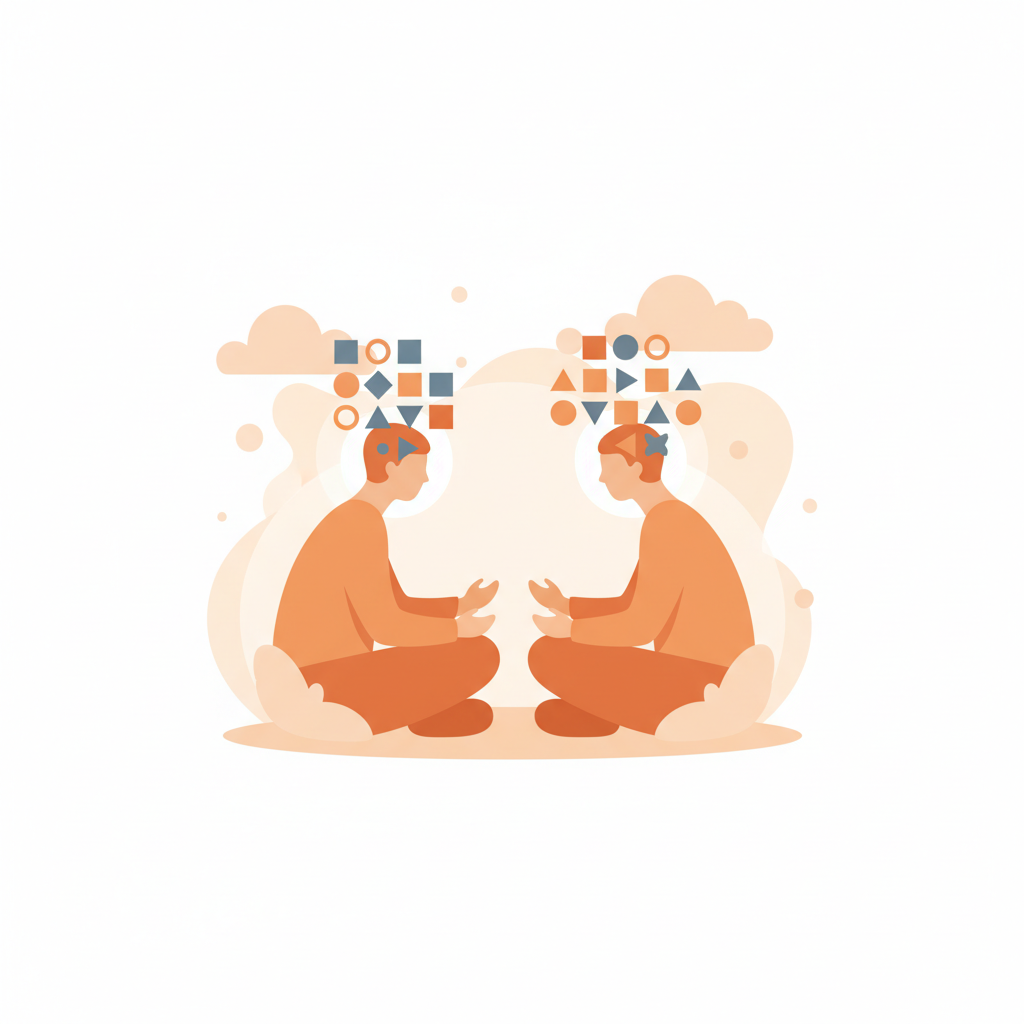
Cognitive behavioural therapy (CBT) is a structured, goal-oriented psychotherapeutic approach built on the premise that thoughts, emotions, and behaviours are interconnected. Developed from the work of Aaron Beck in the 1960s and Albert Ellis's rational emotive behaviour therapy, CBT has become the psychological treatment with the strongest scientific backing for a wide range of mental health conditions. Over 2,000 controlled clinical trials support its efficacy, according to a comprehensive review published in Cognitive Therapy and Research. Its fundamental principle is simple yet powerful: it is not situations that cause suffering, but the interpretation we give to them. A 2023 umbrella review in Psychological Bulletin reaffirmed CBT as a first-line treatment across anxiety, depression, OCD, and PTSD.
What Are the Core Principles of CBT?
| Concept |
Definition |
Example |
| Automatic thought |
Ideas that arise spontaneously in response to a situation |
"If they're late, it means they don't care about me" |
| Cognitive distortion |
Systematic error in information processing |
All-or-nothing thinking, catastrophising, mind-reading |
| Core belief |
Deep conviction about oneself, others, or the world |
"I am not worthy of love" |
| Cognitive restructuring |
Technique for questioning and modifying distorted thoughts |
"What evidence do I have that they don't care?" |
| Graded exposure |
Progressively confronting the feared situation |
Speaking in public starting with 2 people, then 5, then 20 |
Disclaimer: this article is for educational purposes and does not replace treatment with a qualified professional. If you believe CBT could help you, consult with a licensed clinical psychologist or therapist.
How Does a CBT Session Work?
A typical CBT session lasts between 45 and 60 minutes and follows a clear structure:
- Week review: the therapist asks how things have been since the last session and reviews between-session assignments.
- Session agenda: both parties agree on what to work on that day.
- Work with thoughts or behaviours: automatic thoughts are identified, questioned, and more balanced alternatives are sought.
- Homework: CBT is active. Between sessions, the client practises what they have learned through thought records, exposure exercises, or behavioural experiments.
This structure contrasts with more open-ended approaches (such as psychoanalysis), where the session does not have a predefined agenda. No approach is inherently better; it depends on the presenting concern and the person.
Which Conditions Does CBT Treat Most Effectively?
Scientific evidence especially supports CBT for:
- Anxiety disorders (generalised anxiety disorder, phobias, panic disorder): CBT is the first-line psychological treatment recommended by the UK's NICE guidelines and the American Psychological Association.
- Depression: multiple meta-analyses confirm its efficacy, comparable to antidepressant medication in mild-to-moderate depression and superior in relapse prevention. A 2022 meta-analysis in JAMA Psychiatry found CBT reduced relapse risk by 50% compared to medication alone.
- Obsessive-compulsive disorder (OCD): exposure with response prevention, a core CBT technique, is the psychological treatment of choice.
- Post-traumatic stress disorder (PTSD): especially trauma-focused CBT.
- Insomnia: CBT for insomnia (CBT-I) is more effective long-term than medication, according to the American Academy of Sleep Medicine.
- Eating disorders: especially enhanced CBT (CBT-E) developed by Christopher Fairburn.
What Are Cognitive Distortions?
Aaron Beck identified a series of "thinking errors" that everyone commits, but which become rigid and frequent in people experiencing emotional distress:
- All-or-nothing thinking: seeing things in black and white, with no nuance. "If I'm not perfect, I'm a failure."
- Catastrophising: anticipating the worst possible scenario. "If I fail this exam, my life is ruined."
- Mind-reading: assuming you know what others are thinking. "They definitely think I'm stupid."
- Personalisation: attributing responsibility for something beyond your control. "They got angry because of me."
- Mental filter: focusing only on the negative and ignoring the positive. "Everyone said the presentation was good, but one person yawned."
Recognising these distortions is the first step toward changing them. The DSM-5 does not classify distortions as a disorder, but they appear across many clinical diagnoses.
How Many Sessions Does a Course of CBT Require?
CBT is a relatively brief treatment compared to other approaches. Clinical guidelines typically recommend:
- Generalised anxiety: 12-16 sessions.
- Mild-to-moderate depression: 16-20 sessions.
- OCD: 12-20 sessions with intensive exposure.
- Specific phobias: sometimes as few as 5-8 sessions.
These are averages. Everyone moves at their own pace. What matters is that goals are defined and reviewed periodically.
Can CBT Be Complemented with Digital Tools?
Yes. There is growing evidence supporting computerised CBT and digital support tools. Platforms like LetsShine.app can complement therapeutic work by helping you reflect on your thinking and communication patterns between sessions. However, the relationship with the therapist remains the engine of change. No digital tool replaces professional therapy.
Does CBT Have Limitations?
Like any approach, CBT is not perfect:
- It requires active engagement from the client (homework between sessions).
- It can feel overly "rational" for people who need deeper emotional or body-based work.
- It does not explore biographical history in depth (psychodynamic approaches may be more suited for that).
- For severe personality disorders, specialised variants such as dialectical behaviour therapy (DBT) by Marsha Linehan are typically used.
Frequently Asked Questions
Is CBT compatible with medication?
Yes. In many cases, the combination of CBT and pharmacotherapy is more effective than either treatment alone, especially in moderate-to-severe depression and OCD.
Can I do CBT online?
Absolutely. Studies confirm that online CBT is as effective as in-person CBT for most anxiety and depressive disorders. NHS England's IAPT programme has delivered hundreds of thousands of online CBT courses.
Does CBT work for children and adolescents?
Yes. Age-adapted protocols exist. CBT is the most recommended psychological treatment for childhood and adolescent anxiety and depression according to major international clinical guidelines.
Do I need a diagnosis to start CBT?
No. Many people begin CBT to improve coping skills, stress management, or communication in their relationships, without having a clinical diagnosis.
What if I don't connect with the approach?
CBT is not for everyone. If after several sessions you do not feel comfortable, talk to your therapist. A good professional will help you find the approach that best suits you.
Your relationships can improve. Today.
Start free in 2 minutes. No credit card, no commitment. Just you, the people you care about, and an AI that helps you understand each other.
Start free now