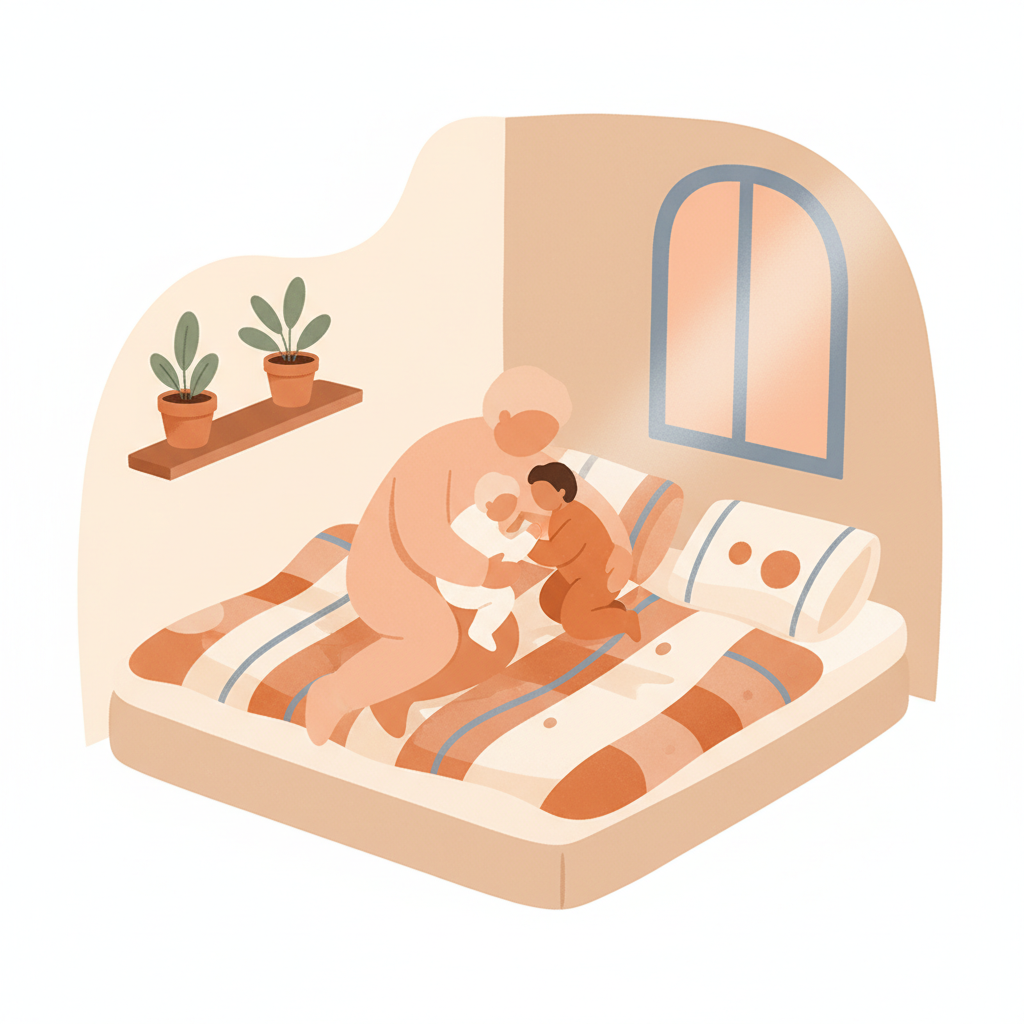
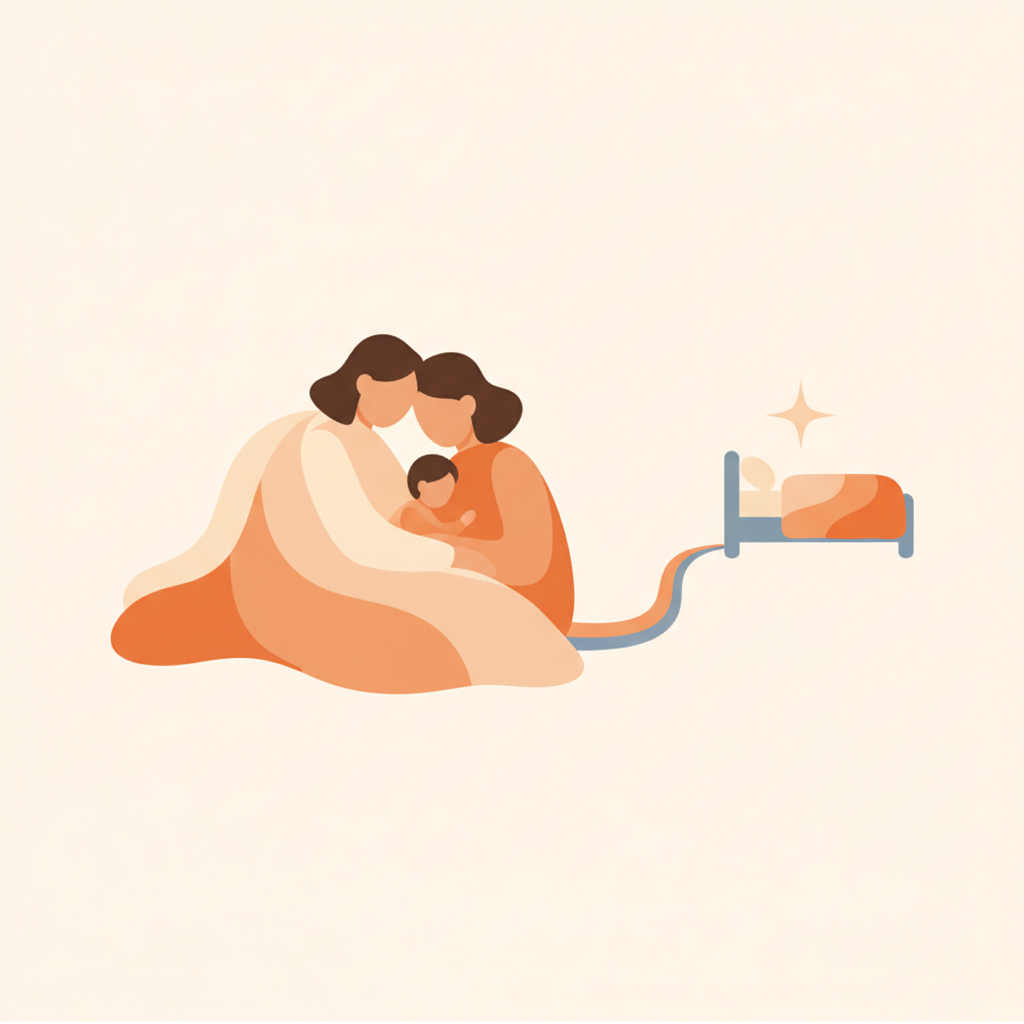
A bedtime routine is a predictable sequence of activities repeated every night before sleep that sends a clear signal to your baby's brain: "it's time to rest." According to the Pediatric Sleep Council, establishing a consistent routine is the most effective and least invasive intervention for improving infant sleep — more so than any specific method or technique.
Why Does a Bedtime Routine Work?
A baby's brain craves predictability. When the same actions repeat in the same order every night, the nervous system begins producing melatonin in anticipation. It's like a biological switch: the sequence "bath, pajamas, story, darkness" becomes a signal that says "relax, nighttime is coming."
Babies can't read a clock. They don't understand that "it's 7:30 p.m. and time to sleep." What they do understand is the sequence: "after the bath comes the pajamas, after the pajamas comes the story, and after the story I fall asleep." That predictability gives them security.
Research published in the journal Sleep shows that a consistent bedtime routine reduces cortisol (the stress hormone) and increases the baby's feeling of safety. When a baby knows what comes next, they feel in control — and feeling in control helps the body let go and drift into sleep.
What Are the 4 Phases of an Effective Bedtime Routine?
Phase 1: Environmental Signal (5 minutes)
The goal is to reduce environmental stimulation. Dim the lights, turn off the television, lower the noise. If the baby has been playing actively, this phase serves as a transition between activity and calm.
Phase 2: Body Care (5-10 minutes)
A warm (not stimulating) bath without intense play, diaper change, pajamas. Physical contact during this phase — gentle massage, soft strokes — activates the parasympathetic nervous system, which is responsible for relaxation.
Phase 3: Emotional Connection (5-10 minutes)
Story, lullaby, whispers, cuddles. This is the most important phase because it reinforces the attachment bond. The baby needs to feel safe and accompanied in order to let go of control and surrender to sleep.
Phase 4: Goodnight and Sleep (2-5 minutes)
A goodnight phrase, position in the crib or bed, lights off. Ideally, the baby is drowsy but still awake when you put them down, so they learn to take the final step — falling asleep — on their own.
How to Adapt the Routine by Age
| Age |
Total duration |
Key elements |
Notes |
| 0-3 months |
10-15 min |
Diaper, pajamas, song, swaddle |
No rigid routine; the baby sleeps when they need to |
| 4-6 months |
15-20 min |
Bath, pajamas, short story, song |
Good time to establish the routine |
| 7-12 months |
20-25 min |
Bath, pajamas, story, song, lovey |
Separation anxiety may extend phase 3 |
| 1-2 years |
20-30 min |
Bath, pajamas, 2 stories, song, "goodnight" |
May try to negotiate ("one more story"): set clear limits |
| 2-4 years |
25-30 min |
Bath, pajamas, story, day review, song |
Including a day review reinforces emotional security |
Common Bedtime Routine Mistakes to Avoid
Mistake 1: Making it too long. If the routine lasts 45 minutes or more, the baby may pass their sleep window and become overtired. Between 15 and 30 minutes is optimal.
Mistake 2: Including stimulating elements. Screens, active play, or baths full of toys don't relax — they excite. The routine should move from more stimulation to less.
Mistake 3: Being inconsistent. If one night there's a routine and the next there isn't, the baby's brain can't anticipate. The key is repetition — even on weekends and vacations.
Mistake 4: Relying on a single caregiver. If only mom can do the routine, there's a problem. Both parents (or other caregivers) should be able to replicate it with the same sequence.
Mistake 5: Starting too late. Many parents wait until the baby is exhausted to start the routine. By then, cortisol is already high and falling asleep becomes harder. Start the routine at the first signs of sleepiness.
What to Do When the Routine Stops Working
Babies go through sleep regressions, growth spurts, and schedule changes that can temporarily reduce the routine's effectiveness. During those times, maintain the sequence even if the result isn't what you expect. Consistency during difficult phases is what consolidates the habit long-term.
If you feel overwhelmed by exhaustion and the routine becomes a source of stress, remember that you don't have to face it alone. At LetsShine.app, the AI can guide you on how to adjust the routine to your baby's age and temperament, especially on those nights when nothing seems to work.
Frequently Asked Questions
At what age can I start a bedtime routine?
You can introduce a mini-routine from the first weeks (pajamas, song, darkness), but more structured routines work best from 3-4 months onward, when the baby begins distinguishing day from night.
Does the routine always need to include a bath?
No. A bath is effective because the change in body temperature induces drowsiness, but it isn't essential. If you bathe your baby in the morning, you can substitute it with a face and hands wash or a gentle massage.
What if my child resists the routine?
Resistance usually indicates that the routine starts too late (the child is already overtired) or that it's missing an element of emotional connection. Try starting 15 minutes earlier and adding a period of cuddles or calm conversation.
Is it normal for the routine to work for weeks and then suddenly stop?
Yes, very common. Sleep regressions, teething, illness, and nap transitions can temporarily alter the routine's effectiveness. Maintain the sequence and in 1-2 weeks it usually starts working again.
Your relationships can improve. Today.
Start free in 2 minutes. No credit card, no commitment. Just you, the people you care about, and an AI that helps you understand each other.
Start free now