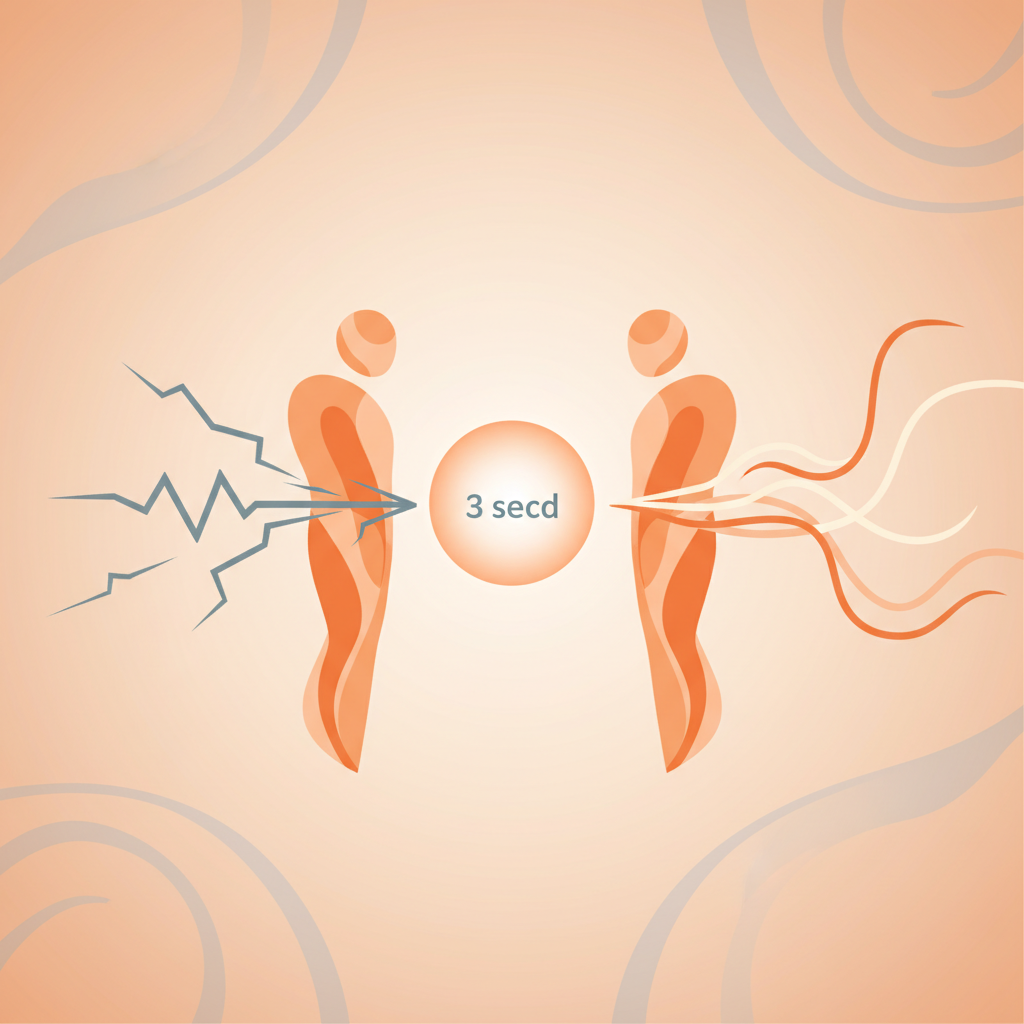
Viktor Frankl, the psychiatrist who survived Auschwitz and founded logotherapy, wrote: "Between stimulus and response there is a space. In that space is our power to choose our response. In our response lies our growth and our freedom." This observation -- made by a man who endured the most extreme conditions imaginable -- captures the central challenge of relational life. Not the big, dramatic choices (should I stay or should I go?) but the micro-choices that occur dozens of times a day: in the split second after your partner says something that triggers you, do you react or do you respond?
The difference between reacting and responding is the difference between being lived by your emotions and living with your emotions. A reaction is automatic, instantaneous, and driven by the amygdala's threat-detection system. It bypasses the prefrontal cortex -- the brain region responsible for perspective-taking, empathy, and long-term consequences. A response, by contrast, is conscious, deliberate, and informed by the full range of your cognitive and emotional capacities. Both use the same information; they process it through entirely different neural pathways.
The Anatomy of a Reaction
Understanding the neurological sequence of a reaction helps demystify it:
- Trigger: your partner says, "You forgot to call the plumber again." (0 milliseconds)
- Amygdala activation: the brain's alarm system detects a potential threat. (50 milliseconds)
- Physiological cascade: cortisol and adrenaline release. Heart rate increases. Muscles tense. Blood flow shifts from the digestive system to the limbs (preparation for fight or flight). (100-300 milliseconds)
- Story generation: the brain constructs a narrative that justifies the physiological state. "They always criticize me. Nothing I do is good enough. I'm under attack." (300-500 milliseconds)
- Behavioural output: the reaction emerges. "Well, maybe if you didn't pile on ten things every day, I'd have time to call the plumber!" (500-1000 milliseconds)
The entire sequence, from trigger to outburst, takes less than a second. The prefrontal cortex -- the part of the brain that could have said, "They're frustrated, not attacking me; let me acknowledge the oversight and make the call" -- never had a chance to engage. This is not a character flaw. It is a design feature of a brain that evolved to prioritize speed over accuracy in threat detection.
The Anatomy of a Response
A response follows a different path:
- Trigger: same as above. "You forgot to call the plumber again."
- Amygdala activation: same initial alarm. This cannot be prevented.
- Awareness: you notice the alarm. "I feel defensive. My chest is tight. I want to snap back." This is the critical intervention point. (200-500 milliseconds with practice)
- Pause: you create a deliberate gap. Three breaths. A moment of inner stillness. The pause allows the prefrontal cortex to come online. (3-10 seconds)
- Perspective: from the prefrontal cortex, you see more clearly. "They're frustrated. They're not saying I'm a failure; they're saying the plumber hasn't been called. This is fixable." (5-15 seconds)
- Choice: you select a response aligned with your values and the relationship's well-being. "You're right, I forgot. I'll do it now." (Total elapsed time: 15-30 seconds)
The difference in time is measured in seconds. The difference in relational outcome is measured in years.
Why We Default to Reactivity
Three main factors keep us trapped in reactive patterns:
Evolutionary wiring
The brain's threat-detection system is biased toward speed and worst-case assumptions. In ancestral environments, this saved lives. In modern relationships, it destroys them. The system cannot tell the difference between a sabre-toothed tiger and a sarcastic comment about the plumber.
Learned patterns
The way your family of origin handled conflict created neural pathways that persist into adulthood. If anger was met with anger, your brain learned that anger is the appropriate response to conflict. If vulnerability was met with punishment, your brain learned that defensiveness is the only safe option. These patterns feel like "who you are." They are actually "what you learned."
Stress and depletion
The prefrontal cortex requires energy to function. When you are tired, hungry, stressed, or overwhelmed, the prefrontal cortex goes offline more easily, leaving the amygdala in charge. This is why the worst arguments happen at the end of long days, and why couples fight more when they are under financial pressure or sleep-deprived.
Building the Pause: Practical Strategies
Strategy 1: Name the Activation
When you feel the reactive surge, silently label it: "I'm activated." This simple act of naming recruits the prefrontal cortex and begins to dampen the amygdala. Lieberman's research on affect labelling shows that putting a word to an emotion can reduce its neurological intensity by up to 50%.
Strategy 2: Feel the Body First
Before engaging with the content of what was said, drop your attention into your body. Where is the tension? What is the quality of your breathing? The body always registers activation before the mind formulates a story. By attending to the body, you interrupt the story-generating process.
Strategy 3: The 90-Second Rule
Neuroscientist Jill Bolte Taylor observed that the biochemical lifespan of an emotion in the body is approximately 90 seconds. After that, any continued emotional intensity is being generated by thought -- by the story you are telling yourself. If you can ride out the initial 90-second wave without acting on it, you will be in a significantly better position to respond wisely.
Strategy 4: The Question Protocol
Replace your first reactive impulse with a question. Not a rhetorical or accusatory question, but a genuine one: "Help me understand what you need right now." This shifts the brain from defence mode to inquiry mode. It also communicates to your partner that you are willing to engage rather than retaliate.
Strategy 5: The Pre-Commitment
In a calm moment, agree with your partner on a signal that either of you can use when you feel a conversation escalating. It could be a word ("pause"), a gesture (palms up), or a simple "I need a minute." This pre-commitment leverages the prefrontal cortex while it is online to create a structure that helps when it is not.
From Reactivity to Responsiveness: A Gradual Path
The shift from reacting to responding is not binary. It is a gradual process that unfolds over months and years. At first, you will catch yourself after the reaction. Then you will catch yourself during the reaction. Eventually, you will catch yourself before the reaction -- in the space that Frankl described. Each stage is progress. Each moment of awareness, even after a reactive explosion, is a step toward freedom.
LetsShine.app supports this process through structured reflection that helps partners identify their reactive patterns, understand their origins, and practise the pause that transforms reaction into response. The AI does not judge your reactions; it helps you see them clearly, which is the necessary first step toward changing them.
Frequently Asked Questions
Is it possible to completely stop reacting?
No, and that is not the goal. The amygdala will always fire. The goal is to increase the frequency and speed with which awareness catches the reaction before it reaches your mouth. Over time, the ratio of responses to reactions shifts. Perfection is not the standard; direction is.
What if my partner reacts and I respond calmly? Will they feel condescended to?
It depends on the quality of your response. If your calm comes from suppression or superiority ("I'm above this"), it will feel condescending. If it comes from genuine care and presence ("I hear you, and I'm trying to understand"), it will feel connecting. The difference is felt, not analysed.
How do I practise responding when my triggers are very intense?
Start with low-stakes triggers. Practice the pause when the dishwasher is loaded "wrong" before attempting it during an argument about finances. The neural pathways you build in small moments will be available in large ones.
Is pausing the same as avoiding the conversation?
No. A pause is a temporary suspension of reactivity to allow a wiser response. Avoidance is permanent withdrawal from the topic. The key difference: after a pause, you re-engage. After avoidance, you do not.
How long does it take to shift from reactive to responsive?
Significant change typically occurs within 8-12 weeks of consistent practice, based on the MBSR and MBRE research literature. However, the shift is not linear. You may have a week of remarkable responsiveness followed by a day of raw reactivity. This is normal. The trend matters more than any single data point.