Weaning is the gradual process by which a baby or toddler stops breastfeeding and obtains all nutrition from other sources. Far from being a single event, the American Academy of Pediatrics (AAP) defines it as a transition that can take weeks, months or even years, forming a natural part of child development.
The WHO recommends breastfeeding until age 2 or beyond, but every family has its own pace and circumstances. Respectful weaning takes into account the emotional needs of both parent and child, without abruptness or guilt.
When Is the Right Time to Wean?
There is no universally "correct" moment. The decision depends on several factors:
- The parent's wish: every breastfeeding parent has the right to decide when to stop, without needing to justify the choice.
- The child's development: emotional maturity and ability to accept other forms of comfort and nutrition.
- Family circumstances: return to work, a new pregnancy, parental health, couple dynamics.
La Leche League International emphasises that "weaning is a process that parent and child go through together; it is not something done to the child." The AAP notes that there is no evidence that extended breastfeeding causes dependence, dental problems (with adequate hygiene) or malnutrition.
What Is the Difference Between Child-Led and Parent-Led Weaning?
| Type |
Who Initiates |
Typical Duration |
Characteristics |
| Child-led weaning |
The child |
Months to years |
Gradual, spontaneous reduction; usually completes between ages 2 and 7 |
| Parent-led weaning |
The parent |
Weeks to months |
The parent reduces feeds in a planned, gradual way |
| Partial weaning |
Parent or child |
Variable |
Some feeds are kept (e.g. the bedtime feed) while others are dropped |
All types are valid and respectful as long as they are carried out gradually and with sensitivity to the child's emotions.
How to Do Parent-Led Weaning Step by Step
The AAP and IBCLC consultants recommend the following strategies:
1. Don't offer, don't refuse. Stop proactively offering the breast, but do not reject the child if they ask. This is the gentlest approach and often the first to apply.
2. Substitute, don't eliminate. Replace a breastfeed with another moment of connection: a story, a cuddle, a cup of milk, a song. What the child loses is not just food, but contact and comfort.
3. Drop feeds gradually. Eliminate the feeds the child is least attached to first (often daytime feeds) and leave the ones with the most emotional weight (bedtime, night feeds) for last.
4. Shorten the duration. Instead of dropping a feed, gradually reduce how long it lasts: "Let's nurse while we sing this song, and when it finishes, we stop."
5. Change routines. If the child associates the breast with a specific place or moment (the sofa, the rocking chair, naptime), changing the routine can help demand decrease naturally.
6. Involve the other caregiver. Having the partner or another carer take over the moments previously associated with breastfeeding (bedtime, night comfort) can ease the transition.
Managing the Child's Emotions During Weaning
The breast is not just food: it is security, comfort and emotional regulation. It is normal for the child to protest, cry or regress. The keys are:
- Validate their feelings: "I understand you want to nurse. You're upset because it's not time right now. I'm right here with you."
- Offer alternative comfort: physical contact, play, presence.
- Be firm with warmth: if you have decided not to nurse at that moment, you do not need to give in out of guilt, but do accompany the child's emotion.
- Accept setbacks: illness, a life change or a stressful period may increase the child's demand. It is temporary.
What Happens to the Parent's Body During Weaning?
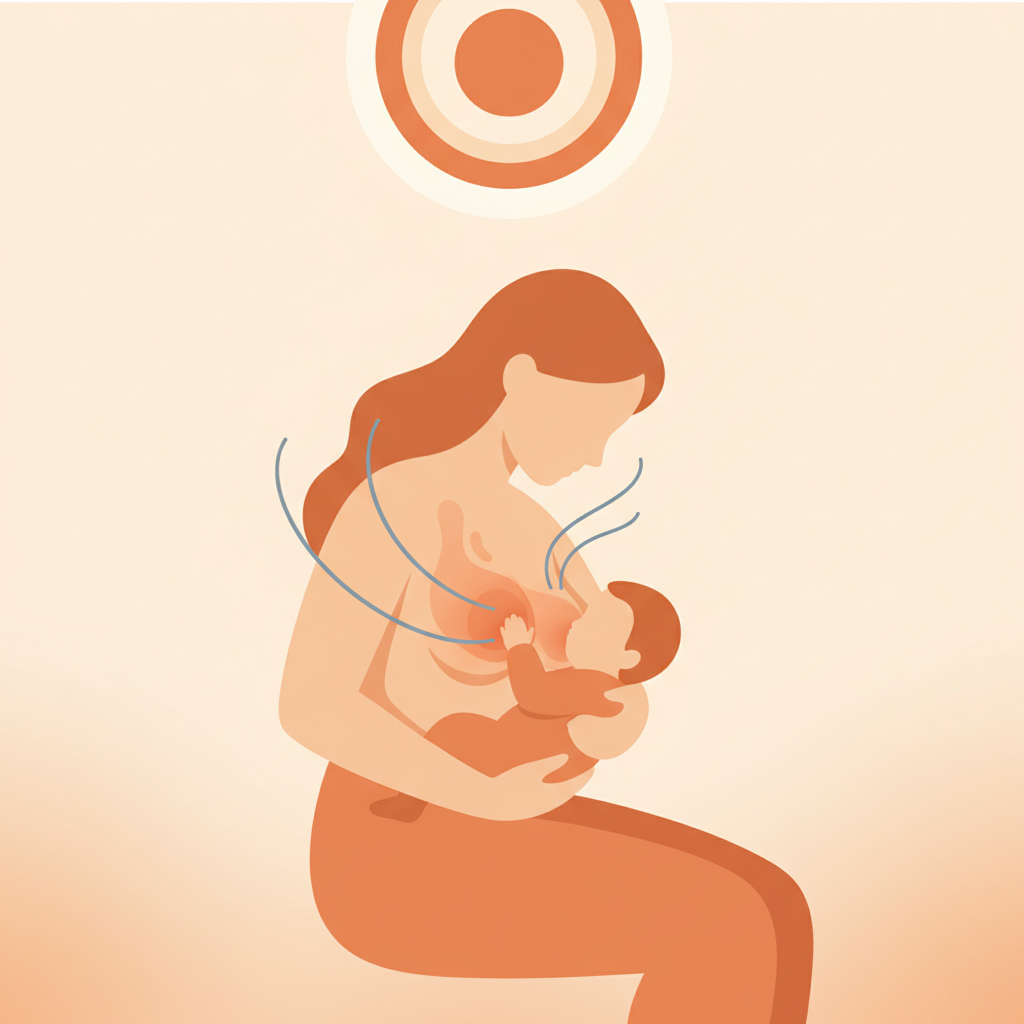
Milk production is regulated by supply and demand: as feeds decrease, the body gradually reduces production. To avoid discomfort:
- Gradual weaning: the best prevention against engorgement and mastitis.
- Express only enough to relieve pressure, without fully draining (that would stimulate production).
- Apply cold if there is discomfort.
- Consult a doctor if lumps, fever or redness appear.
The AAP notes that after complete weaning, some parents may continue to have residual milk secretion for weeks or even months, which is physiological and requires no treatment.
The Parent's Emotional Journey
Weaning can trigger a mix of relief, sadness, guilt and grief that is often left unspoken. It is worth remembering that there is no contradiction in wanting to wean and, at the same time, feeling sorrow about it. Consider:
- Allowing yourself to feel without self-judgement.
- Talking about it with your partner, friends or a support group.
- Remembering that the bond does not end with breastfeeding.
At LetsShine.app we know that weaning can affect couple dynamics in unexpected ways. Our AI mediator can help you navigate this process as a team, communicating needs and supporting each other.
Frequently Asked Questions
Are there pills to stop milk production abruptly?
Medications such as cabergoline exist that inhibit prolactin production, but the AAP discourages their routine use for weaning due to side effects. They are only indicated in specific medical situations under prescription.
Do I have to wean if I'm pregnant?
Not necessarily. Breastfeeding during pregnancy is safe in normal pregnancies, according to the AAP. Some parents practise tandem nursing (feeding the older child and the newborn). It is a personal decision.
At what age does natural weaning typically happen?
Anthropological research suggests that natural weaning in humans occurs between 2.5 and 7 years of age. The global average is well above what is commonly practised in Western societies.
Can weaning trigger depression?
The abrupt drop in prolactin and oxytocin that accompanies weaning (especially if rapid) can contribute to mood changes. It is not a clinical depressive disorder in most cases, but if symptoms persist, consulting a mental health professional is advisable.
Your relationships can improve. Today.
Start free in 2 minutes. No credit card, no commitment. Just you, the people you care about, and an AI that helps you understand each other.
Start free now