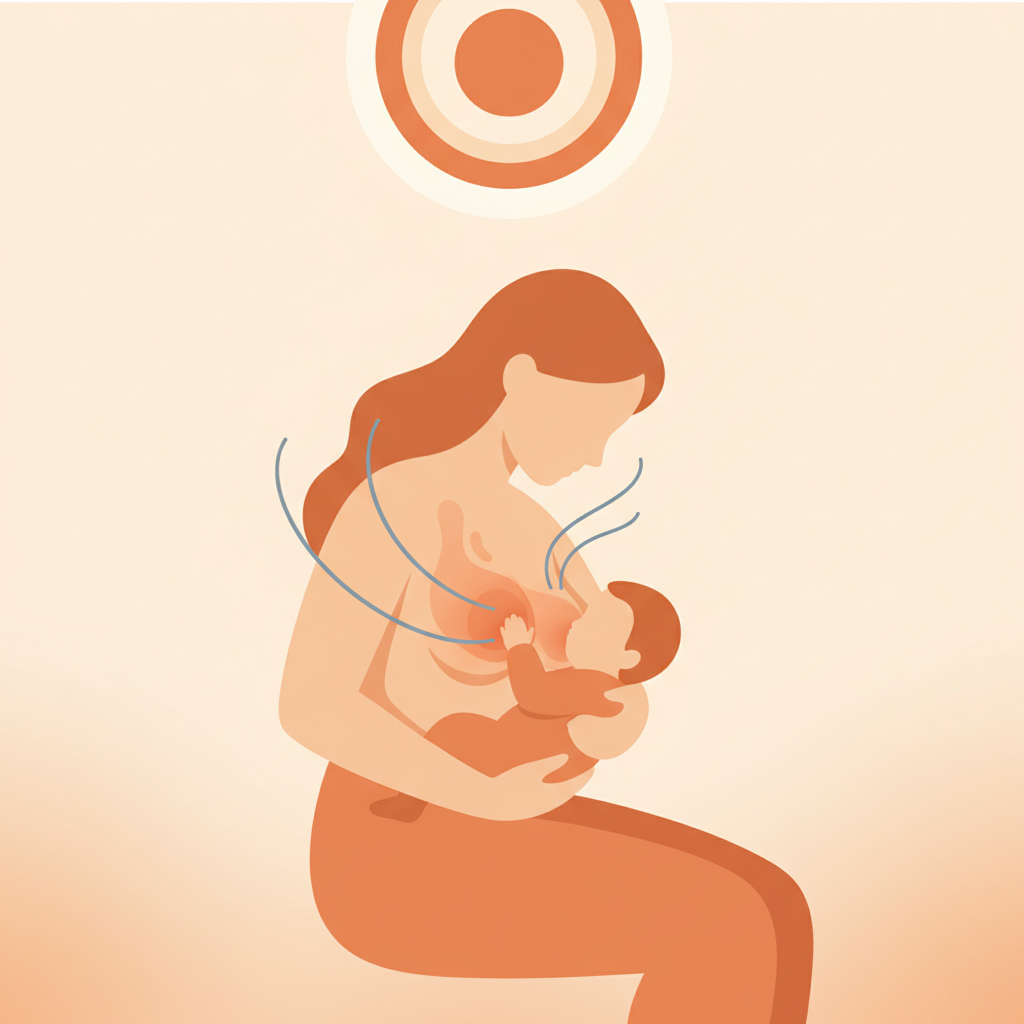
Mastitis is an inflammation of breast tissue that may or may not involve bacterial infection, affecting approximately 10-33% of breastfeeding women according to the Academy of Breastfeeding Medicine (ABM). While historically treated generically with antibiotics, current evidence — informed by the ABM's revised Clinical Protocol #36 (2022) — clearly distinguishes between ductal narrowing, inflammatory mastitis, and bacterial mastitis, and treatment varies significantly depending on the case.
This article gathers the most up-to-date evidence so you can identify what is happening, act in time, and know that mastitis does not have to mean the end of breastfeeding.
| Situation |
Main symptoms |
Fever? |
Antibiotics? |
| Engorgement |
Firm, warm breast, bilateral |
Rarely |
No |
| Ductal narrowing (clogged duct) |
Localized lump, focal pain, no general malaise |
No or low-grade |
No (usually) |
| Inflammatory mastitis |
Red zone, warm, intense pain, general malaise |
Yes (>101.3 F / 38.5 C) |
Not necessarily |
| Bacterial mastitis |
Inflammatory symptoms + no improvement in 24-48 h |
Yes |
Yes |
| Breast abscess |
Fluctuant mass, intense pain, high fever |
Yes |
Yes + drainage |
What Causes Mastitis?
Mastitis occurs when milk accumulates in breast tissue and triggers an inflammatory response. The most common causes are:
- Incomplete breast emptying: due to poor latch, infrequent feeds, skipping nighttime feeds, or improper pump use.
- External pressure on the breast: underwire bras, seatbelts, sleeping on the stomach, carriers that compress breast tissue.
- Nipple cracks: can serve as entry points for bacteria (especially Staphylococcus aureus).
- Stress and fatigue: reduce immune response and can inhibit letdown.
- Mammary dysbiosis: an imbalance in the mammary gland microbiota, a concept studied extensively by microbiologists at institutions like the Complutense University of Madrid and referenced in updated ABM protocols.
The ABM emphasizes that "mastitis is not the mother's fault. It is a common, treatable, and preventable complication when its mechanisms are understood."
How to Differentiate a Clogged Duct From Mastitis?
A clogged duct (now more accurately called ductal narrowing) is a precursor to mastitis. It presents as a hard, painful lump in one area of the breast, without fever or general malaise. If resolved in time, it does not progress to mastitis.
Mastitis adds systemic inflammatory signs: fever, chills, flu-like malaise, and a red, hot, very painful area of the breast. If fever exceeds 101.3 F (38.5 C) for more than 24 hours or red streaks appear on the breast, consulting a healthcare provider is a priority.
Importantly, the updated ABM protocol (2022) advises against aggressive massage and excessive pumping, which were previously recommended but can worsen inflammation. Gentle lymphatic drainage and physiologic milk removal are now preferred.
What Is the Updated Treatment Protocol?
The protocol recommended by the ABM (Clinical Protocol #36, revised 2022) is:
First 12-24 hours (conservative management):
- Do not stop breastfeeding from the affected breast. Offer that breast first.
- Effective milk removal: check baby's latch. If they are not emptying well, supplement with hand expression or gentle pumping.
- Apply cold between feeds (20 minutes, with a cloth barrier). Cold reduces inflammation. Warmth before a feed may facilitate letdown, but should not be applied for extended periods.
- Anti-inflammatories: ibuprofen (compatible with breastfeeding) is the first-line treatment. It reduces both inflammation and pain.
- Rest: mastitis is the body's signal to stop. Delegate everything possible.
- Gentle massage toward the nipple only if it does not increase pain. Aggressive massage can worsen inflammation.
If no improvement in 24-48 hours:
- Consult your healthcare provider. Likely indication for milk culture and antibiotic (typically dicloxacillin, cephalexin, or amoxicillin-clavulanate, all compatible with breastfeeding according to LactMed).
- Rule out breast abscess via ultrasound if a fluctuant mass is present.
If mammary dysbiosis is suspected (subacute mastitis):
- Deep, shooting pain described as "glass" or "needles," without external inflammatory signs.
- Milk culture showing elevated bacterial counts.
- Treatment with specific probiotics (Lactobacillus fermentum, Lactobacillus salivarius) based on emerging research.
Can You Continue Breastfeeding With Mastitis?
Yes, and in fact it is recommended. Milk from the breast with mastitis is safe for the baby. Stopping breastfeeding can worsen the situation by increasing milk retention. The only exception is a surgically drained abscess, in which case the surgeon's instructions should be followed.
How to Prevent Mastitis?
- Feed on demand: without rigid schedules, without limiting the duration of feeds.
- Correct latch: have it assessed by an IBCLC (International Board Certified Lactation Consultant) if there is pain or cracking.
- Avoid pressure on the breast: loose clothing, side-sleeping.
- Do not skip feeds abruptly: if you need to space feeds, do it gradually.
- Stress management: rest, ask for help, do not try to do everything.
- Mammary probiotics: evidence suggests they can reduce recurrence in women with a history of mastitis.
When Can Mastitis End Breastfeeding?
Mastitis rarely forces weaning. However, repeated pain, fear of recurrence, and lack of professional support cause many women to stop breastfeeding after mastitis. This is not a failure: it is a legitimate decision made under difficult circumstances.
If you wish to continue breastfeeding after mastitis, seeking support from an IBCLC can be decisive. At LetsShine.app we understand that feeding decisions can create tension in a relationship, and our AI mediator is available to help communicate needs and find joint solutions.
Frequently Asked Questions
Does mastitis always need antibiotics?
No. Inflammatory mastitis (without bacterial infection) is treated with effective milk removal, ibuprofen, and rest. Only if symptoms persist beyond 24-48 hours or worsen is antibiotic therapy considered.
Can I take ibuprofen while breastfeeding?
Yes. Ibuprofen is compatible with breastfeeding according to LactMed (very low risk). It is the anti-inflammatory of choice for mastitis.
What should I do if I have recurrent mastitis?
Consult an IBCLC to review latch and milk removal. Request a milk culture to rule out dysbiosis. Consider the use of specific mammary probiotics.
Can mastitis happen if I am not breastfeeding?
Yes, although it is much less common. It can occur during postpartum engorgement in women who are not breastfeeding, or in contexts unrelated to lactation.
How long does it take for mastitis to heal?
With appropriate treatment, symptoms usually improve within 48-72 hours. Full resolution can take about a week. If there is no improvement within 48 hours, consult your healthcare provider again.
Your relationships can improve. Today.
Start free in 2 minutes. No credit card, no commitment. Just you, the people you care about, and an AI that helps you understand each other.
Start free now