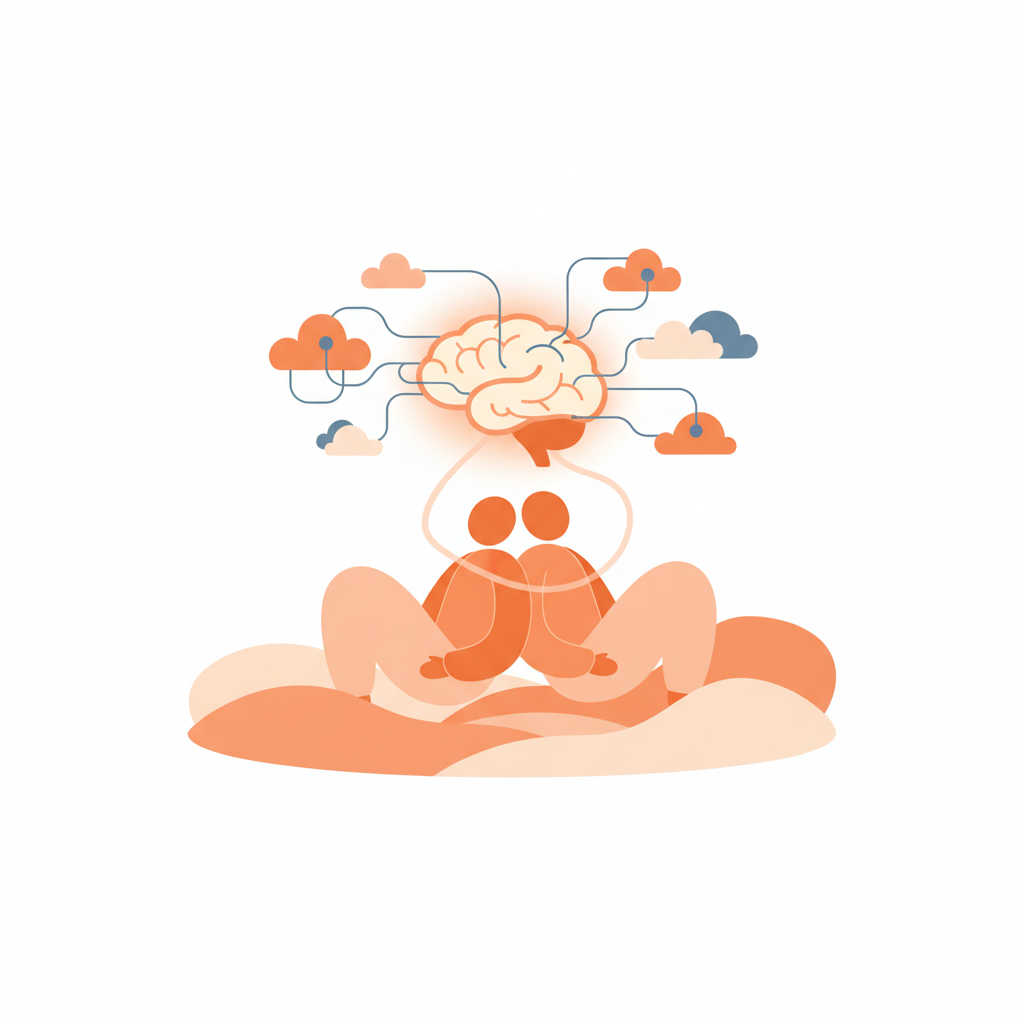
Mindfulness -- the practice of paying attention to the present moment with openness, curiosity, and without judgement -- has been studied extensively as an individual practice. The evidence base is robust: regular mindfulness practice reduces anxiety, depression, and stress while improving attention, emotional regulation, and overall well-being. But the application of mindfulness to relationships -- what researchers call "relational mindfulness" -- is a more recent and equally promising frontier.
James Carson's Mindfulness-Based Relationship Enhancement (MBRE) programme, the first rigorous clinical application of mindfulness to couples, demonstrated in 2004 that couples who practised together experienced significant gains in relationship satisfaction, closeness, and acceptance, with reductions in relationship distress. These gains persisted three months after the programme ended. Since then, a growing body of research has confirmed what contemplatives have long known: the quality of your attention determines the quality of your relationships.
What Relational Mindfulness Looks Like
Relational mindfulness is not about meditating with your partner (though that can help). It is about bringing the qualities of mindfulness -- presence, non-judgement, curiosity, acceptance -- into the fabric of everyday relational life.
At Breakfast
Instead of scrolling your phone while your partner makes coffee, you notice them. The way they move. The expression on their face. You say "good morning" and mean it -- not as a reflex but as a small act of recognition. This takes three seconds and changes the tone of the entire morning.
During Conflict
Instead of reacting to your partner's words with your pre-loaded defence, you pause. You notice the heat in your chest. You notice the thought forming ("That's not fair"). You let the thought be there without acting on it. You breathe. And then you respond -- from choice, not from reflex.
In Silence
Instead of filling every quiet moment with noise, screens, or tasks, you allow shared silence to exist. You discover that silence between two people who are present with each other is not empty -- it is full of a quiet, sustaining warmth.
In Touch
Instead of touching your partner on autopilot -- the habitual kiss goodbye, the mechanical holding of hands -- you bring awareness to the contact. You feel the warmth of their skin. You notice the pressure of their grip. Simple physical contact becomes a meditation in itself.
The Science of Presence in Relationships
A 2016 study by Adair and colleagues published in the Journal of Marital and Family Therapy examined 186 couples and found that mindfulness predicted relationship satisfaction even after controlling for personality traits and attachment style. In other words, being mindful in your relationship matters regardless of your temperament or attachment history.
Research by Barnes and colleagues (2007) found that people with higher trait mindfulness reported lower emotional stress in response to relationship conflict, used more constructive strategies during disagreements, and were more likely to recover quickly from negative interactions. The mechanism is straightforward: mindfulness creates a gap between stimulus and response. In that gap lies the difference between a constructive conversation and a destructive argument.
Five Mindfulness Practices for Everyday Relationships
1. The Arrival Practice
When you come home -- or when your partner comes home -- take ten seconds to fully arrive before engaging. Put down your bag. Take a breath. Look at the person in front of you. Let the transition from "out there" to "here, with you" be conscious rather than automatic.
2. The One-Conversation Practice
Once a day, have one conversation in which you do nothing else. No cooking while talking. No glancing at the television. No checking notifications. One conversation, with full attention, even if it lasts only three minutes.
3. The Trigger Pause
When you feel the familiar surge of reactivity during a disagreement, name it silently ("I'm triggered") and take three breaths before speaking. This is not suppression; it is creating space for your wisest self to respond. The naming itself, as Matthew Lieberman's research shows, reduces the intensity of the emotional reaction.
4. The Gratitude Moment
Before sleep, silently identify one thing your partner did today that you appreciate. You do not need to say it aloud (though you can). The act of noticing what is good -- counteracting the negativity bias that evolution wired into our brains -- is a mindfulness practice with powerful relational effects. Robert Emmons's research on gratitude shows that this simple practice significantly increases relationship satisfaction.
5. The Repair Practice
After a conflict, instead of pretending it did not happen or rehashing it endlessly, sit together and each share one sentence about what you felt (not what the other did wrong). Then let it rest. Mindful repair is not about resolution; it is about acknowledgement.
Mindfulness and Relational Patterns
One of the most valuable applications of mindfulness in relationships is the capacity to see your own patterns in real time. Without mindfulness, patterns operate invisibly: you pursue, they withdraw; you criticize, they defend; you distance, they demand. With mindfulness, you begin to notice the pattern as it unfolds: "There I go again, pursuing. I can feel the anxiety driving it. I have a choice."
This moment of recognition -- seeing the pattern while you are in it, rather than only in retrospect -- is the turning point. It does not mean the pattern disappears. It means you are no longer run by it. You have gained a degree of freedom that no amount of arguing could have produced.
At LetsShine.app, the AI-guided reflection process is designed to help partners identify these patterns together, creating a shared language for the automatic dynamics that shape their relationship. When both people can say "We're in the pursue-withdraw cycle again," the cycle loses much of its power.
Frequently Asked Questions
Do I need to meditate regularly for mindfulness to help my relationship?
Formal meditation strengthens the capacity for mindfulness, but relational mindfulness can be practised directly. The five practices above do not require a meditation habit. That said, even ten minutes of daily meditation will make all relational practices easier, because you will have a stronger "muscle" for present-moment awareness.
Can mindfulness help if my partner is not interested in practising?
Yes. Mindfulness is inherently unilateral -- you practise it in your own mind, and it changes how you show up in the relationship. Many partners notice the shift without knowing its cause: conversations feel safer, reactions feel calmer, presence feels more genuine.
Is mindfulness the same as being calm all the time?
No. Mindfulness is not about suppressing emotion. It is about being fully aware of your emotions without being controlled by them. You can be mindful and angry, mindful and sad, mindful and joyful. The difference is that you are experiencing the emotion rather than being run by it.
How does mindfulness relate to couples therapy?
Many contemporary couples therapy approaches -- including Emotionally Focused Therapy (EFT) and the Gottman Method -- incorporate mindfulness principles. Mindfulness is not a replacement for therapy but a powerful complement that enhances the capacity to engage in the therapeutic process.
What if I try to be mindful during an argument and fail?
That is the practice. Noticing that you lost mindfulness is itself a moment of mindfulness. The instruction is always the same: notice, do not judge, and return. Each return strengthens the capacity. Failure, in mindfulness, is just another word for practice.