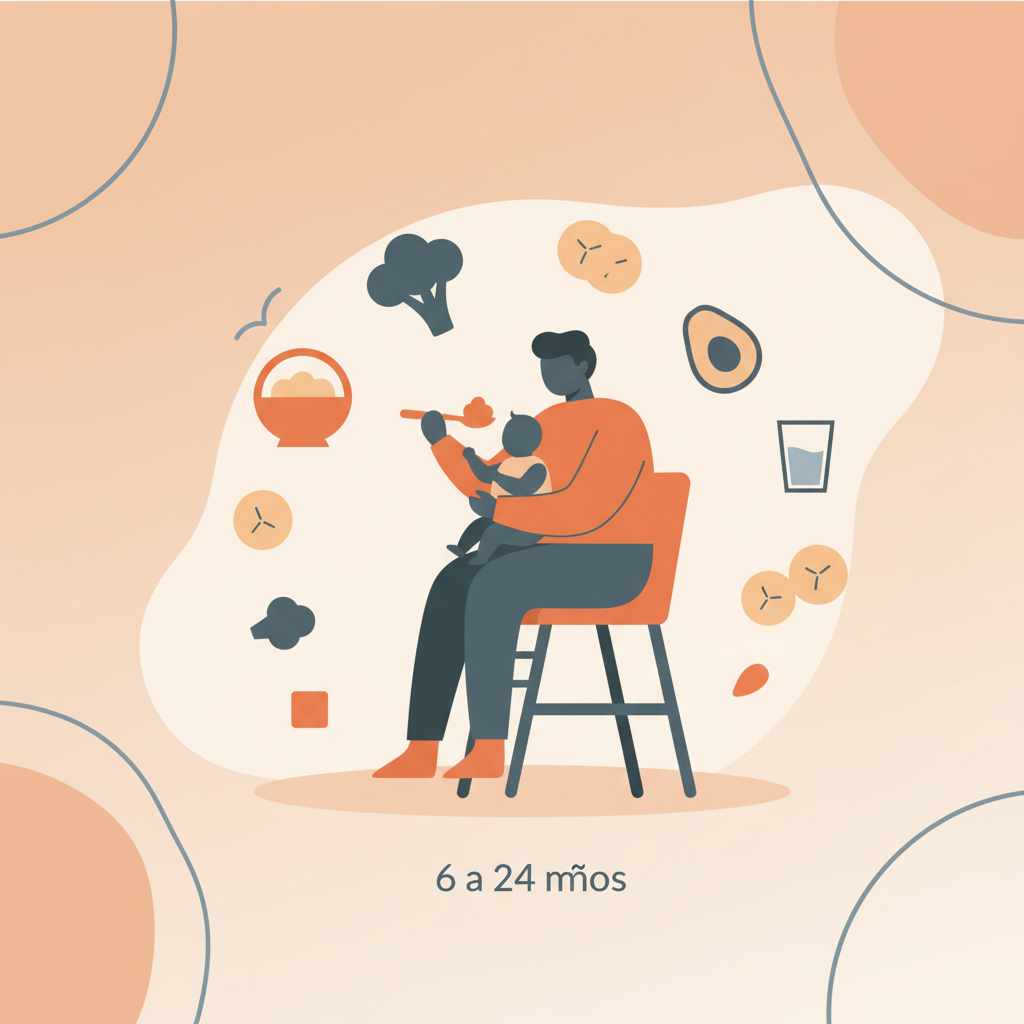
Complementary feeding is the process of introducing foods other than breast milk or formula into a baby's diet, while keeping milk as the primary food until 12 months. The WHO recommends it from around 6 months of age, when milk alone no longer covers all the baby's growing nutritional needs -- particularly for iron and zinc.
The AAP, in line with the European Society for Paediatric Gastroenterology, Hepatology and Nutrition (ESPGHAN), provides the guidelines that shape complementary feeding practices internationally.
When Is the Baby Ready to Start?
The signs of readiness, according to the AAP, include:
- At least 6 months old (approximately; some babies mature a few weeks earlier or later).
- Sitting with minimal support and holding the head upright.
- Loss of the tongue-thrust reflex (no longer pushing food out with the tongue).
- Interest in food: watching, reaching, grabbing, bringing objects to the mouth.
- Reasonable hand-to-mouth coordination.
Do not go by age alone: a 5.5-month-old who meets all the signs is more ready than a 7-month-old who cannot sit upright.
Month-by-Month Feeding Guide
6 Months: The First Tastes
This is the exploration stage. The baby is learning textures, flavours and the mechanics of eating. Breast milk or formula remains the primary source of nutrition.
| Food Group |
Examples |
Suggested Texture |
| Vegetables |
Sweet potato, butternut squash, broccoli, courgette, carrot |
Smooth puree or soft sticks (BLW) |
| Fruits |
Banana, pear, apple (cooked), avocado, mango |
Smooth puree or soft strips |
| Cereals |
Iron-fortified baby rice, oats, millet |
Porridge mixed with breast milk or formula |
| Protein |
Chicken, turkey, beef, lentils, tofu |
Pureed or shredded into long strips |
| Fats |
Olive oil, avocado, butter |
Added to purees or on toast fingers |
Key nutrients at this stage: iron (from meat, fortified cereals, lentils) and zinc (from meat, legumes).
8-9 Months: Growing Variety
The baby's pincer grasp is developing, allowing smaller pieces. New foods can be introduced more quickly.
- Add: cooked egg (well-cooked yolk and white), plain full-fat yoghurt, soft cheese, white fish, salmon, a wider range of fruits and vegetables.
- Texture: mashed with a fork, soft lumps, small strips.
- Meals: aim for 2-3 meals per day alongside breast milk or formula.
10-12 Months: Approaching the Family Table
The baby can now handle a wider variety of textures and is increasingly eating what the rest of the family eats, with minor adaptations (no added salt or sugar).
- Add: wider range of fish, pasta, rice, bread, soft-cooked legumes, most fruits and vegetables.
- Texture: small diced pieces, shredded, finger food.
- Meals: 3 meals and 1-2 healthy snacks per day.
12-18 Months: Transition to Family Food
From 12 months, the AAP considers it safe to introduce:
- Whole cow's milk as a drink (not as a replacement for water; up to around 500 ml per day).
- Honey (botulism risk is gone after 12 months).
- Most family foods, adapted to avoid excess salt, sugar and choking hazards.
18-24 Months: Full Integration
By this stage, most children eat the same meals as the family, with appropriate portion sizes and continued attention to choking hazards. Breast milk or formula is no longer the primary caloric source but can continue as desired.
Common Mistakes to Avoid
- Adding salt or sugar to baby food before 12 months (and keeping it minimal after).
- Offering juice as a regular drink (the AAP recommends no juice before 12 months, and limited amounts after).
- Replacing meals with milk: after 12 months, food should become the primary source of nutrition, with milk as a complement.
- Forcing the child to finish everything on the plate.
- Delaying allergens: current evidence strongly supports early introduction (see our allergen guide).
How Can LetsShine.app Help?
Disagreements about what and how to feed a baby are among the most common sources of tension in new-parent couples. At LetsShine.app our AI mediator can help you align as a team on feeding decisions, handle differing advice from grandparents, and communicate calmly even when you are sleep-deprived.
Frequently Asked Questions
Does my baby need to drink water once solids start?
Yes. The AAP recommends offering small amounts of water in an open cup from 6 months, especially with meals. Breast milk or formula remains the main fluid source.
How much food should my baby eat per meal?
There is no fixed quantity. Let the baby guide you. Start with a few teaspoons and increase as appetite grows. The AAP emphasises responsive feeding: watch for hunger and fullness cues.
Is it safe to give meat from the start?
Yes. The AAP actually recommends iron-rich foods like meat as among the first foods offered, given the risk of iron deficiency after 6 months.
What if my baby gags a lot on lumpy food?
Gagging is a normal protective reflex. If it is severe or persistent, slow the texture progression and consult your paediatrician. Gagging typically decreases within a few weeks of exposure.
Your relationships can improve. Today.
Start free in 2 minutes. No credit card, no commitment. Just you, the people you care about, and an AI that helps you understand each other.
Start free now