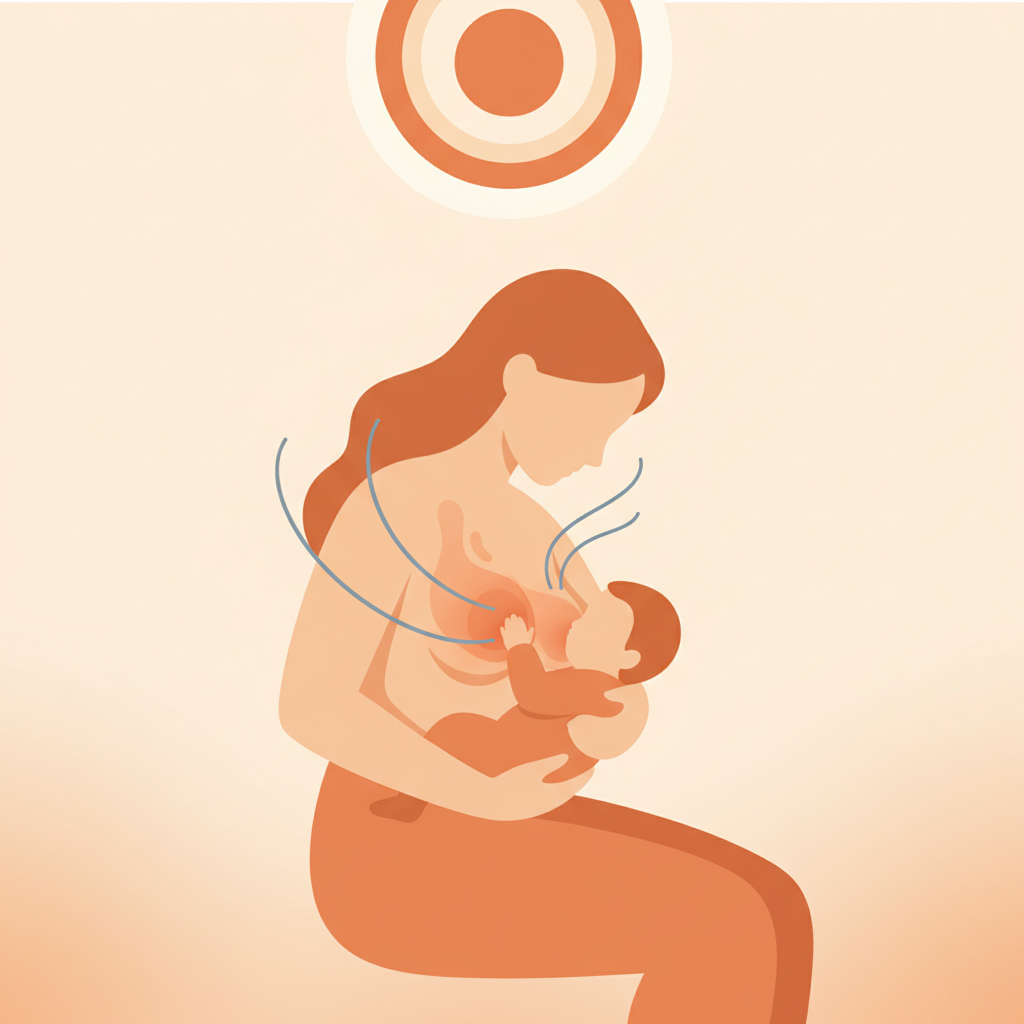
Pain during breastfeeding is the most common reason for early cessation, ahead of genuine low supply or return to work. It is defined as any painful sensation in the nipple, areola or breast during or after a feed that goes beyond the mild, transient tenderness of the first days. The American Academy of Pediatrics (AAP) is clear: breastfeeding should not hurt. When it does, there is always an identifiable cause and, in the vast majority of cases, a solution.
Is It Normal for Breastfeeding to Hurt at the Beginning?
The first few days may bring heightened sensitivity in the nipple at the start of a feed, lasting a few seconds and diminishing over the first week or two. This falls within normal physiological adaptation.
What is not normal, at any point, includes:
- Pain that lasts throughout the feed or intensifies.
- Pain that persists between feeds.
- Cracked, wounded or bleeding nipples.
- Stabbing or "needle-like" pain deep inside the breast.
- Fever or redness in any area of the breast.
Dr. Jack Newman stresses: "If breastfeeding hurts, something can be improved. You should neither endure nor resign yourself."
What Are the Most Common Causes of Pain?
| Cause |
Key Symptoms |
Estimated Frequency |
| Poor latch |
Pain at the start of the feed, nipple distorted or flattened when baby releases |
70-80 % of cases |
| Tongue-tie |
Shallow latch despite corrections, clicking sounds, lipstick-shaped nipple |
4-10 % of newborns |
| Cracked nipples / wounds |
Visible damage, possible bleeding |
Consequence of poor latch |
| Thrush (candida) |
Burning, radiating pain; shiny pink nipple; sometimes white patches in baby's mouth |
Variable |
| Nipple vasospasm |
White nipple after the feed, intense Raynaud-type pain |
Less common |
| Mastitis |
Red, hot, hard area; fever; malaise |
2-10 % of breastfeeding parents |
| Blocked duct |
Localised painful lump, no fever |
Common |
| Milk bleb (blister) |
White dot on nipple, focal pain |
Occasional |
How to Resolve Pain Based on Its Cause
Poor latch: this is the number-one cause and the number-one solution. Ensure the baby opens the mouth wide, takes in the areola and the chin touches the breast. Trying different positions (cradle, football hold, lying down) can make a significant difference. An IBCLC can observe a live feed and correct subtle issues that are easy to miss.
Cracked nipples and wounds: air-dry the nipple after feeding, apply expressed breast milk (it contains healing factors) and, if needed, use hydrogel pads or purified lanolin. The key is to correct the cause (latch or tongue-tie), not just treat the symptom.
Tongue-tie: if pain persists after multiple latch-correction sessions, have a trained professional (IBCLC, paediatric dentist, oral surgeon) assess the baby's oral anatomy. Frenotomy, when indicated, is a quick procedure that often improves feeding immediately.
Thrush (candida): requires a medical diagnosis. It is usually treated with topical antifungal on the nipple and oral antifungal in the baby's mouth simultaneously. The LactMed database provides updated information on breastfeeding-compatible treatments.
Vasospasm: apply dry heat after the feed, avoid cold exposure and, in severe cases, a doctor may consider nifedipine, a medication compatible with breastfeeding according to LactMed.
Mastitis: the WHO updated its recommendations in 2022 and the AAP echoes them: do not stop breastfeeding from the affected breast, drain frequently (through feeds or expression), apply cold between feeds to reduce inflammation, and consult a doctor if high fever or symptoms do not improve within 24-48 hours. Antibiotics are only necessary when bacterial infection is confirmed or strongly suspected.
When Should You See an IBCLC?
The IBCLC (International Board Certified Lactation Consultant) holds the most rigorous certification in breastfeeding support worldwide. The AAP recommends consulting an IBCLC when:
- Pain does not resolve after two or three days of latch correction.
- Tongue-tie is suspected.
- Cracked nipples are not healing.
- The baby is not gaining weight appropriately.
- The parent has a history of breast surgery or breast hypoplasia.
In the US, find IBCLCs through the United States Lactation Consultant Association (USLCA). In the UK, check the Lactation Consultants of Great Britain (LCGB). La Leche League International also offers free peer-to-peer support worldwide.
What If the Pain Becomes Unbearable?
No parent should suffer in silence. If pain compromises your physical or emotional wellbeing, you have every right to seek professional help, to use nipple shields temporarily under guidance, to pump and offer in a bottle while the cause is addressed, or to supplement with formula if you need to. The best feeding is the one that allows both parent and baby to be well.
At LetsShine.app we understand that breastfeeding pain can generate frustration, guilt and conflict within a couple. If you feel the situation is overwhelming you, our AI mediator can support you in communicating needs and finding solutions without judgement.
Frequently Asked Questions
Do nipple shields solve breastfeeding pain?
Nipple shields can be a useful temporary tool under IBCLC supervision, but they do not address the underlying cause. Using them without professional assessment can mask a latch or tongue-tie issue and reduce milk transfer.
Does pain mean I don't have enough milk?
No. Pain and supply are separate issues. In fact, a painful latch may drain the breast poorly and reduce supply over time, but the solution is to fix the latch, not to supplement.
Can I take ibuprofen if my breast hurts?
Yes. Ibuprofen is compatible with breastfeeding according to the LactMed database. Its anti-inflammatory properties make it the analgesic of choice for mastitis or engorgement.
Can breastfeeding hurt with my second child even if it went well the first time?
Yes. Every breastfeeding pair is different. A baby with a shorter frenulum, a different mouth size or a different positioning preference can create new challenges. Prior success does not guarantee a problem-free experience.
Your relationships can improve. Today.
Start free in 2 minutes. No credit card, no commitment. Just you, the people you care about, and an AI that helps you understand each other.
Start free now