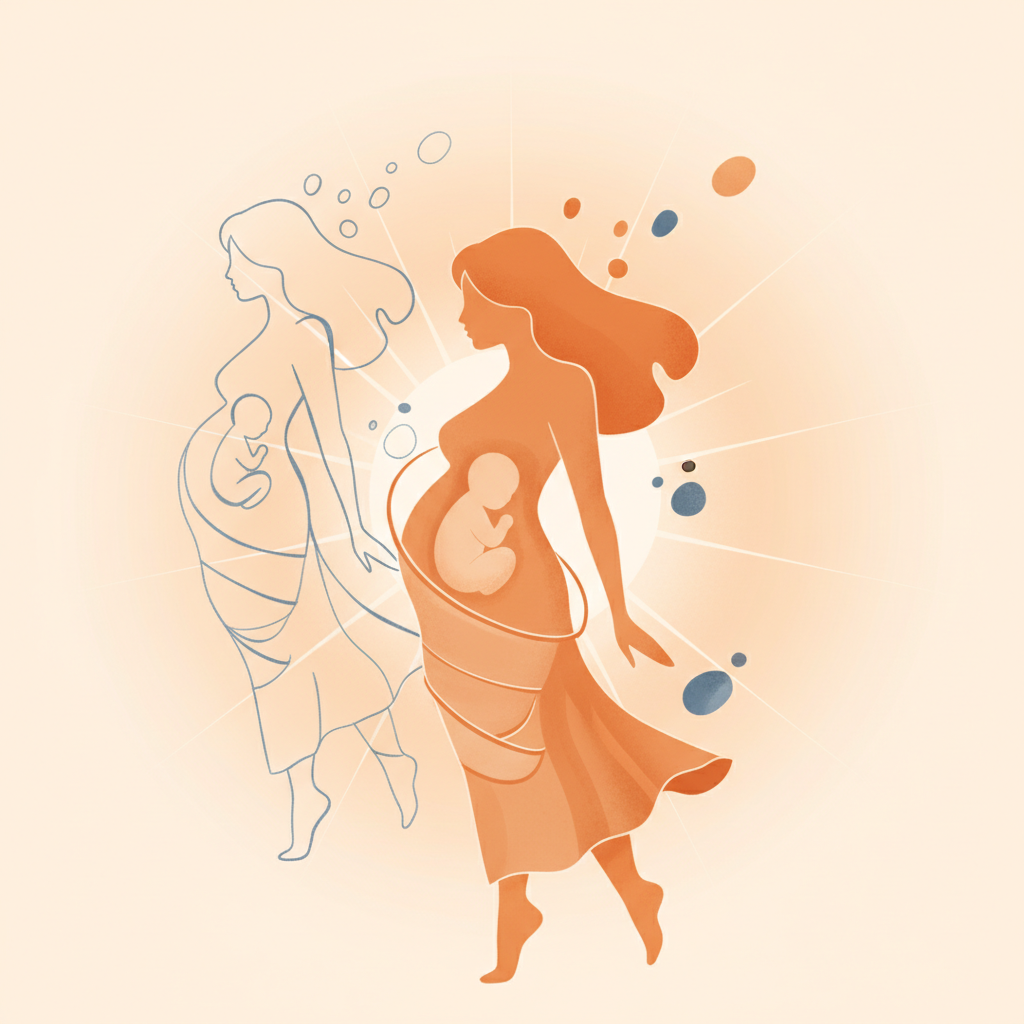
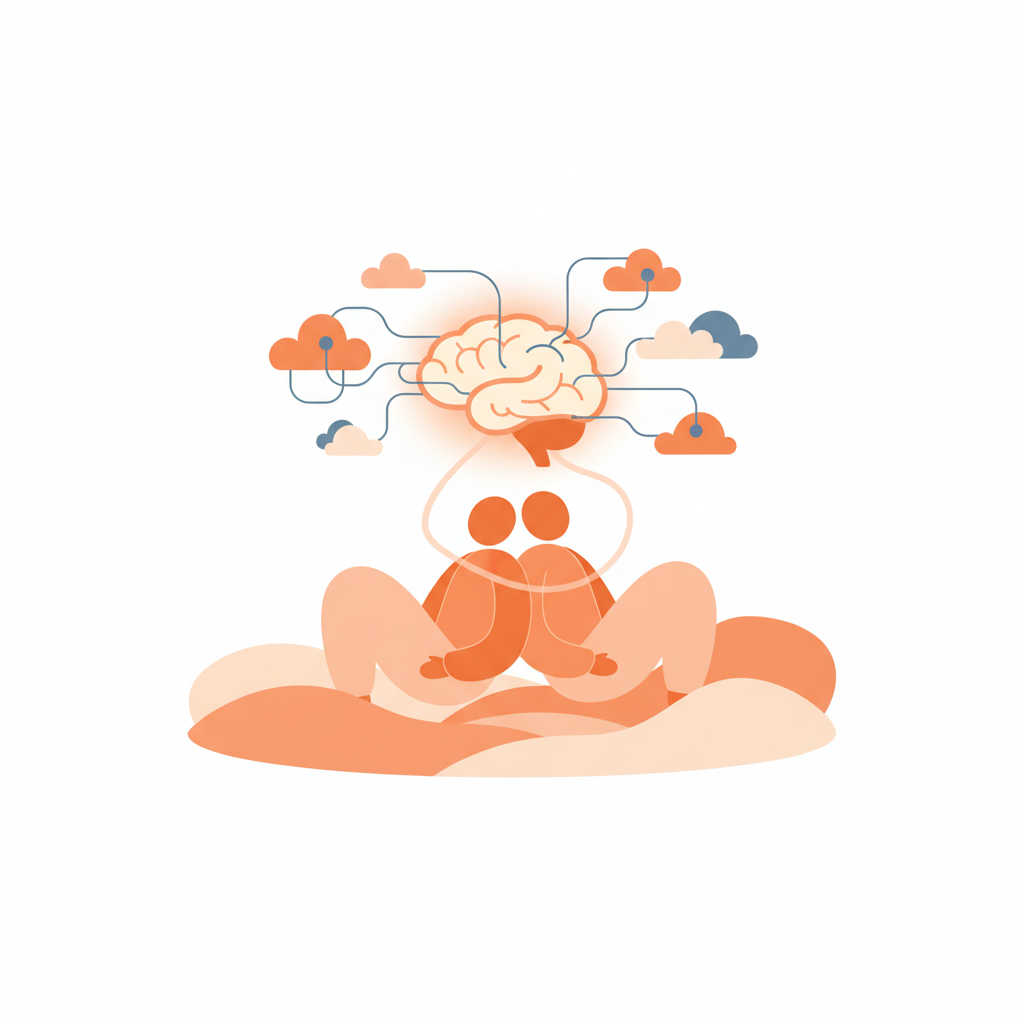
Matrescence is the neurobiological, hormonal and psychological process of becoming a mother. The term was coined by anthropologist Dana Raphael in 1973 and brought back into the conversation by reproductive psychologist Alexandra Sacks in 2017, who defined it as "the adolescence of motherhood": a period of deep identity reorganisation that affects the brain, the body, relationships and the sense of self. Neuroimaging studies published in Nature Neuroscience (2016) show that a mother's brain changes structurally during pregnancy, with reductions in grey matter that improve her ability to interpret her baby's needs. These changes carry an emotional cost that society ignores: the mother who is born alongside her child also needs to be cared for.
Overview: the stages of matrescence
| Stage |
What happens |
Common signs |
| Fusion (0-3 months) |
Total symbiosis with the baby, disappearance of the former self |
Hypervigilance, loss of time awareness, neglect of own needs |
| Ambivalence (3-12 months) |
Conflict between love for the child and grief for the former life |
Guilt about wanting alone time, irritability, feeling "not enough" |
| Reorganisation (12-24 months) |
Integration of the new identity with the former one |
A new version of the self emerges that includes — but is not reduced to — being a mother |
| Consolidation (2-3 years) |
Stabilisation of the maternal identity |
Greater confidence, less comparison, acceptance of imperfection |
Why does nobody talk about the maternal identity crisis?
Because the dominant cultural narrative says motherhood is "the most beautiful thing in the world," and any emotion that deviates from absolute happiness is interpreted as failure or pathology. Alexandra Sacks draws a clear line: maternal ambivalence is not postpartum depression. It is the legitimate grief for an identity that has been irreversibly transformed.
The woman you were before giving birth — the professional, the friend, the partner — has not died, but she has mutated. And that mutation requires grief. As Esther Perel puts it, "you cannot become something new without ceasing to be something previous."
What happens to a mother's brain?
Researcher Elseline Hoekzema demonstrated in her 2017 study (Nature Neuroscience) that pregnancy produces brain changes lasting at least two years. The areas that reorganise are linked to theory of mind — the ability to understand what another person feels — and to threat detection. In evolutionary terms, the brain optimises itself to protect the baby.
But this optimisation has side effects:
- Hypervigilance: the brain is on permanent alert, generating exhaustion and anxiety.
- Short-term memory loss: the famous "baby brain" has a neurological basis; cognitive resources are redirected towards the baby's survival.
- Emotional hypersensitivity: empathy and emotional reactivity intensify, making minor conflicts feel like threats.
How does matrescence affect the couple relationship?
The birth of a child is the transition that most impacts relationship satisfaction, according to the Gottman Institute. 67% of couples experience a significant drop in relationship quality during the first three years of parenting. The reasons are clear:
- Role redistribution: the mental and physical load falls disproportionately on the mother, generating resentment.
- Emotional desynchrony: she is living an identity transformation; he may not understand the magnitude of the change.
- Disappearance of intimacy: exhaustion and hormonal reorganisation affect sexual desire and emotional connection.
What does a mother in matrescence need?
She does not need advice. She needs validation. Rosenberg would say her fundamental need is to be seen in her vulnerability without being corrected. Specifically:
- Someone who says it out loud: "What you feel is normal. You are not crazy, and you are not a bad mother."
- Time alone without guilt: the mother needs to recover fragments of her former identity in order to integrate them into the new one.
- A partner who asks "how are you?" and listens to the answer without offering solutions.
- A real support network: not Instagram, but honest conversations with other mothers who do not idealise the experience.
- Therapeutic space: when ambivalence turns into hopelessness, perinatal therapy is essential.
When does ambivalence stop being normal?
Maternal ambivalence — loving your child while missing your former life — is universal and healthy. But if persistent intrusive thoughts appear, if you are unable to bond with the baby, if you have thoughts of self-harm, or if you experience uncontrollable crying for more than two weeks, it is time to seek professional help. Postpartum depression affects 10-15% of mothers, and postpartum anxiety affects a similar percentage.
At LetsShine.app we work with the premise that understanding what is happening to you is the first step to transforming it. Matrescence is not a problem to solve but a process to move through with awareness, companionship and self-compassion.
How to navigate matrescence with greater awareness
- Name it: simply knowing that matrescence exists reduces anxiety. You are not broken; you are in transition.
- Write: keeping an emotional journal during the first year helps identify patterns and process grief.
- Ask for specific help: not "whatever," but "I need you to do the grocery shopping on Tuesdays and give me an hour free on Saturdays."
- Speak to your partner from vulnerability: "I feel lost and I need you to see me" is more effective than "you never help."
- Find your tribe: groups of real, non-idealised motherhood. Shame dissolves when you discover that others feel the same.
The mother who is born alongside her child deserves as much care as the baby. Recognising this is not weakness; it is the most honest way to begin caring.
Frequently asked questions
What is matrescence?
It is the psychological, neurobiological and social transformation a woman experiences when becoming a mother. Comparable to adolescence in intensity, it involves structural brain changes, identity reorganisation and a legitimate grief for the former life. The term was coined by Dana Raphael in 1973.
Does maternal ambivalence mean I don't love my child?
No. Maternal ambivalence — deeply loving your child while missing freedom, personal time or your former identity — is universal and psychologically healthy. Not feeling ambivalence would be more concerning, because it would imply an idealisation disconnected from reality.
How long does matrescence last?
It varies by individual, but research suggests the most intense phase lasts between one and three years after birth. The documented brain changes persist for at least two years. It is not a single event but a gradual process of identity reorganisation.
How can I explain to my partner what is happening to me?
Try to separate the complaint from the reproach. Instead of "you don't help me," try: "I am living through a transformation I did not expect. I feel lost and I need you to ask me how I am without trying to fix it. I just need you to listen."
When should I seek professional help?
If sadness, anxiety or emotional disconnection from the baby persists for more than two weeks, if intrusive thoughts frighten you, or if you feel you cannot function in daily life, seek a professional specialising in perinatal mental health. Postpartum depression and anxiety have effective treatment.
Your relationships can improve. Today.
Start free in 2 minutes. No credit card, no commitment. Just you, the people you care about, and an AI that helps you understand each other.
Start free now