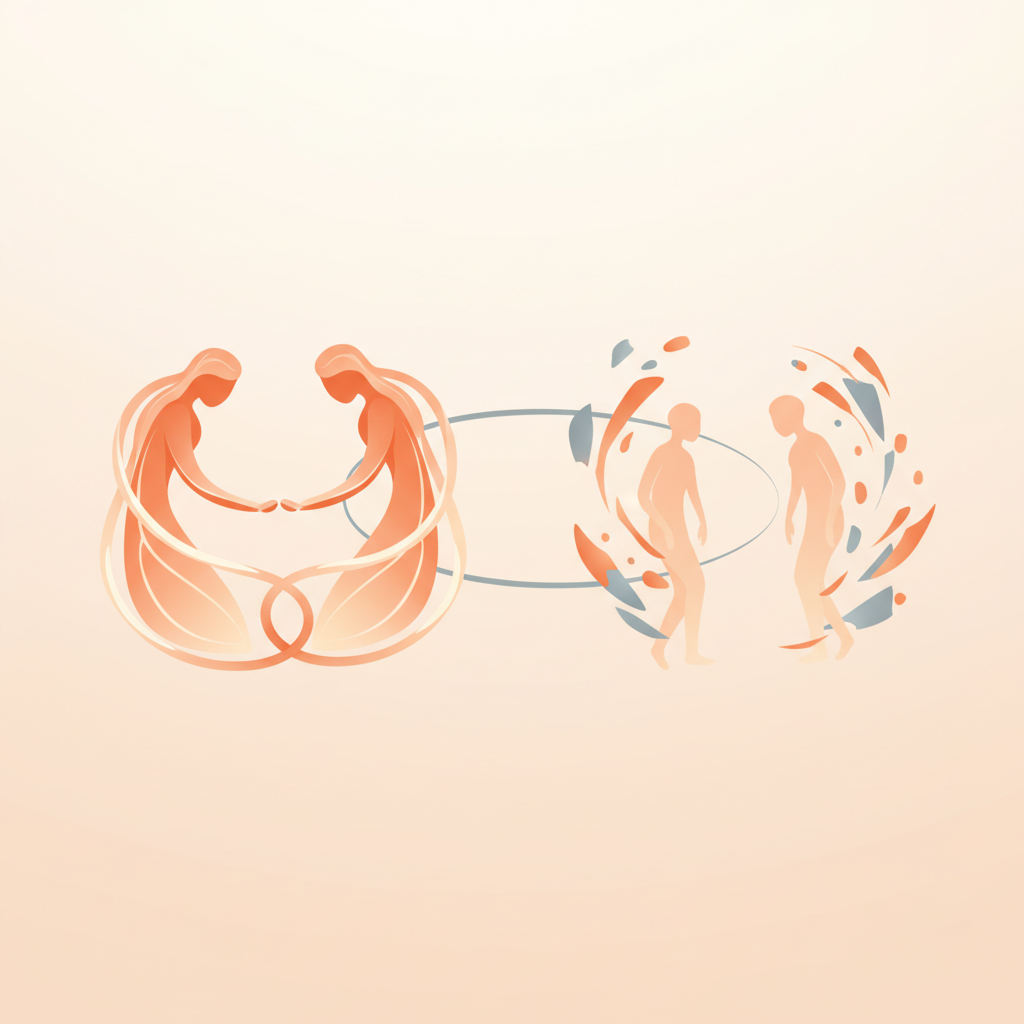
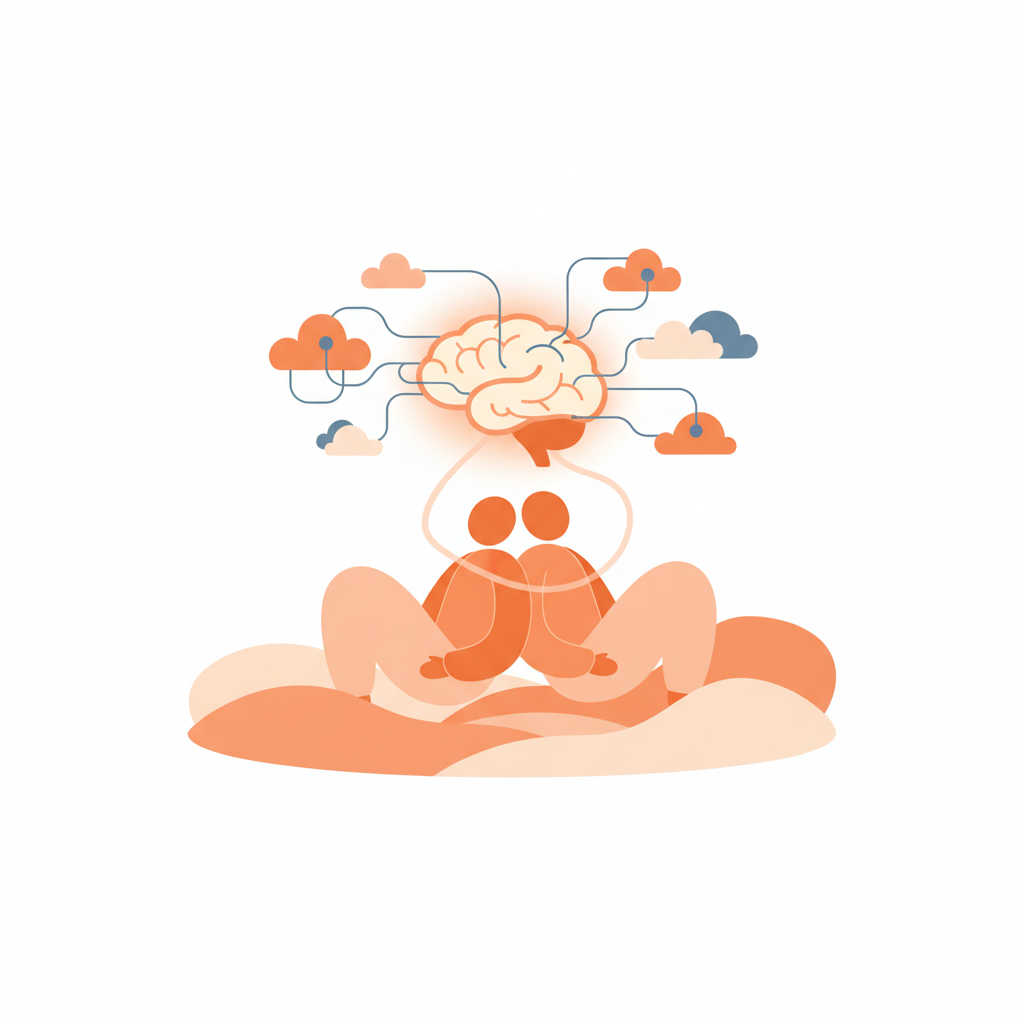
There is a moment in every romantic relationship when the world narrows to a single person. Colours seem brighter. Songs make sense. Sleep feels optional. You think about them constantly, and when you are together, everything else dissolves. This is infatuation -- the neurochemical storm that launches human bonding -- and it is magnificent. It is also, by design, temporary.
The anthropologist Helen Fisher at Rutgers University has mapped the neuroscience of infatuation extensively. The early phase of romantic love activates the ventral tegmental area (VTA) and the caudate nucleus -- the same dopamine-driven reward circuits triggered by cocaine. Infatuation is, in a very literal neurological sense, an addiction to a person. Norepinephrine surges create hyperawareness of the beloved. Serotonin drops to levels seen in obsessive-compulsive disorder, explaining the intrusive, constant thinking. Cortisol rises, creating the anxious excitement that makes your heart race when they text.
This neurochemical cocktail serves an evolutionary purpose: it motivates pair-bonding long enough for reproduction to occur. But evolution is indifferent to long-term happiness. Infatuation's expiration date -- typically 12 to 18 months, according to Fisher's research -- is not a sign that something went wrong. It is the system working exactly as designed.
The Crisis Point: When Infatuation Fades
The most dangerous period in a relationship is not the first argument. It is the period when infatuation's chemicals begin to recede and ordinary reality reasserts itself. The person who was perfect now leaves dishes in the sink. The conversations that crackled with electricity now sometimes feel mundane. The passionate urgency gives way to comfortable familiarity -- and many people interpret this shift as proof that love has died.
This interpretation is understandable but catastrophically wrong. What has died is not love; it is the neurochemical illusion that made the other person seem flawless. What remains -- if you are willing to see it -- is the raw material for something far more valuable than infatuation ever offered.
Thich Nhat Hanh distinguished between "being in love" and "true love." Being in love, he wrote, is largely a projection: you fall in love with your idea of the person, not the person themselves. True love requires seeing the other as they actually are -- imperfect, complex, sometimes frustrating -- and choosing them anyway. This is not a diminishment. It is an elevation. True love says: "I see all of you, and I choose to be here."
What Authentic Love Actually Looks Like
Authentic love is quieter than infatuation. It does not announce itself with fireworks. Its presence is felt in subtler ways:
- Seeing clearly: you perceive your partner's flaws without denial and their virtues without idealization. Both are held in the same compassionate gaze.
- Choosing daily: authentic love is not a feeling that happens to you but a decision you renew each morning. Some mornings it is easy; some mornings it requires effort. Both are valid.
- Bearing discomfort: you can sit with the other's pain without trying to fix it, and you can share your own vulnerability without performance.
- Growing together: authentic love creates a shared space in which both people evolve -- not in the same direction, necessarily, but with mutual encouragement.
- Conflict as information: disagreements are not evidence of failure but data about unmet needs, unspoken fears, or diverging values that deserve attention.
The Neuroscience of Lasting Love
Bianca Acevedo and Arthur Aron at Stony Brook University conducted a groundbreaking study in 2011, scanning the brains of people who reported being deeply in love after an average of 21 years of marriage. What they found challenged the assumption that intense love inevitably fades: these long-term lovers showed activation in the same VTA reward area as newly infatuated people. However, they also showed something the infatuated did not: activation in brain regions associated with calm, bonding, and pain suppression (the posterior globus pallidus and the raphe nucleus, linked to serotonin).
In other words, long-term love can retain the intensity of early passion while adding something infatuation lacks: serenity. It is not passion or peace; it is passion with peace. This is not automatic -- it requires sustained attention, vulnerability, and the willingness to keep choosing the relationship even when it is hard.
The Contemplative View: Love as Practice
The contemplative traditions describe love not as an emotion but as a practice. In Buddhism, metta (loving-kindness) is cultivated through deliberate, repeated intention -- first toward oneself, then toward loved ones, then toward all beings. The insight is radical: love is not something you either feel or do not feel. It is something you train, like any other capacity.
Applied to intimate relationships, this means that the waning of infatuation is not a problem to be solved but a doorway to be entered. When the chemicals recede, you are invited into a deeper practice: seeing the other clearly, listening without the filter of idealization, offering presence without the intoxication of novelty. This is harder than falling in love. It is also incomparably more rewarding.
From Infatuation to Authentic Love: The Transition
Phase 1: Disillusionment (months 12-24)
The partner's imperfections become visible. Disappointment arises. The temptation to conclude "I chose wrong" is strong. This phase is not a sign of failure; it is the necessary death of the illusion that makes authentic love possible.
Phase 2: Power Struggle (years 1-3)
Both partners try to mould the other into the idealised image infatuation created. Conflict escalates. The question shifts from "Are they the one?" to "Can I accept them as they are?" This is the crucible of the relationship.
Phase 3: Conscious Love (year 3 onward)
If both partners do the inner work -- self-knowledge, emotional archaeology, honest communication -- a new form of love emerges. It is not the breathless high of infatuation, but a steady, warm, deeply satisfying connection rooted in truth rather than fantasy.
Frequently Asked Questions
Does the disappearance of infatuation mean we are not compatible?
No. Infatuation's end is biologically programmed and happens in every relationship. Compatibility is revealed after infatuation fades, in how you navigate differences, share vulnerability, and support each other's growth.
Can you reignite the "spark" in a long-term relationship?
Yes, though "spark" may mean something different. Novelty (trying new things together), vulnerability (sharing something you have never shared), and deliberate presence (putting the phone away and making eye contact) all activate reward circuits. But the goal is not to replicate infatuation -- it is to discover the deeper pleasures that mature love offers.
Is it possible to love someone without infatuation?
Yes. Many lasting, deeply satisfying relationships begin without the classic "thunderbolt." Love that grows slowly from friendship, mutual respect, and shared values is no less real than love that begins with fireworks.
How do I know if what I feel is authentic love or just comfort?
Authentic love involves ongoing growth, vulnerability, and the willingness to face difficult truths about yourself and the relationship. Comfort alone tends toward stagnation. If you are still learning, still surprised, still occasionally uncomfortable in a productive way, love is alive.
What role does mindfulness play in sustaining authentic love?
Mindfulness keeps you present to the relationship as it is right now, rather than comparing it to the infatuation phase or fantasizing about a different partner. It trains the attention to notice what is good, what is difficult, and what is true -- all of which are essential nutrients for authentic love.