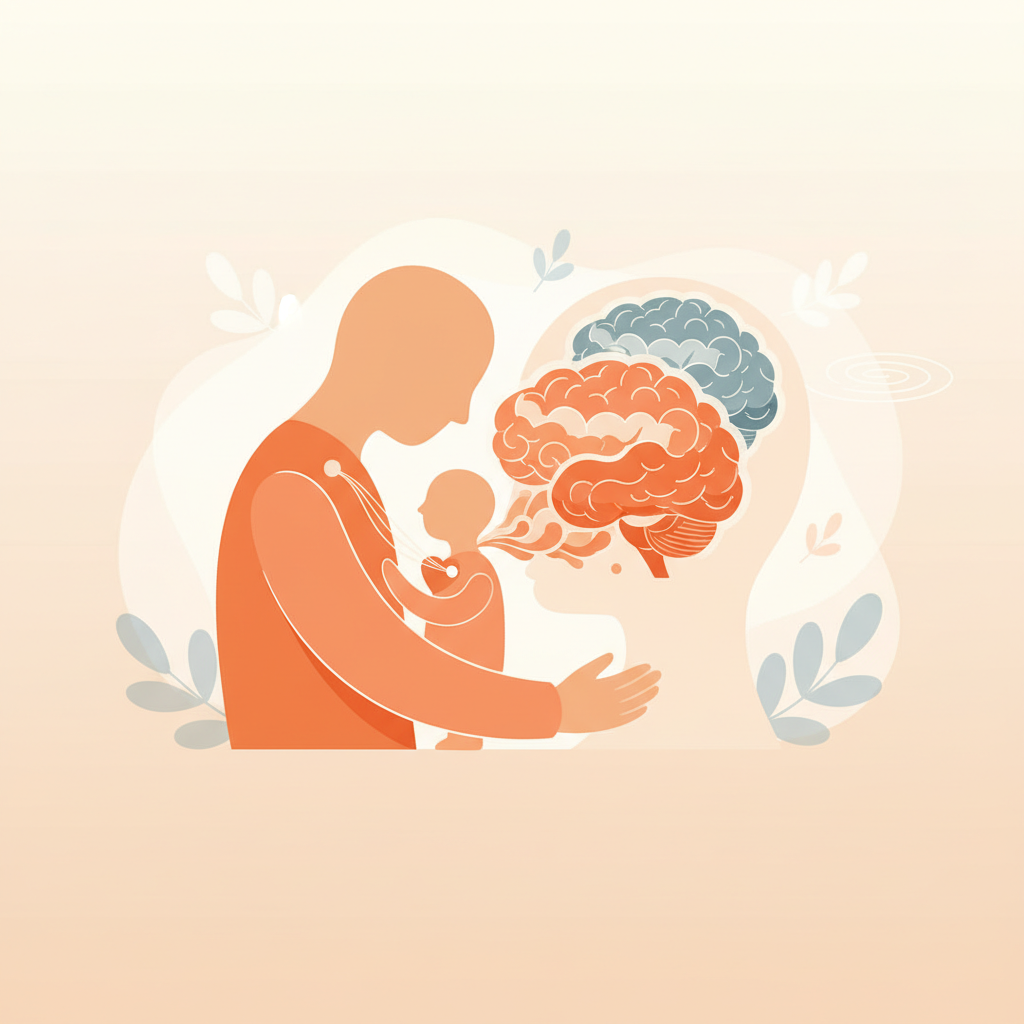
The human brain is not a single structure that operates as one unit, but a collection of regions with different functions, different maturation timelines, and sometimes opposing goals. In children, this neurological reality has direct consequences on behavior: when a three-year-old throws themselves on the floor screaming because they do not want to leave the park, they are not being spoiled or disobedient — their downstairs brain has taken control and the upstairs brain literally cannot intervene. Understanding this architecture is the first step toward stopping the punishment of what is actually neurobiology.
The Two-Story House Model
| Brain |
Location |
Function |
Maturation |
When it dominates... |
| Downstairs (emotional/reptilian) |
Brainstem and limbic system |
Emotions, survival, instinctive reactions |
Functional from birth |
Meltdowns, fears, aggression, shutdown |
| Upstairs (rational) |
Prefrontal cortex |
Self-control, empathy, decision-making, planning |
Not mature until age 25 |
Reflection, negotiation, problem-solving |
What Is Siegel's Upstairs-Downstairs Brain Model?
Dr. Dan Siegel, professor of psychiatry at UCLA and author of The Whole-Brain Child, proposes a metaphor that has transformed how we understand children's behavior. Imagine the brain as a two-story house:
- Downstairs brain: includes the brainstem and limbic system. It is the primitive part of the brain, shared with reptiles and mammals. It handles intense emotions, fight-or-flight responses, fear, rage, and vital functions. It is operational from birth.
- Upstairs brain: the prefrontal cortex. It is the most evolved part of the human brain, responsible for critical thinking, impulse control, empathy, morality, and the ability to consider consequences. It does not fully mature until the third decade of life.
When a child feels safe, both floors are connected and work as a team. But when the child feels threatened, frustrated, or overwhelmed, the downstairs brain "closes the staircase" and disconnects the upstairs brain. Siegel calls this "flipping the lid": the prefrontal cortex disconnects and the child is at the mercy of their most primitive reactions.
Why Can't My Child "Behave" in Certain Moments?
Because behaving — in the way adults expect — requires upstairs brain functions: self-control, consideration of consequences, empathy, ability to delay gratification. All of these depend on the prefrontal cortex, which in a child aged 2-6 is in active construction.
Dr. Bruce Perry uses a neurological framework to explain the same reality: the brain processes experience in a sequential, bottom-up manner. When a child is in a survival state (brainstem), they cannot access relational functions (limbic) or cognitive functions (cortical). You must meet the child where their brain is, not where you wish it were.
This does not mean we should allow any behavior. It means our response must account for the neurological reality of the child rather than ignore it.
What Happens in the Brain During a Meltdown?
The neurological process of a meltdown follows a predictable sequence:
- Trigger: something activates the limbic system (frustration, fear, tiredness, hunger).
- Amygdala hijack: the amygdala, the brain's emotional sentinel, detects a "threat" and activates the stress response.
- Prefrontal disconnection: cortisol and adrenaline flood the brain. The prefrontal cortex disconnects. The child loses the ability to reason, listen, and negotiate.
- Emotional explosion: crying, screaming, hitting, throwing themselves on the floor. It is not a strategy — it is an overwhelmed brain discharging tension.
- Exhaustion and return to calm: when stress hormones decrease, the upstairs brain reconnects.
Siegel explains that during phases 2-4, talking, reasoning, or threatening is futile — the staircase between the two floors is closed. Only physical contact, a calm tone of voice, and emotional presence can help restore the connection.
How to Respond When the Downstairs Brain Takes Over
Step 1: Connect With the Emotional Brain
Get down to their level. Use a soft tone of voice. Name the emotion: "I can see you're very angry." Do not try to reason yet. Your goal is for the amygdala to perceive safety and reduce the alarm.
Step 2: Wait for the Staircase to Open
Breathe. Do not rush. The child's body needs time to metabolize cortisol. The process can take 5-20 minutes depending on intensity.
Step 3: Redirect With the Upstairs Brain
Once the child is calm — and only then — you can talk about what happened: "What happened? How can we solve this?" This is the moment when the prefrontal cortex can participate and real learning occurs.
The sequence is always the same: first the heart, then the head.
What Happens When We Respond With Yelling or Punishment?
When an adult yells at a child who is in the middle of a meltdown, exactly the opposite of what is intended occurs:
- The yell is interpreted by the child's amygdala as an additional threat, increasing cortisol instead of reducing it.
- The staircase between the two brains closes even further.
- The child may go silent out of fear (freeze response), but has not learned anything about emotional regulation.
- With repetition, the child's brain develops a hypersensitivity to stress that can become chronic.
Siegel warns in The Whole-Brain Child that the most effective discipline is the kind that teaches, not the kind that frightens. And teaching is only possible when the upstairs brain is connected.
How Do I Strengthen My Child's Upstairs Brain?
The prefrontal cortex is strengthened through practice, exactly like a muscle:
- Ask questions instead of giving orders: "What do you think we could do?" forces the upstairs brain to activate.
- Play turn-taking and rule-based games: waiting, respecting turns, and managing the frustration of losing are pure prefrontal cortex exercises.
- Tell stories about what happened: Siegel calls this "name it to tame it." Narrating what happened activates the left hemisphere and integrates the experience.
- Give real responsibilities adapted to their age: setting the table, choosing their clothes, deciding the menu for a day.
At LetsShine.app we help parents understand these brain dynamics and find ways to respond that respect their children's neurological development without giving up necessary boundaries.
At What Age Does the Balance Between Both Brains Improve?
There is no exact age, but research points to relevant milestones:
- 3-5 years: first inhibition capabilities (can wait briefly, begin to negotiate).
- 6-9 years: significant improvement in self-control, though emotional regulation remains fragile under stress.
- 10-12 years: greater capacity for cognitive empathy and moral reasoning.
- Adolescence: paradoxically, the synaptic pruning that remodels the brain can create a temporary regression in self-control (explaining adolescent impulsivity).
- Around age 25: full maturation of the prefrontal cortex.
Frequently Asked Questions
Does this mean I should not correct my child when they misbehave?
No. Brain-informed parenting strongly supports boundaries as an essential part of raising children. What changes is the timing and the method: first connect emotionally (downstairs brain), and when the child is calm, correct and teach (upstairs brain). Correcting during a meltdown is like talking to a wall — the rational brain is disconnected.
Why do some children seem to have more meltdowns than others?
Because each brain has a different stress tolerance threshold. Innate temperament, quality of attachment, sleep, nutrition, and stimulation all influence the frequency and intensity of meltdowns. A child with secure attachment and basic needs met generally regulates better, but that does not mean they will have no meltdowns.
Does ignoring a child during a meltdown work?
Siegel advises against ignoring because the child interprets the adult's absence as abandonment, which increases stress. The recommendation is to be present, available, and calm — without giving in to the demand but without disappearing emotionally.
At what age can I start reasoning with my child?
Basic reasoning becomes possible around age 4-5, but always after connecting emotionally. Before that age, emotional language (tone, touch, presence) is much more effective than logical explanations.
Is an "upstairs tantrum" different from a "downstairs tantrum"?
Siegel distinguishes between "downstairs tantrums" (genuine overwhelm) and "upstairs tantrums" (the child consciously chooses the behavior to obtain something). Downstairs tantrums need connection; upstairs tantrums need firm, calm boundaries. The key is observation: if the child can stop when they get what they want, it is likely an upstairs tantrum.
Your relationships can improve. Today.
Start free in 2 minutes. No credit card, no commitment. Just you, the people you care about, and an AI that helps you understand each other.
Start free now