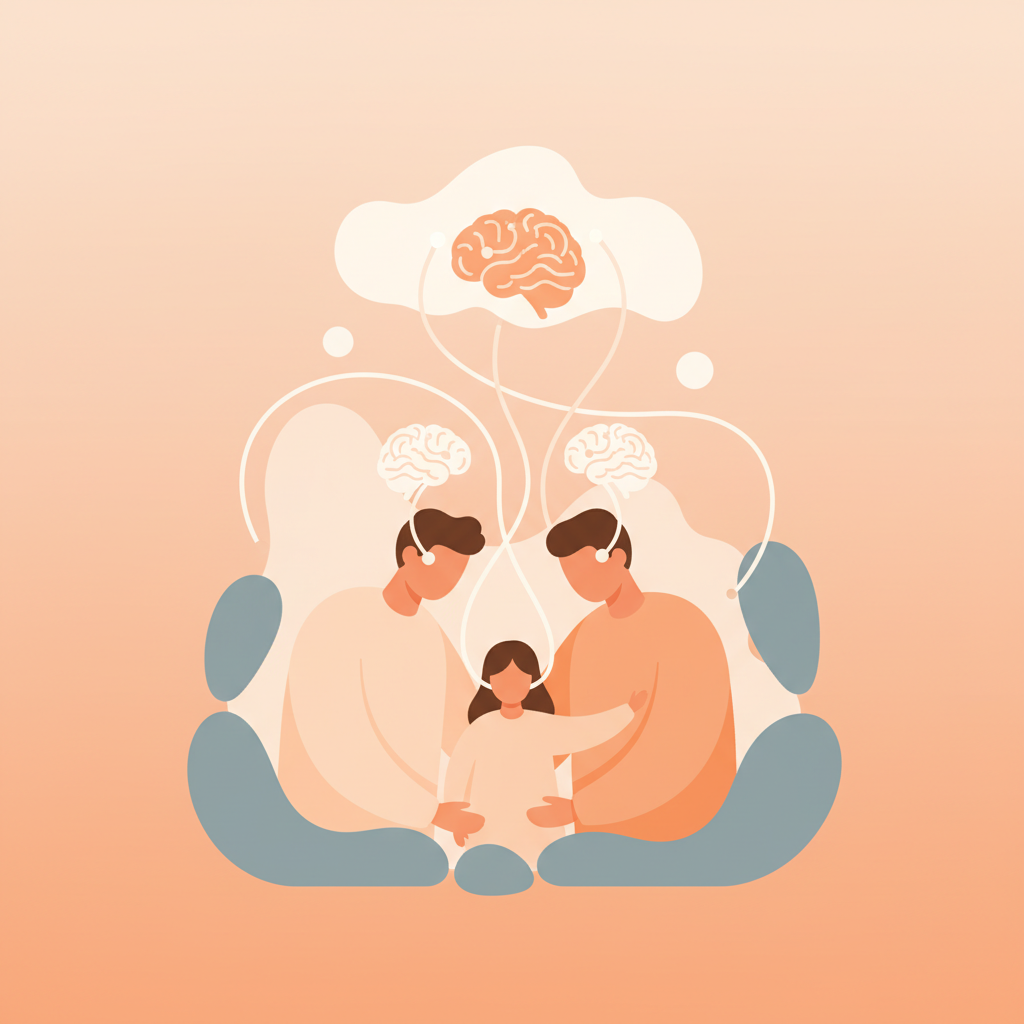
Discipline is, etymologically, the act of teaching — from the Latin disciplina, meaning instruction, knowledge. However, in the everyday practice of parenting, discipline has become synonymous with punishment, control, and obedience. Developmental neuroscience proposes a radical transformation of this concept: a discipline that does not seek to submit the child's behavior but to develop the brain capacities that will allow them to self-regulate, make ethical decisions, and maintain healthy relationships. Dr. Dan Siegel and Dr. Tina Payne Bryson call it No-Drama Discipline; Dr. Bruce Perry describes it as "meeting the child where their brain is, not where you wish it were." The result is a model that works better, causes less harm, and prepares the child for real life.
Traditional Discipline vs Brain-Based Discipline
| Aspect |
Traditional Discipline |
Brain-Based Discipline |
| Goal |
Immediate obedience |
Learning and skill development |
| Driver |
Fear of punishment |
Understanding and internal motivation |
| View of the child |
"They misbehave on purpose" |
"Their brain is still under construction" |
| Response to mistakes |
Punishment, threat, yelling |
Connection, teaching, natural consequence |
| Short-term effect |
Child obeys (out of fear) |
Child may resist initially |
| Long-term effect |
Resentment, dependence on external control |
Self-regulation, personal moral thinking, healthy relationship |
What Is Brain-Based Discipline?
It is an educational model that integrates the contributions of Siegel, Perry, Bryson, and other developmental researchers into a coherent approach based on three principles:
- The child's behavior is a window into their neurological state, not a reflection of their moral character.
- Effective discipline teaches brain skills (self-control, empathy, decision-making), not blind obedience.
- The bond between parent and child is the most powerful educational tool and must not be sacrificed in the name of correction.
Siegel distinguishes between two questions parents can ask themselves when facing inappropriate behavior: the first is "How do I get them to stop?" — focused on immediate control. The second is "What do I want my child to learn from this situation?" — focused on development. Brain-based discipline always answers the second question.
Why Don't Traditional Punishments Work Long-Term?
Punishments — removing privileges, isolating, threatening — produce obedience through fear, not understanding. The punished child's brain registers: "If I do this, something bad happens to me." What it does not register is: "This is wrong because it affects others / because there is a better alternative / because it goes against my values."
The difference is crucial. A child who obeys out of fear needs the constant presence of external authority to behave. A child who understands why a behavior is inappropriate can regulate on their own — which is precisely the goal of education.
Additionally, punishments have documented side effects:
- Resentment: the child focuses on the "injustice" of the punishment, not on their behavior.
- Secrecy: they learn not to get caught rather than not to do it.
- Dependence on external control: they do not develop internal motivation.
- Damage to the bond: each punishment creates emotional distance.
Siegel warns: "Every time you punish instead of teach, you miss a developmental opportunity that does not come back."
How Is Brain-Based Discipline Applied in Practice?
Step 1: Connect Before You Correct
Already widely developed throughout this series, this step is the foundation of the entire model. Before teaching, make sure your child's upstairs brain is connected. If they are in the middle of a meltdown, the prefrontal cortex is disconnected and any correction will be futile.
Step 2: Name What Happened
Siegel calls this "narrate to integrate": help the child tell the story of what happened. "First you were playing with your brother, then he took your truck, you got very angry, and you hit him." Narrating activates the left hemisphere and reduces the emotional load of the right.
Step 3: Validate the Emotion, Redirect the Behavior
"I understand you're angry. You have every right to feel angry. But hitting is not okay. What could you have done instead of hitting?" The distinction between emotion (always legitimate) and behavior (regulable) is one of the most important keys of this model.
Step 4: Ask Questions Instead of Giving Lectures
"How do you think your brother felt?" develops empathy. "What could you do next time?" develops problem-solving. "How can you make it right?" develops responsibility. Questions activate the prefrontal cortex; lectures disconnect it.
Step 5: Natural and Logical Consequences
A natural consequence arises from the act itself: if you do not eat, you get hungry. A logical consequence is one the adult establishes with direct connection to the behavior: if you throw food, you clean it up. The key distinction is between consequence and punishment: the consequence teaches cause and effect; the punishment imposes power.
Step 6: Repair
When the child has caused harm — physical or emotional — to another person, repair is the most formative phase of the entire process. "You hit your brother. What do you think you can do to help him feel better?" Repair teaches responsibility, empathy, and the possibility of making amends.
What About Boundaries in This Model?
Brain-based discipline does not eliminate boundaries — it redefines them. A child without boundaries is a disoriented child. Boundaries provide security because they delimit a territory where the child knows what to expect. What changes is the way they are set:
- Clear boundaries: the child needs to know exactly what is expected. "Be good" is too vague. "In this house, we don't hit" is clear.
- Consistent boundaries: what applies today must apply tomorrow. Inconsistency generates anxiety.
- Empathic boundaries: you can say "no" with firmness and warmth. "I understand you want to stay, but it's time to go" is both firm and respectful.
- Flexible boundaries on the non-essential: the clothes they choose, the food they prefer, the order of tasks — these are spaces where autonomy is possible.
- Firm boundaries on safety: everything involving physical risk, harm to others, or dangerous situations is non-negotiable.
Does This Work With Strong-Willed Children?
Yes, and it is especially effective. Children with intense temperaments — the ones who challenge the most, argue the most, and resist the most — are precisely the ones who respond worst to the punitive model, because their nervous system activates more easily and punishment generates escalation rather than compliance. Brain-based discipline offers them what they need most: validation of their emotional intensity and tools to channel it.
Siegel observes: "Difficult children do not need more control. They need more connection. It is connection that generates cooperation, not threat."
At LetsShine.app we accompany families who want to raise children with firmness without sacrificing the bond. Our AI can help you analyze specific situations, understand what your child's brain needs at each moment, and build a discipline that teaches rather than subjugates.
What Do I Do When I Lose Control and React Badly?
Repair. Siegel and Perry agree that repair is the most powerful tool in parenting. Nobody is perfect. What matters is not never making mistakes, but what you do afterward:
- Calm down first.
- Approach the child.
- Acknowledge what you did: "I yelled at you and that was not okay. I'm sorry."
- Explain what you intended: "I was angry because you were not listening, but yelling is not the way."
- Commit: "Next time I am going to try to stop before I yell."
Repairing does not make you a weak parent. It makes you human. And a parent who knows how to repair teaches their child that mistakes are part of life and that responsibility is possible.
Frequently Asked Questions
Is brain-based discipline the same as permissive parenting?
No. Permissive parenting sets no boundaries. Brain-based discipline sets firm boundaries with empathy. Siegel describes it as the balance between two extremes: neither authoritarianism (lots of boundaries, little empathy) nor permissiveness (lots of empathy, few boundaries). Brain-based discipline sits in the center: firmness with warmth.
At what age can I apply this model?
From birth in its essentials (connection, validation, presence). From age 2-3 you can incorporate narration and natural consequences. From age 4-5, reflective questions and repair. The model adapts to each developmental stage.
What if my partner disagrees with this approach?
It is common for both members of a couple to have different parenting styles. What matters is dialogue, finding points of agreement, and avoiding undermining each other in front of the child. If differences run deep, a mediation space can help.
Does this model work with children diagnosed with ADHD or ASD?
Yes, with adaptations. Children with ADHD need more structure, more repetition, and more patience in waiting. Children with ASD may need visual supports and more explicit communication. In both cases, the foundational principles — connect, validate, teach — remain the same.
Is it true that "children need a firm hand"?
What children need is clear structure, consistent boundaries, and an adult who makes them feel safe. "Firm hand" is often a euphemism for authoritarianism, which neuroscience has shown produces obedience through fear but not moral development. Children need firm, caring guides — not authoritarian bosses.